
The World Food Programme (WFP) in close partnership with the GRATIS Foundation, has trained 231 young Ghanaian artisanal fabricators to produce high‑quality threshing equipment under supervised quality assurance mechanisms.
The initiative, which aims to strengthen local fabrication, local skills, and local ownership, is being implemented across seven Technology Solution Centres: Hohoe, Dormaa, Savelugu, Konongo, Kumawu, Bolgatanga, and Techiman.
The beneficiary artisans are fabricating 300 threshers Made up of 200 maize and 100 soybean units, which will be installed at selected agribusiness sites serving women and youth smallholder farmers.
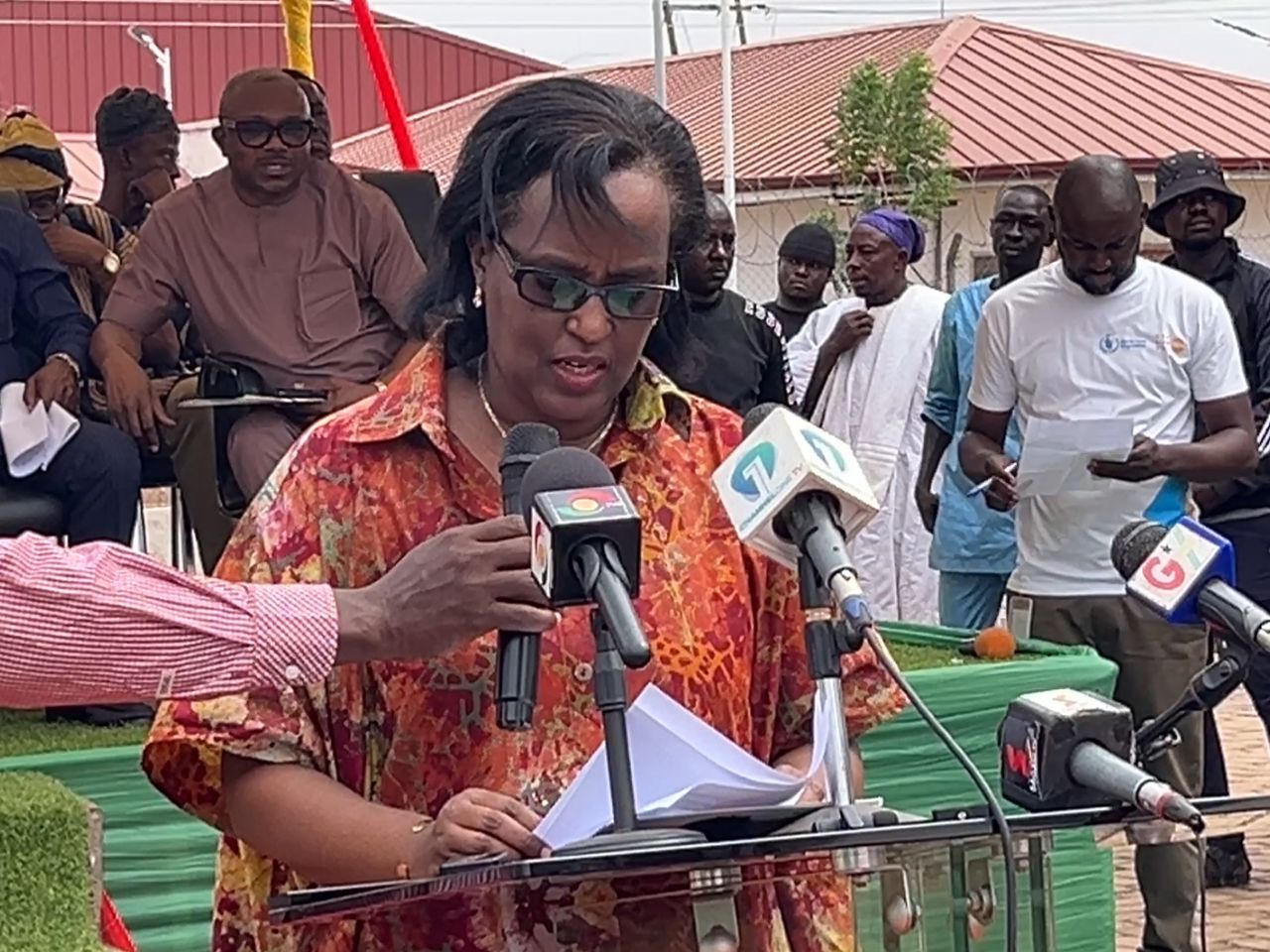
Speaking at the launch and outdooring of the World Food Programme local fabricators post-harvest equipment programme in Savelugu, Country Director of WFP, Aurore Rusiga intimated that, the initiative aligns strongly with Ghana’s Feed Ghana Programme, particularly its mechanization agenda and reflects WFP’s commitment to supporting nationally led priorities.

“This programme goes beyond equipment delivery. It integrates hands-on user training, the development of user manuals, routine maintenance services, and a technical support and maintenance framework anchored in local capacity.”
“Once fully operational, this initiative is expected to directly benefit over 3,000 farmers, improving productivity, reducing drudgery, and preserving the value of their harvests,” Madam Rusiga noted.
She reaffirmed WFP’s commitment to partnerships that deliver measurable impact.
“Together, we can ensure that what Ghana grows is well-managed from farm to market and transformed into lasting prosperity for communities and the nation at large,” she stated.
For his part, Minister for Food and Agriculture, Eric Opoku noted that, for far too long, Ghana has invested heavily in boosting agricultural production yet continues to lose a significant proportion of what farmers harvest due to poor post-harvest handling.

According to him, inadequate storage and processing services have robbed farmers of income, wasted effort, and weakened the country’s food systems.
“The future of Ghana’s agriculture lies in efficiency, value addition, and dignity of work. It also depends on empowering women farmers, equipping young people with relevant skills, and ensuring that what the country grows is not lost, but leveraged for national development,” he said.
Beyond equipment delivery, the programme includes user training, maintenance services, and the deployment of agricultural engineering graduates to ensure safe operations and long-term sustainability.
By Nadra Mohammed