
Ghana’s President, John Dramani Mahama, has expressed the need for future reparations to reflect the unique suffering endured by enslaved women and girls during the transatlantic slave trade.
According to Mahama, the reparatory justice cannot be complete without a reflection of the unique experiences of women and girls through truth-telling, remembrance and redress.
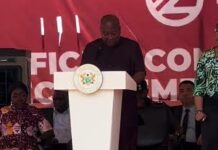
John Mahama, speaking at the Heads of State Session of the Next Steps High-Level Consultative Conference in Accra on Thursday, June 18, 2026, stressed that any process that failed to acknowledge the experiences of enslaved women would fall short of delivering justice.
“Any framework for truth-telling, memorialisation, reparatory justice, or historical reckoning that fails to recognise the specific experience of women will remain incomplete,” he noted.
Despite the violence and indignity suffered by African women, children and men during the transatlantic slave trade, President Mahama says women and girls were subjected to additional forms of abuse that have received little attention in historical accounts.
He said the exploitation of women extended beyond forced labour, with their bodies and ability to bear children used to sustain slavery across generations.
President Mahama paid tribute to women who resisted oppression during and after slavery, citing Harriet Tubman and Sojourner Truth. He also acknowledged the many unnamed women whose resilience helped preserve families, communities and hope despite the harsh conditions they faced.
Women, including scholars, activists, jurists and policymakers, Mahama averred, continue to play an important role in advancing the global conversation on reparatory justice.
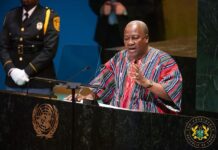
He maintained that Ghana’s advocacy for reparations had gained international recognition following the adoption of a United Nations General Assembly resolution that the country championed. The resolution acknowledged the scale, brutality and lasting effects of the trafficking of enslaved Africans and racialised chattel enslavement.
He said the next stage of the reparations process should involve practical measures, including research, education, memorialisation, restitution and stronger partnerships between Africa, the African diaspora and the international community.
President Mahama said the pursuit of reparatory justice was not intended to assign personal blame for actions committed centuries ago, but to address the lasting effects of historical injustice.
“History does not ask us to inherit guilt, but it asks us to inherit responsibility,” he said.
President Mahama said the success of the current generation would be measured not only by the resolutions adopted, but by the progress made in translating recognition into meaningful action.
‘Reparatory justice now a legitimate global concern; no longer a peripheral issue’ – Ablakwa