
The Government is proactively enhancing its counter-terrorism strategy through a comprehensive review of the National Framework for Countering and Preventing Violent Extremism and Terrorism (NAFPCVET).
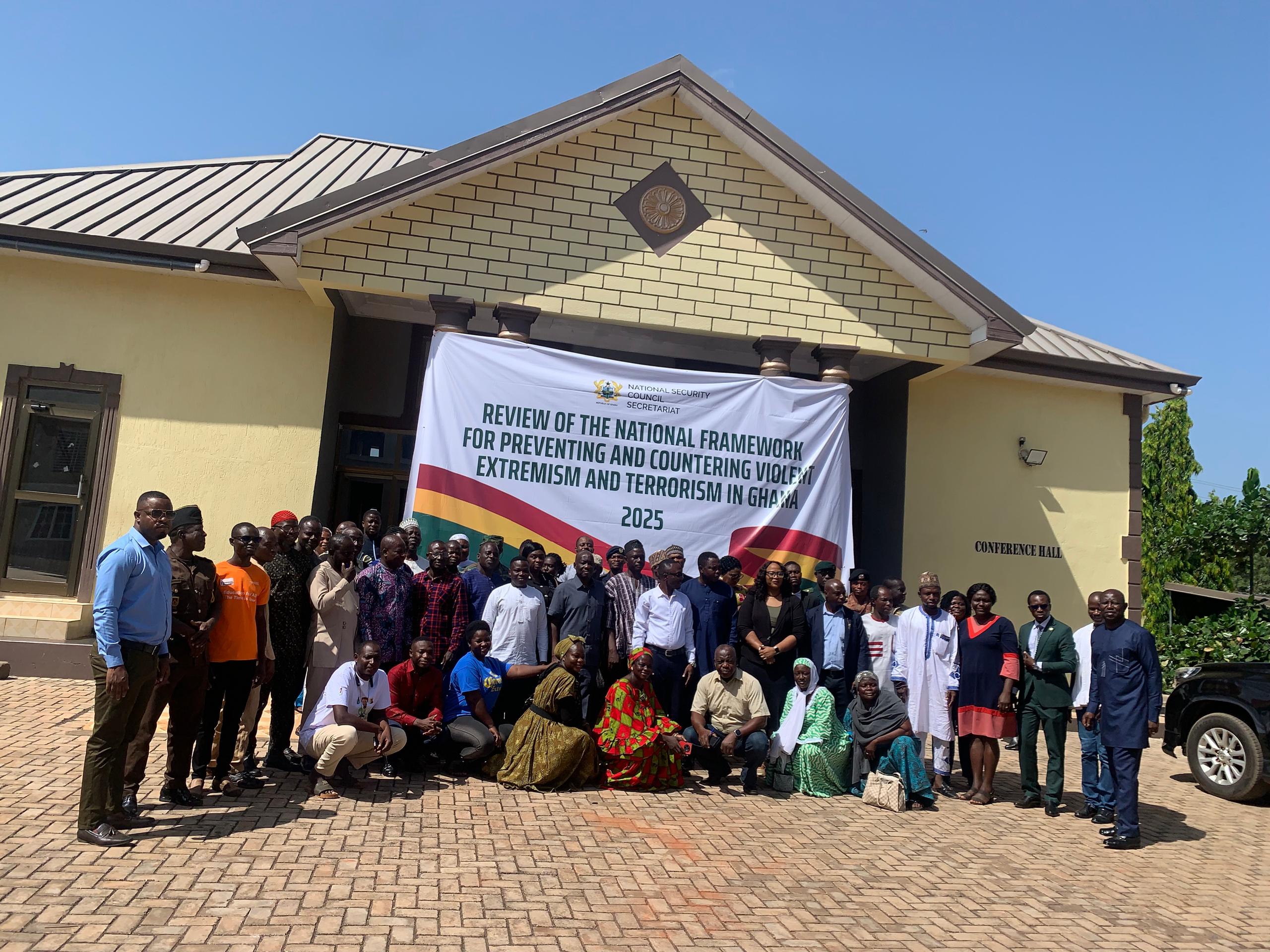
Faced with escalating regional instability, the Government of Ghana, confronting increasing regional instability, convened a high-level workshop in Nalerigu aimed at bolstering national counter-terrorism strategies.
This initiative, spearheaded by the National Counter-Terrorism Fusion Centre, National Security Council Secretariat, and supported by the Coastal States Stability Mechanism (CSSM) program implemented by the International Organization for Migration (IOM), and funded by the German Federal Foreign Office, the Ministry of Foreign Affairs of the Kingdom of the Netherlands, and the United Kingdom Foreign, Commonwealth and Development Office, underscores a multi-pronged approach to national security.

The workshop’s central objective was to strengthen the national framework for countering violent extremism and terrorism, with a specific emphasis on fostering community resilience in the vulnerable northern border regions. This dual focus acknowledges the critical interplay between national policy and localized community empowerment.
This initiative highlights Ghana’s commitment to proactively addressing the threat of violent extremism through a combination of national policy measures and localized community-based interventions.
The success of this approach will depend on effective coordination, sustained investment, and a deep understanding of the complex dynamics at play in the northern border regions. Continued monitoring and evaluation will be crucial to assess the impact of these efforts and adapt strategies as needed.

The NAFPCVET, initially established in 2019 outlines Ghana’s comprehensive approach to preventing and countering violent extremism and terrorism. The current review aims to assess the framework’s effectiveness in addressing emerging threats, incorporating lessons learned from past implementation, and aligning it with evolving international best practices.
Data from the African Union Counter-Terrorism Centre paints a concerning picture that demands proactive measures in Ghana, especially considering the volatile situation in neighboring Burkina Faso and other neighboring countries. Between 2015 and 2024, approximately 19,186 terrorist attacks led to 82,104 deaths in Africa, averaging about 5 attacks and 23 deaths each day, with a lethality rate of approximately 4.3 deaths per attack.
However, recent trends are alarming. From January to June 2025, there were 1,886 recorded attacks, resulting in 8,592 deaths in Africa. Comparing this to the same period in 2024, while attacks only increased by a small margin from approximately 1,867 to 1,886, the number of deaths rose significantly from approximately 6,460 to 8,592. This translates to approximately 10 attacks and 48 deaths per day in the first half of 2025, with a lethality rate that has climbed to approximately 4.6 deaths per attack.
These raw figures underscore the escalating threat. The fact that nearly 2,132 more people died in terrorist attacks in the first half of 2025 compared to the same period in 2024, despite only a minor increase in the number of attacks, indicates a dangerous shift in the terrorists’ capabilities or tactics.
Given Ghana’s proximity to Burkina Faso and other countries, the increased lethality of attacks raises the stakes considerably. The data highlights the urgent need for Ghana to fortify its border security, enhance intelligence gathering, and strengthen inter-agency cooperation. Proactive measures are crucial to prevent the infiltration of terrorist elements, disrupt potential attacks, and safeguard the nation’s stability. The rising numbers emphasize that vigilance and preparedness are no longer optional but essential for Ghana’s security.
Recognizing these evolving threats, the workshop in Nalerigu represents a proactive strategy to bolster national security and empower local communities. It brought together key stakeholders, including security agencies, local government officials, community leaders, and civil society organizations, to foster collaboration and enhance information sharing.
Addressing the participants at the forum, the North East Regional Minister, Ibrahim Tia, stated, “This workshop is a testament to our commitment to safeguarding the peace and security of our nation. By empowering local communities and strengthening inter-agency collaboration, we can effectively prevent and counter the threat of violent extremism.”
The primary objectives of the workshop included, Equipping local communities with the knowledge and resources to identify and resist extremist ideologies through community-based early warning systems, Improving communication and collaboration between security agencies and local authorities to facilitate a more effective response to potential threats, strengthening state presence and improving relationships, developing effective communication strategies to challenge extremist propaganda and promote tolerance and social cohesion, building trust between communities and authorities, implementing targeted interventions to address the root causes of radicalization, such as poverty, unemployment, and lack of educational opportunities.
Workshop sessions covered critical topics such as identifying and countering extremist narratives, promoting community-based early warning systems, addressing the socio-economic drivers of radicalization, and strengthening border security measures.
The Nalerigu workshop is an integral part of a broader national strategy to enhance Ghana’s resilience to violent extremism and terrorism. The government remains committed to working with local communities, civil society organizations, and international partners to ensure the safety and security of all Ghanaians. The success of this strategy hinges on continued collaboration, information sharing, and a sustained focus on addressing the root causes of radicalization.