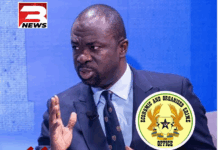

The Head of Intelligence Unit at the Economic and Organized Crime Office (EOCO), Patrick Yankey has called for an effective institutional collaboration in fighting cybercrime in Ghana.
Mr. Yankey said this has continuously empowered the office to crack down on complex criminal networks.
The Head of Intelligence Unit at the EOCO was speaking at the African Fraud Stakeholders Dialogue (AFSD) 2026 in Accra.
It was under the theme “Mobilizing Collective Action Against Fraud”.
The Member of Parliament for the Suame Constituency and Lead Counsel to the Minority Caucus in Parliament, Hon. John Darko, lent legislative weight to the discussions.
He emphasized the need for robust legal frameworks in fighting cybercrime in the country.
The Founder of the Anti-Fraud Initiative Ghana (AFIG), Isaac Obour, called for stronger collaboration among governments, law enforcement agencies, civil society organizations and the private sector to combat the growing threat of financial fraud across Africa.
According to Mr. Obour, the increasing sophistication of financial crimes and digital scams is not only causing significant financial losses but is also undermining economic development and affecting the livelihoods of individuals and businesses.
Mr. Obour said fraud has evolved beyond isolated criminal incidents into a systemic challenge requiring coordinated and sustained intervention.
He stressed the need for countries to give greater and more specialized attention to fraud prevention, warning that failure to act decisively could have long-term consequences for economic stability and development.
He called for increased investment in fraud prevention, intelligence sharing, public education and capacity building to strengthen the continent’s response to economic crime.
AFIG’s anti-fraud campaign
Mr. Obour’s advocacy against fraud is also reflected in the establishment of AFIG, an organization focused on fraud prevention, anti-corruption, victim support, public awareness and capacity building.
He recounted his decision to leave a lucrative career in the United States and return to Ghana to contribute to efforts aimed at addressing financial crime and promoting greater integrity within society.
He said the establishment of AFIG was driven by the need to create a stronger platform through which stakeholders could coordinate their efforts in the fight against fraud.
AFIG has subsequently participated in international engagements on financial and organized crime.
Mr. Obour argued that no single institution can effectively tackle the increasingly sophisticated nature of fraud on its own.
He therefore called for stronger partnerships between law enforcement agencies, regulators, financial institutions, technology companies, civil society organizations and the public.
He also emphasized the importance of seamless intelligence sharing and sustained investment in preventive measures, including public education and capacity building.
According to the organization, in March 2026, it was invited by the United Nations Office on Drugs and Crime (UNODC) and INTERPOL to participate in the closing plenary of the Global Fraud Summit in Vienna, Austria.
The organization also said Mr. Obour participated in a July 2026 United Nations Convention against Transnational Organized Crime (UNTOC) panel discussion on tools for providing global responses to organized fraud.
Stakeholders call for stronger collaboration
The African Fraud Stakeholders Dialogue brought together representatives from state institutions, regulators, Parliament, the financial sector, civil society and other industries to discuss emerging fraud threats and possible solutions.
Representatives from the Attorney General’s Department and the Cybersecurity Authority also shared perspectives on regulatory enforcement and the growing threat of digital crime.
The Deputy Managing Director of Ghana Post addressed emerging threats within the postal and logistics sector, including postal fraud and other vulnerabilities, while outlining measures being considered to strengthen security.
The Head of Internal Control at Development Bank Ghana provided perspectives on protecting institutional credit and financial transactions against fraudulent activities.
Call for a united front
The discussions at the dialogue highlighted the need for a coordinated approach involving both public and private institutions.
The organizers say AFSD 2026 is intended to provide a platform for stakeholders to move beyond discussions and develop practical partnerships to address fraud across sectors.
The dialogue ended with a call for African countries and institutions to strengthen cooperation in preventing financial crime and protecting resources needed for economic growth and development.
For AFIG, the goal is to build a more coordinated anti-fraud movement in which prevention, intelligence sharing, victim support and enforcement become shared responsibilities across society.