
Ghana’s aviation sector stands at a critical inflection point. At the center of this moment is Terminal 2 of Accra International Airport, a facility long acknowledged to be outdated, inefficient, and structurally constrained.
Yet, despite prior technical assessments and strategic decisions that led to the construction of Terminal 3, public resources are once again being deployed, not for reconstruction, but for refurbishment.
This raises a fundamental question: Why is Ghana investing in extending the life of infrastructure it has already deemed obsolete?
The answer matters, not just for aviation policy, but for public financial governance, national
security, and Ghana’s broader ambition to become a regional aviation hub.
A policy reversal without public accountability
Historical records and institutional decisions point to a clear trajectory: Terminal 2 was
assessed as inadequate, which justified the development of Terminal 3 as a modern
replacement facility.
That decision was not arbitrary, it was grounded in engineering realities, operational inefficiencies, and increasing passenger demands.
Today, however, the narrative has shifted. The ongoing works at Terminal 2 are being
described as “repurposing.”
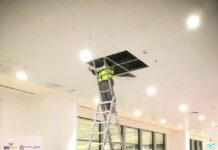
But a closer technical examination suggests otherwise. Leak repairs, ceiling replacements, and structural patching are not repurposing, they are refurbishment.
This distinction is not semantic. It goes to the heart of procurement integrity and public
accountability. Mischaracterising refurbishment as repurposing risks distorting the basis
upon which contracts are awarded and public funds are justified.
The Economics: Short term savings, long term losses
Refurbishment is often presented as a cost-saving measure. In reality, it is frequently a false
economy.
Legacy infrastructure like Terminal 2 was not designed for modern aviation demands.
Retrofitting it repeatedly results in escalating maintenance costs, operational inefficiencies,
and constrained revenue potential.
By contrast, reconstruction, though capital-intensive, delivers long-term value through efficiency, scalability, and increased commercial viability.
Even more concerning is the potential cannibalisation of Terminal 3’s return on investment.
Fragmenting passenger traffic across suboptimal facilities risks undermining utilization rates
and weakening Ghana’s competitive position in the regional aviation market.
Legal and Governance risks
Under Ghana’s public financial framework, the use of public funds must meet strict
standards of efficiency, effectiveness, and value for money.
The Public Financial Management Act, 2016 (Act 921) imposes a duty on public officials to
ensure that resources are not applied in a manner that results in avoidable loss.
Similarly, the Public Procurement Act, 2003 (Act 663) requires that procurement decisions be
transparent, properly justified, and aligned with value-for-money principles.
Where a facility has previously been classified as obsolete, continued investment in its
refurbishment raises legitimate concerns. It opens the door to audit queries, potential
disallowances, and even surcharge by oversight bodies under Ghana’s accountability regime.
Public institutions must not only act lawfully, but they must also be seen to act rationally and
consistently with prior evidence-based decisions.
National Security and infrastructure reality
Modern airport terminals are not merely buildings, they are integrated systems. From
biometric processing to baggage handling and surveillance architecture, today’s aviation
security framework depends on seamless system integration.
Terminal 2, by design, is a legacy structure. Its architectural limitations restrict the effective
deployment of modern security technologies. Piecemeal refurbishment cannot resolve these
systemic constraints.
In an era of evolving transnational threats, fragmented terminal operations and outdated
infrastructure introduce vulnerabilities that cannot be ignored.
The strategic question: What kind of aviation hub does Ghana want?
Ghana has repeatedly articulated its ambition to become a leading aviation hub in West
Africa.
That ambition cannot be realized through incremental upgrades to outdated facilities.
Global aviation hubs are built on purpose-designed, future-ready infrastructure, not on the
prolonged life support of legacy terminals.
The choice before us is therefore not technical, it is strategic. Do we invest in infrastructure
that meets international standards and supports long-term growth? Or do we continue to
allocate scarce public resources to short-term fixes that defer, but do not solve, the
underlying problem?
A call for transparency and accountability
In the public interest, a formal request has been made to Ghana Airports Company Limited
under the Right to Information Act, 2019 (Act 989) to disclose key documents relating to
Terminal 2.
These include engineering assessments, board decisions, procurement records, and contractor details.
The objective is simple: to ensure that decisions affecting national infrastructure and public
funds are subject to scrutiny, transparency, and accountability.
The way forward
Ghana cannot afford policy inconsistency in critical infrastructure sectors. The evidence
suggests that refurbishment of Terminal 2 is not a solution, it is a postponement of an
inevitable decision.
That decision is reconstruction.
Anything short of that risks financial inefficiency, legal exposure, and strategic stagnation.
The time has come to align policy with evidence, investment with long-term value, and
infrastructure with national ambition.
Reconstruct Terminal 2. Don’t refurbish the past at the expense of the future.
BY CHARLES AKOTO-LAMPTEY JNR ESQ
Public Interest Activist
Tel: 0554610918