
Ghana prides itself in three main religions: Christianity, Islam and African Traditional religion. We wear our best to church on Saturdays or Sundays and other special church occasions.
We wear our best for Jummah and Eid prayers. We wear our best when Asaase Yaa has to be honoured. These days, within every 300 metre radius, you are sure to find churches, mosques and shrines.
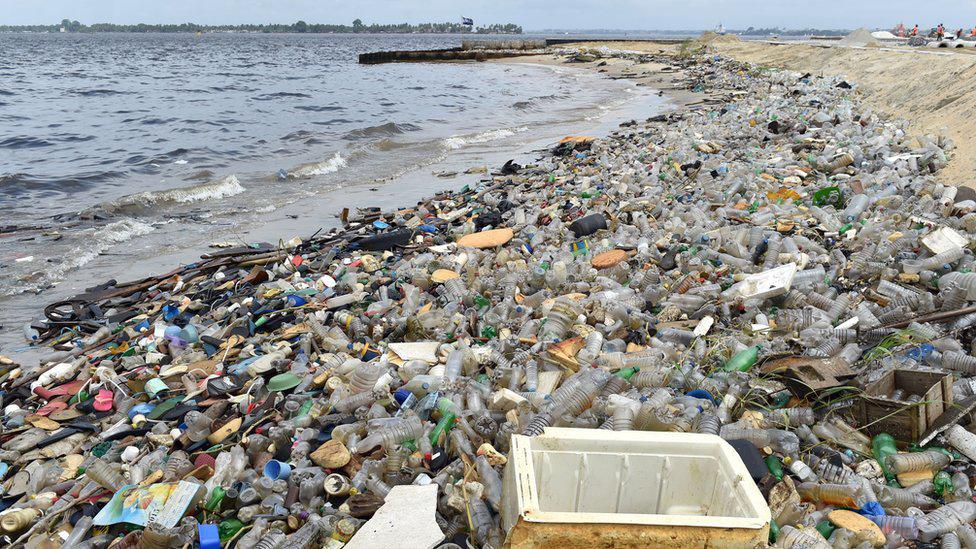
Yet, the spaces in-between, are filled with rubbish or trash, known in Ghanaian local parlance as ‘borla’. I dare say, that the mountains of rubbish dwarf the heaps of prayers and libation.
At the heart of these systems of faith and belief, is the popular mantra “cleanliness is next to godliness”.
Ordinarily, one would assume without thinking twice, that the mantra will be in deeds and not just words. Rather shockingly, the events of Monday, 29th June 2026, exposed how our covert ‘cleanliness’ meant nothing to our so-called overt godliness!
For the uninitiated, here’s what happened.
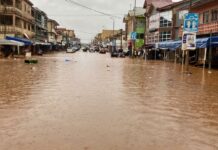
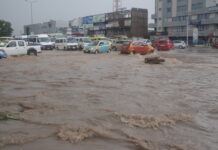
On Monday, 29th June 2026, most parts of Ghana experienced heavy rains for more than 12 straight hours. During those hours of downpour, Ghana received about 120mm of rain, that literally submerged cities.
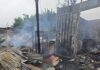
People had their hearts in their mouths the entire time. For me, the events of the trio-disaster of filth, flood and fire on June 3, 2015 kept flooding my mind.
Places that had remained flood-virgins had their virginity violently broken without notice. People perched on roofs, etc. It was an eye sore.
If that had happened in London, the capital of Great Britain, it would have been called a “drizzle.”
However, ours cost us lives, cars, shops, eatries, businesses, etc and brought us a humiliating national sense of shame on the global stage!
While people continue to count their losses, with some not knowing where to pick up from, insurance companies are also racking their brains to honour claims for damages.
The day after the floods, President John Mahama was in an aircraft, flying over the nation to get an eagle’s eye view of the situation. On the grounds, was former Vice President, Dr. Mahamudu Bawumia on foot in certain suburbs, also assessing the situation and attracting a few photo opportunities here and there.
These two scenarios took a political twist and sparked a debate as to which of the two gentlemen cared most for the people. As usual, we switched into NPP and NDC mode. Unnecessary debate, if you ask me.
If the people are killed by the floods, who will queue to vote? Floods also do not demand party cards before entering homes and offices. Filth does not check if you have a party connection or not before breeding life-threatening diseases for you.
Now, having convinced himself that something can be done to prevent an encore of floods, President John Dramani Mahama announced a mandatory 2-day post-flood clean-up exercise for Friday, 10th and Saturday, 11th July, 2026.
The mission was simple: to rid the nation of filth, clear the drainage, demolish structures sitting boldly on waterways like they pay rent that can stop floods. It was not just a hollow announcement, it was backed with the needed logistical support to desilt drains, sweep, clean and cart the rubbish to designated transfer sites.
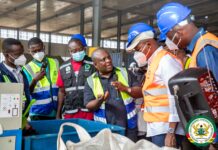
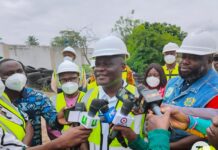
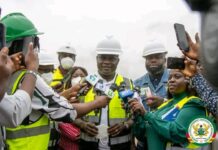
Friday came, and almost everybody put their shoulders to the wheel. From the President, to the Vice President, Ministers of state, Service Chiefs, Members of Parliament, MCEs and DCEs to the last citizen came out to clean like heroes.
The philosophers, medical officers, economists, lawyers, students and so on, emerged wearing wellington boots and gloves and holding brooms, shovels, rakes, etc in their hands and with one principle in their hearts – make Ghana clean again.
Whilst the cleaning was ongoing, it came to light that some persons were just not bothered. They actually refused to join the war against filth. They were still in the mood of flood post-mortem and sarcasm laced with half-baked statistics.
Before anybody could pronounce Alajo, they barked their favourite excuse: “…. but we pay taxes? What do they use those taxes for? The government is responsible for cleaning the streets and gutters, not us.”
I was beyond stunned when I heard those things being uttered on the grounds. These same people had lost stuff through the floods, but they still purposed in their hearts that they have no role to play.
For them, that warped thinking sounded like a brilliant logic, when in fact, it is a very silly one. What that excuse suggests, is akin to the metric that because you subscribed and paid for DStv, the Black Stars should have won the World Cup? Or, the fact that we pay for road worthy certificates, potholes must not be fixed, but must file a resignation letter?
Furthermore, I wondered, so the fact that we pay taxes, does it mean that the rain water should have cleared itself? That the gutters should have self-cleaned. That the houses built directly in waterways, wetlands, ramsar sites, etc should have politely relocated when the water started gushing their way?
Well, taxes do not sweep or scoop silt from gutters, human beings do. We do so with brooms and shovels. The government that takes the taxes, is also not a hydra-headed-octopus-like robot.
The filth we are all trying to rid society of, does not have the capacity to read memoranda of active or abrogated waste management contracts. The mosquitoes, rodents, cholera and typhoid causing agents will not stand and stare until some procurement has been finalised.
The reality of Monday June 29, 2026 is that the floods did not check tender documents before arriving. The rubbish didn’t say, “oh, there’s no contract so let me just hold back until they get one.”
If we are honest enough and we truly love a clean country, we would not wait or prefer for someone else to clean it for us. We will not wait to do the cleaning on camera, in a reflector vest. Ghanaian politicians will come and go, but Ghana lives forever!
Why can we not stop building on waterways? Why can we not stop pouring cement, sand, chippings and sawdust into drains to fill them up? Why can we not stop dumping empty sachet water and other solid waste into gutters and at unapproved places? Why do we do all these and still act shocked when the water returns the favor with abundant interest that leaves us in pain?
We cannot want a Japan or Dubai drainage with such unadulterated Ghanaian indiscipline? We cannot desire immaculately clean Singapore streets with that underwhelming “it’s not my job” refrain and energy? We cannot hope for a cleaner future, if we are not consciously raising the children to be clean and to shun dirt and filth? How about sanitation clubs in schools? We cannot hope for a brighter future if we are not recycling plastics as much as we use them?
What the 10th and 11th July mandatory clean-up exercise proved to us is that, when we work together, we can actually move mountains of trash in 48 hours. When we do not, we will get stuck on mountains of excuses and rooftops in 48 seconds.
There is ample evidence to show that after the clean-up, some drains flowed freely again. What it means is that when the next rain comes, we may be safer and secured from flood alarm.
The sharp truth is, the floods do not care about your tax bracket or your societal status. You can pay taxes and still pick up a broom. You can criticize waste collectors and waste management companies and still clear the gutter in front of your house.
You can choose to wait for government and still not drown yourself in your own mess while waiting. And oh, if you haven’t heard, the broom is also a tool of good governance.
Ghana, as a country, is not a hotel where guests check out and housekeeping comes in to freshen up the room. Ghana, our country, is our gated estate community and our individual houses are our homes.
So the next time it rains for even 24 straight hours, we have two options. The first option is fueled by your mind. The second option is fueled by your attitude.
Option one is to resolve to regularly clean your environment and encourage others to do same. That way, we can clean up for even 2 days to a major rain and we should be fine. Option two is to refuse to clean regularly and count our losses for two months after the rain and flood.
We can do it, if we do not let politics and religion cloud our minds going forward.
By Johnnie Hughes