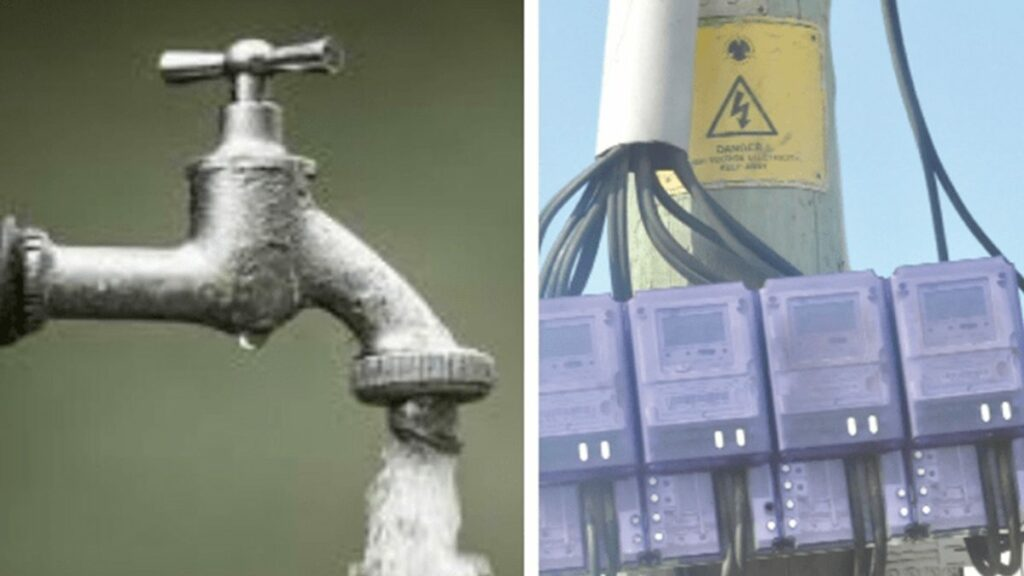

Ghana’s ongoing debate over the new utility tariff proposals has reignited a tension between affordability and financial sustainability.
The Public Utilities Regulatory Commission’s (PURC) 2025–2030 tariff framework aims to realign prices with the cost of delivering reliable power and water but the reaction from industry has been fierce.
The Food and Beverages Association of Ghana (FABAG) argues that tariff hikes “will not fix ECG’s inefficiencies,” while the Ghana Union of Traders Association (GUTA) warns that Ghana’s cost of electricity already undermines its competitiveness under the AfCFTA.
Manufacturers, including the Ghana Plastic Manufacturers have warned that the relentless increases in tariffs are crippling local industries, discouraging investment and forcing some firms to either downsize or shut down entirely. Their frustration reflects a wider concern: that the rising cost of utilities has become one of the biggest threats to production and business survival.
Yet beneath the political noise lies an unavoidable truth, the finances of Ghana’s utilities are unsustainable. The problem is not just inefficiency; it is structural. Financial pressures; high debt, rising operational costs, persistent under-recoveries, and capital investment obligations, have pushed these institutions into chronic distress.
1. High Debt Burdens
Ghana’s utilities are carrying loans that they can no longer comfortably service. Ghana Water Limited (GWL) alone has signed eight on-lending loan agreements with the Ministry of Finance totaling GHS 14.6 billion.
Under these arrangements, the Ministry borrows on behalf of the company at an interest rate of LIBOR + 4%, with repayment over 15 years. As of the end of 2024, GWL’s monthly loan repayment stands at GHS 38.9 million, roughly 23% of its average monthly revenue (GHS 170.9 million) .
This means that almost a quarter of the company’s income goes into debt service before salaries, maintenance, or new investments. This pattern is not unique to GWL.
The Volta River Authority (VRA) and the Electricity Company of Ghana (ECG) also carry legacy debts accumulated from years of uncollected bills, unpaid government arrears, and emergency borrowings to keep operations afloat. These debts eventually flow into the national balance sheet, and by extension, to taxpayers.
2. High and Rising Operational Costs
Utility companies are facing sharp increases in their day-to-day running costs. For Ghana Water Limited, operational expenses have risen nearly tenfold compared to initial projections driven by higher costs for treatment chemicals.
VRA faces similar constraints. Beyond its core generation role, it now operates five mini-grids serving island communities, with three more awaiting handover from the Ministry of Energy. While these projects expand access to electricity in rural Ghana, they come with no corresponding tariff mechanism to recover their maintenance and operational costs. The Authority is therefore absorbing these expenses within its already tight finances.
At ECG, the burden is compounded by technical and commercial losses and by delayed payments from state institutions. Each unpaid bill translates into an operational gap that must be financed somehow, often through short-term borrowing.
3. Persistent Under-Recoveries
One of the most pressing but least understood issues in Ghana’s utility sector is under-recovery, when utilities fail to collect the full cost of services rendered. These losses stem from pricing structures that fall below cost-recovery levels, compounded by inefficiencies in billing and payment enforcement.
For ECG, under-recoveries are chronic. Many government agencies, including hospitals and ministries, delay payments for months. Meanwhile, illegal connections, non-payment, and system losses continue to eat into revenue. The result is a perpetual liquidity squeeze: the company owes Independent Power Producers (IPPs), who in turn owe their lenders, a cycle that eventually draws in the Ministry of Finance as the guarantor of last resort.
4. Capital Investment Needs
Behind every argument about tariffs lies a more fundamental reality: Ghana’s utility infrastructure is ageing and underfunded. To guarantee reliable power and clean water, companies like ECG, VRA, and GWL must undertake major capital projects, from network upgrades and substation expansions to new water treatment plants and rural electrification.
But capital investment must be financed. These projects are often backed by long-term loans, which then appear on the balance sheets of the utilities and the state. Without a tariff structure that reflects these realities, Ghana risks running a utility system that cannot maintain, let alone expand, its infrastructure.
Every time tariff adjustments are postponed for populist convenience, the financial hole deepens. The short-term relief offered to consumers comes at the cost of future service reliability. When tariffs are suppressed, ECG borrows to survive; when ECG borrows, government guarantees those loans; and when government guarantees them, they reappear in the public debt stock.
In the end, Ghanaians pay, either directly through the meter or indirectly through taxes and inflation. The question, therefore, is not whether we will pay, but whether we will choose to pay now through realistic tariffs or later through deeper economic pain.