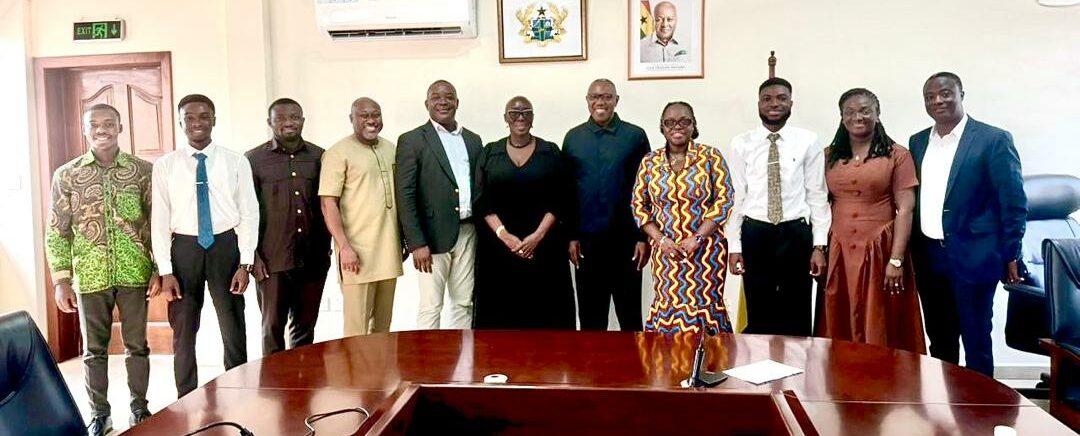

The Ministry of Education has held a high-level stakeholder meeting in Accra to address the growing dispute over recent fee increases at the University of Ghana.
This follows widespread student protests and intervention by the Ghana Tertiary Education Commission (GTEC).
The meeting, which took place on Thursday, January 8, 2026, brought together key actors in the tertiary education sector, including the Chairperson of the University of Ghana Governing Council, Marietta Brew; Vice-Chancellor Prof. Nana Aba Appiah Amfo; Pro Vice-Chancellor Prof. Gordon Akanzuwine Awandare; leaders of the University of Ghana Students’ Representative Council (UGSRC) and the Graduate Students’ Association of Ghana (GRASSAG); as well as the Director-General of the GTEC, Prof. Abdulai Jinapor.

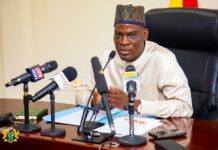
It was chaired by the Deputy Minister for Education, Dr. Clement Abas Apaak, who has been mandated by the Minister of Education to lead engagements aimed at reaching a lawful and broadly acceptable resolution to the impasse.
The intervention comes after weeks of strong opposition from students and parents over reported academic fee increases of about 25 per cent, with some first-year students facing hikes of up to 34 per cent. Continuing students were also reported to be paying roughly 27 per cent more.
Explaining the Ministry’s involvement, Dr. Apaak said the scale of public concern left government with little choice but to act.
“The level of public outcry from students and parents was such that we couldn’t have ignored it,” he said in an interview on Citi FM’s Eyewitness News.
He stressed that any adjustment to fees must be consistent with existing legislation, particularly the Fees and Charges Act, noting that Parliament had not approved the increases.
“Given that we work with laws and there are processes and procedures, the best thing was to instruct GTEC to call the university to stay any increase,” Dr. Apaak added.

University of Ghana management has, however, defended its position. According to the Pro Vice-Chancellor, Prof. Gordon Awandare, the contested charges were largely third-party fees approved by student leadership, rather than management-imposed academic fees.
“What is in the report is about third-party fees which were imposed by the student leadership,” he said, explaining that rising utility costs had made some adjustments unavoidable.
GTEC has taken a firm regulatory stance on the matter. In a letter dated January 5, 2026, and addressed to the Vice-Chancellor, the Commission ordered an immediate reversal of all fee increases and newly introduced charges implemented without statutory approval.
The regulator directed that final-year students who had overpaid should be refunded, while continuing students should receive credits. It also ordered that all charges, including SRC and GRASSAG levies, be reverted to the previous academic year’s approved rates.
“You are hereby requested to provide GTEC with evidence of compliance not later than January 12, 2026,” the Commission warned, adding that failure to comply would attract serious regulatory sanctions.
The UGSRC has previously sought to justify some of the third-party fee adjustments, citing administrative errors, increased utility bills and the need to finance a proposed SRC hostel project.
UGSRC President Larbi Ofori Richmond explained that an additional GHC200 levy was intended to support long-term accommodation needs.
“The proposed facility is expected to house about 15,000 students at affordable rates,” he said.
Thursday’s meeting is expected to reconcile the differing positions of government, regulators, university management and student leaders, as stakeholders work toward a solution that protects student welfare while ensuring strict compliance with the law.