
President John Dramani Mahama has called on the international community to formally recognise the transatlantic slave trade as one of the gravest crimes against humanity, stressing the need to restore dignity and justice to people of African descent.
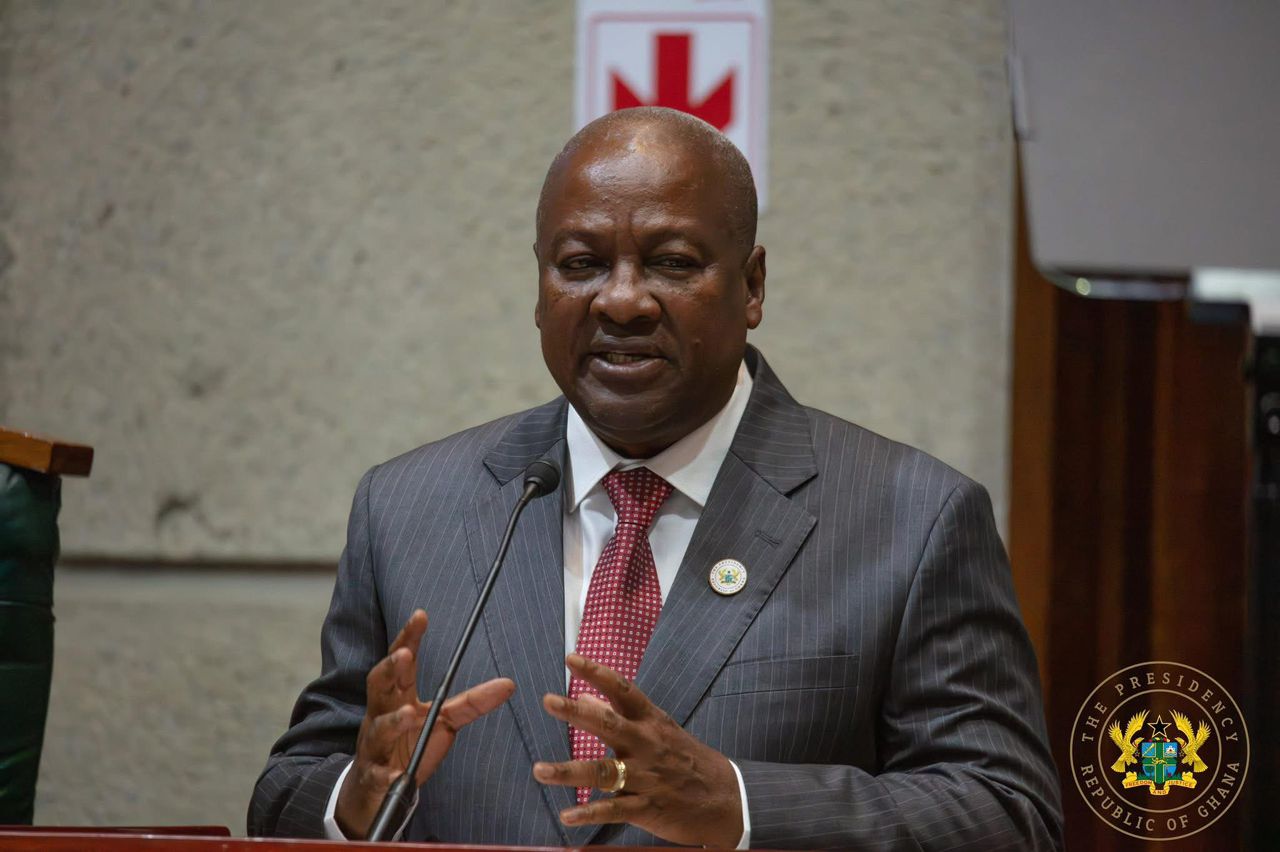
Addressing a high-level gathering at the United Nations’ special event on reparatory justice on Tuesday, March 24, the President said the slave trade was deliberately designed to strip Africans of their humanity, rooted in a false racial hierarchy that rudely placed whites above blacks.
Highlighting the significance of his upcoming United Nation Resolution on the trafficking and enslavement of Africans, he described it as a crucial step toward global acknowledgement of historical wrongs.
According to him, the resolution would enable the international community to collectively recognise the suffering of an estimated 18 million men, women, and children who were forcibly taken from their homes and subjected to years of exploitation.
“This resolution allows us, as a global community, to collectively bear witness to the plight of the 18 million men, women, and children whose homes, communities, names, families, hopes, dreams, futures, and lives were stolen from them over the course of four centuries,” he stated.
President Mahama said the Resolution represents a pathway to healing and reparatory justice.
He added that beyond justice, the move would serve as a safeguard against historical amnesia, ensuring that the horrors of slavery are neither forgotten nor repeated.
“I speak these words today not only for Ghana, but also in solidarity with the rest of Africa, the Caribbean, Latin America, the wider Diaspora and, indeed, all people of good conscience throughout the world. This resolution is a pathway to healing and reparative justice. This resolution is a safeguard against forgetting,” he stressed.
He noted that the atrocities committed during the era of slavery and the lasting injustices that followed—were made possible because enslaved Africans were treated as objects rather than human beings.
President Mahama emphasised that any meaningful discussion on slavery must begin with reclaiming racial equality and reaffirming the dignity and humanity of Africans, both past and present.
“The atrocities that were committed against enslaved Africans, the myriads of injustices that were borne of slavery and carried forward into successive social frameworks, took place specifically because they were considered objects.
“So, when discussing slavery and its resulting institutions and practices, we must always start by reclaiming racial equality, the dignity of Africans, the humanity of our ancestors who were enslaved and, as a matter of course, our own humanity.”