
Residents of Kumasi are increasingly finding it difficult to secure buses to their homes, especially during peak morning and evening hours.
The situation has raised concerns about the city’s already strained public transport system.
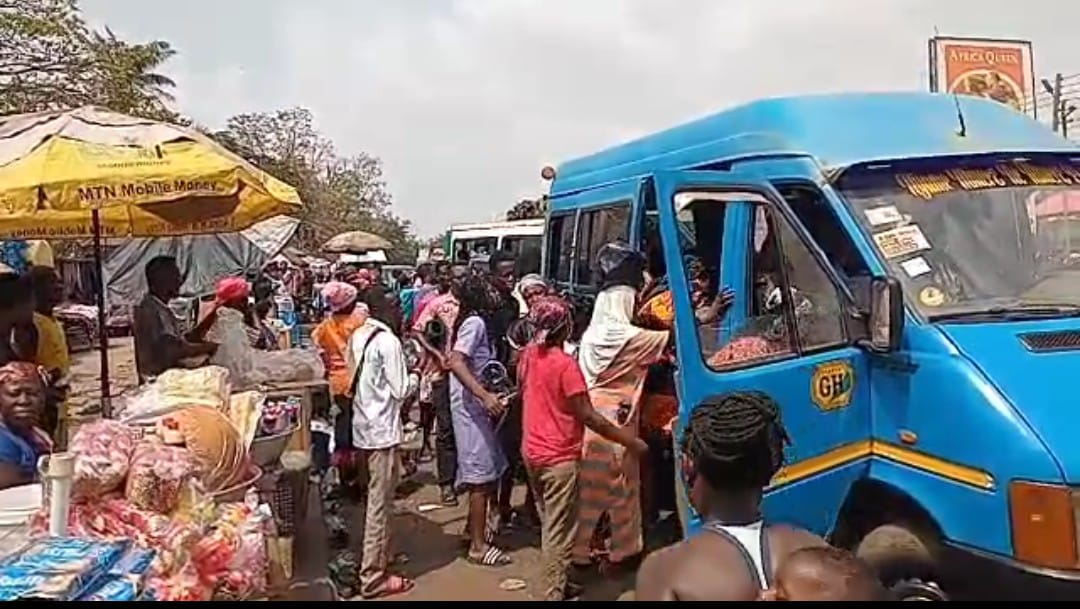
Across major transport hubs such as Kejetia, Asafo, Bantama, Krofrom, Adum, and others, commuters spend long hours in queues with no certainty of getting a bus or a taxi home.
Workers, students, and traders say they are forced to leave work earlier than usual or resort to expensive alternatives just to make to their respective destinations.

The situation has been attributed to shortage of operational buses within the city.
The city of Kumasi is currently battling a serious transportation crisis.
Passengers are stranded along major roads; at trotro stations.
In some instances, commuters are forced to walk long distances to and from work, while trotro drivers take advantage of the situation by overcharging helpless passengers.
Private commercial drivers, particularly trotros, have also been blamed for worsening the problem.
The Ashanti Regional branch of the Ghana Private Road Transport Union, has called on government and city authorities to strictly enforce laws regulating the operation of trotro vehicles across the region.
Speaking at a press conference, on Tuesday, January 20,2026, the Ashanti Regional Chairman of the union, Boakye Sumaila, revealed that there are currently about 24 transport unions operating in the Ashanti Region, a situation he noted is not replicated in other parts of the country.
He expressed concern that the activities of these multiple unions are negatively impacting the operations and credibility of the GPRTU.
According to him, many of these unions do not own any vehicles but operate through drivers who are not registered under any recognised union.
“Such drivers are largely responsible for the frequent inconveniences faced by passengers, including the charging of exorbitant fares and the extortion of money from commuters “, he stated.
He further explained that Kejetia, which was previously designated as a trotro terminal, has now become disorganised, with drivers loading passengers at unauthorized locations wherever space is available.
He stressed that these unregulated practices, mostly carried out by drivers unaffiliated with the GPRTU, undermine the integrity and reputation of the union.
He also accused some security agencies, including the police and officials of the Kumasi Metropolitan Assembly taskforce, of allegedly extorting money from drivers in exchange for allowing them to load passengers at unauthorized locations.
Chairman Sumaila commended the government’s efforts to reduce fuel prices and address other factors contributing to the charging of exorbitant transport fares. He assured the public that the GPRTU is prepared to adjust fares downward for passengers once these cost reductions are sustained.
Political interference also plays a role in the challenges confronting the transport sector.
He disclosed that the GPRTU will begin a comprehensive identification exercise for all its vehicles to enable the union to easily trace and sanction any member who violates transport regulations.
Meanwhile, some passengers who are dissatisfied with the current state of affairs have also voiced their concerns and expressed displeasure over the ongoing situation.
The commuters alleged that drives avoid official terminals during peak hours to operate freely on the roads, where they can charge higher fares.
This practice reduces the number of vehicles available at designated stations, leaving passengers stranded.
Urban growth and population increase have further intensified the challenge.
As Kumasi continues to expand, many residents now live far from their workplaces, increasing reliance on public transport. However, transport infrastructure and planning have not kept pace with this rapid expansion, exposing deep structural weaknesses in the system.
For many commuters, the impact is more than inconvenience. Some arrive home late at night, raising safety concerns, while others spend a significant portion of their daily income on transportation due to fare hikes caused by scarcity.
By Benjamin Aidoo