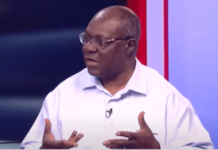

Development and Natural Resource Governance Consultant, Richard Kojo Ellimah, has cast doubt on the sincerity of the country’s so-called anti-corruption crusaders.
Speaking with ConnectNews on September 23, he argued that while outrage against corruption is genuine and widespread, the actions of some campaigners are often only “loud” but “selective” and at times driven more by self-interest than principle.
Corruption remains one of the most emotive issues facing public life. Successive governments have faced a restless citizenry demanding transparency through demonstrations, strike actions, and candlelight vigils. However, behind the noise, questions are now being raised about the integrity of those who lead the charge.
“Don’t be deceived,” Mr. Ellimah cautioned. “Carefully analyse the leaders and ask whether they are genuine or not. In most cases, you will discover a certain uncomfortable truth, which often will be a parochial interest.”
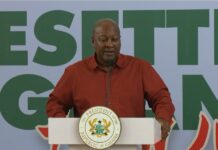
His critique comes on the heels of renewed demonstrations following the start of President John Dramani Mahama’s second administration. Protesters have taken to the streets over what they describe as an assault on free speech, the dismissal of public officials, and the unrelenting scourge of illegal mining.
But for Mr. Ellimah, there is a troubling pattern: “You will realise that out of these moments, some leaders emerge. Somehow, these leaders find themselves in top leadership positions when a new government is elected. These anti-corruption crusaders who get elected to office turn out worse, and are seen to be doing the opposite of what they led hundreds onto the streets for.”
According to him, the reality transcends this democratic era, as from the military juntas of the 1970s, crusaders have often risen to prominence on the back of activism only to fall short when handed political power.
He puts it forcefully: “We only shout corruption because we have not had the opportunity to be corrupt. We tend to shout corruption because perhaps we are being denied the chance to get close to the loot… Corruption is not only systemic but cyclical, surviving changes in government and thriving on the hypocrisy of those who condemn it in opposition only to indulge in it when in power.”
Recent Arrests
The consultant, a strong advocate of free speech, also condemned the arrest of individuals for making critical remarks about public officials. He insisted that unless their statements pose a clear national security risk, they should be dealt with through civil defamation laws, not criminal prosecution.
“If people insult public officials, how can that constitute a crime, for which they should be arrested?” he asked. “If you feel maligned, sue under our defamation law. The state has no business prosecuting people for their public commentary.”
Yet while defending freedom of expression, he was unsparing in his criticism of political parties. He accused them of enabling toxic political discourse by shielding their members when they cross the line.
“You can’t keep quiet when these activists run wild, insulting anybody who appears on their radar, and then turn round to ‘stand with them’ when they are arrested — even if illegally,” he said. “Political parties should help sanitise our airwaves by calling their unruly members who incite public hatred against their opponents to order. The raw insults listeners are served daily are only indicative of a dysfunctional democracy.”
The country’s anti-corruption struggle has long been undermined by grandstanding, powerful speeches, fiery protests, and yet little systemic change. Mr. Ellimah’s challenge is therefore twofold: for crusaders to examine their own sincerity, and for political parties to ensure their members live up to the standards they demand of others.