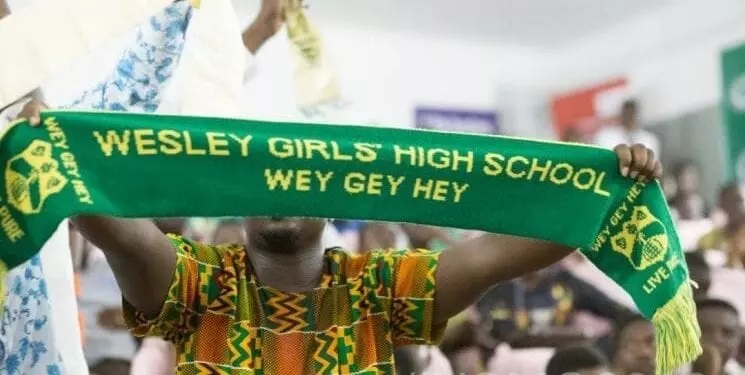

The Center for Public Opinion and Awareness (CenPOA) has noted the recent remarks by the Minister for Education, Hon. Haruna Iddrisu, concerning alleged “religious discrimination” in some mission schools, particularly Wesley Girls’ Senior High School.
While we appreciate the Minister’s concern for the rights of students, CenPOA believes that his comments overlook the historical foundations, purpose, and contributions of Ghana’s missionary schools, and risk creating unnecessary tension between the State and faith-based educational institutions.
Missionary schools have been the backbone of Ghana’s educational system since the pre-independence era. The Methodist, Catholic, Presbyterian, Anglican, and other church missions built these schools with their own resources, at a time when access to formal education was extremely limited.
Their mission was twofold; to provide quality academic instruction, and to nurture the moral, spiritual, and character development of children through the values of their Christian faith.
Over the decades, these schools flourished because of their discipline, academic excellence, and strong value systems. Seeing their impact, the Government of Ghana later partnered with these institutions to expand facilities, increase access, and enable more Ghanaian children—
regardless of religion or background—to benefit from the high standards of mission education.
Importantly, it was the churches themselves that opened their doors to students of all faiths. This act demonstrated inclusion, not discrimination.
However, for the State today to insist that mission schools must now adjust or dilute their founding religious identity by accommodating every religious practice on campus is not only historically inaccurate, but unfair to the missions whose sacrifices built these institutions.
Mission schools were never intended to be multi-faith arenas. Their ethos, routines, and daily life revolve around their Christian foundation. Expecting them to abandon or alter this identity because non-Christian students now attend undermines both their purpose and their heritage.
Students and parents who wish to enroll in schools fully aligned with their own religious practices have many public, non-mission schools available where diverse religious expressions can coexist freely.
CenPOA therefore believes that the Minister’s assertion that mission schools are violating human rights by maintaining their religious character is misleading and disregards the enormous contributions these churches have made—and continue to make—to Ghana’s education sector.
What is needed at this time is constructive dialogue, not a combative posture. Mission schools, government, parents, and stakeholders must work together to find pragmatic, mutually respectful solutions that protect both the constitutional rights of students, and the religious integrity of mission-founded schools.
CenPOA stands for fairness, balance, and respect for the institutions that shaped generations of Ghanaian leaders. We urge the Ministry of Education to engage in consultation rather than unilateral declarations, and to recognize that educational choice—including the choice of a
faith-based environment—is central to the holistic development of Ghana’s children.
By Michael Donyina Mensah
Executive Director od CenPOA