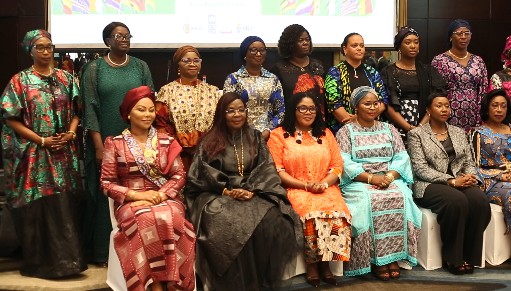

West African Ministers of State have convened in Accra for a landmark meeting to address the persistent underrepresentation of women and youth in leadership roles across the region.
The gathering, held from February 17–20, 2026, forms part of the ECOWAS 50th Anniversary Legacy Project, which is dedicated to advancing gender parity and inclusive governance.
Leaders cautioned that this exclusion is not merely a gap, but a dangerous democratic shortfall and a missed opportunity for transformative progress. They emphasized that without women and young people at the decision-making table, democracy in West Africa risks stagnation.
Efforts are ongoing to dismantle entrenched barriers and chart bold pathways where women and youth are not passive participants, but powerful leaders and decision-makers.
The consultation brought together gender experts, civil society organizations, development partners, and focal persons from ECOWAS’ Human Capital Development programme to assess the state of participation and propose reforms.

Speaking at the meeting, Sierra Leone’s Minister of Gender and Children’s Affairs, Dr. Isata Mahoi, stressed that no democracy can thrive when half of its citizens, mostly women, remain excluded.
“The voices of women and young people are indispensable to the future of our democracies. This imbalance undermines the very principles of equality, justice and sustainable development that ECOWAS stands for. This consultative meeting is therefore a call to action. It is an opportunity to examine the barriers, legal, cultural, economic and institutional, that hinder women and young people from fully engaging in politics,” she said.
Ghana’s Minister for Gender, Children and Social Protection, Dr. Agnes Naa Momo Lartey, underscored the urgency of moving beyond rhetoric.
“What we want to do is to move this meeting from talking to action. When you look at the continent, ECOWAS is no exception. You realise that most of the populations are youth and women. So if you plan and have activities without them, then you realise that you have gaps in terms of implementation of some of the conventions and things we have signed on at the regional and sub-regional level,” she noted.

Director of ECOWAS Centre for Gender Development, Sandra Oulate Fattoh, said the 2024 study shows that gender inequalities carried out by ECOWAS shows women held 18.4% of parliamentary seats while young people under 35 are very poorly represented in the assemblies.
“ECOWAS can no longer be satisfied with marginal progress. Women’s leadership contributes too little to the current gender index 5%, and this trend needs to be reversed through binding legislative measures.”
The Accra meeting is part of a four-day regional consultation (17–18 February technical sessions, followed by 19–20 February ministerial and high-level advocacy sessions). Its goal is to encourage member states to adopt legislative reforms by 2035 that guarantee women and youth active leadership roles.
As ECOWAS marks 50 years, leaders reaffirmed that the future of democracy depends on inclusivity. The roadmap is tied to Africa’s Vision 2063 and the UN Sustainable Development Goals, with the Legacy Project aiming for gender parity in elected bodies across West Africa between 2025 and 2035.
By Beatrice Sowah