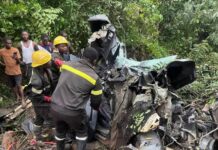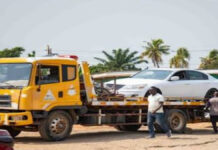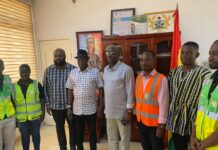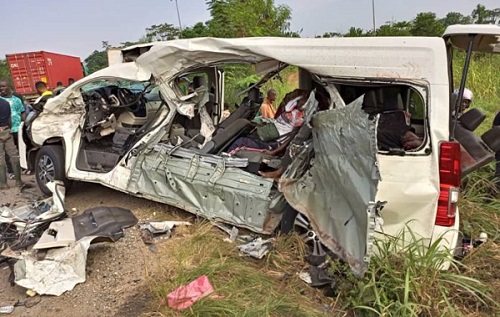

The National Road Safety Authority (NRSA) has raised alarm over a worsening public safety crisis, following a surge in road crash fatalities across the country.
Between January and June 2025, over 1,500 Ghanaians lost their lives in more than 7,000 reported road crashes.
Speaking at a press conference on Wednesday, July 23, officials revealed that road accidents are claiming an average of eight lives daily, with over 12,000 vehicles involved in collisions within the first half of the year.
The Ashanti Region currently tops the list for road crash incidents, followed closely by the Eastern and Greater Accra Regions.
Principal Planning Manager at the NRSA, Dennis Yeribu, shared key findings during the briefing: “These crashes are occurring nationwide, but the Ashanti, Eastern, and Greater Accra regions alone account for more than 60% of all cases and casualties.”
He added: “We record an average of eight deaths daily, sometimes even more. Of those who perish, eight out of ten are male, and a quarter are aged between 26 and 35. From January to June, 12,000 vehicles were involved in crashes, with 8,364 people injured, some permanently, and 1,504 deaths reported. Overall, 78% of casualties were male and 22% female.”
West African Regional Director of CUTS International, Appiah Kusi Adomako, expressed concern about inadequate funding for road safety initiatives.
“Road safety efforts are severely underfunded. We’re calling on the government to legislate the allocation of at least 2% of the Road Fund to NRSA activities, with timely disbursement to support effective planning and implementation.”
Adomako also urged the government to declare road traffic crashes a national public health emergency.
“The President and Parliament must recognize road traffic crashes as a national emergency, equivalent to pandemics and natural disasters. This will allow for better resource allocation, institutional coordination and heightened public awareness.”
As part of its advocacy campaign, the NRSA is appealing to District Assemblies to remove billboards positioned along road shoulders. These structures, they warn, compromise visibility and pose hazards to road users.
“Local authorities must ensure that billboards and advertisements do not obstruct driver visibility or distract road users. Dangerous or illegal signage must be taken down immediately with support of the police,” Adomako stressed.
He remarked, “travelling on our roads today requires prayer, fasting, and faith. You never know, you could become part of the next statistic.”