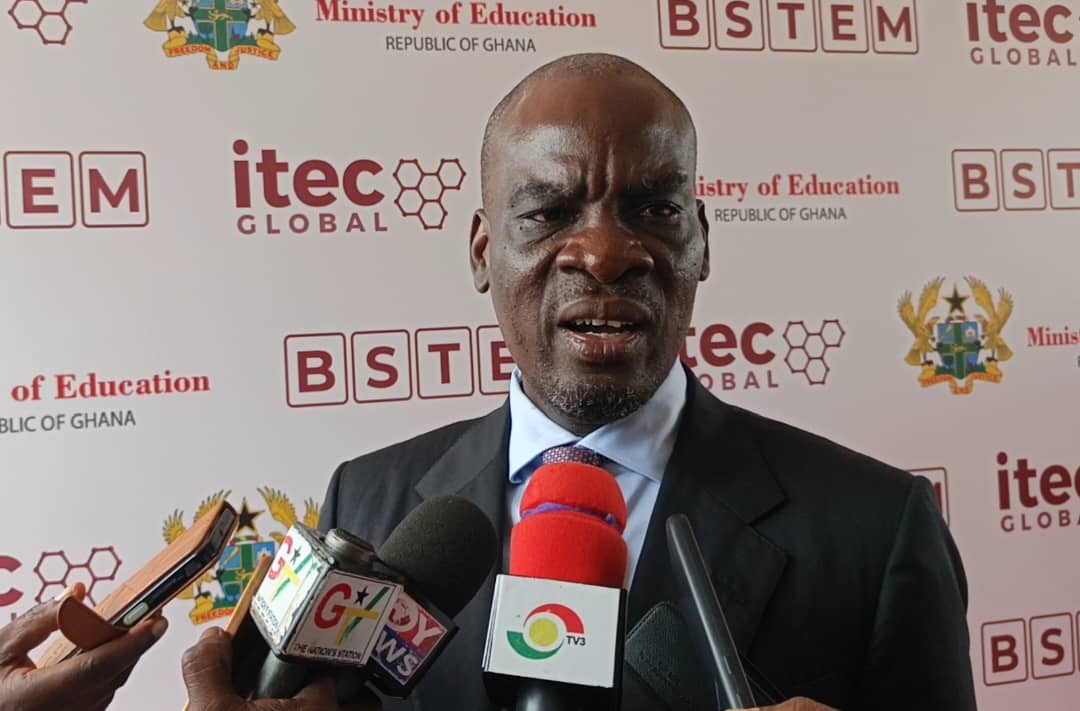

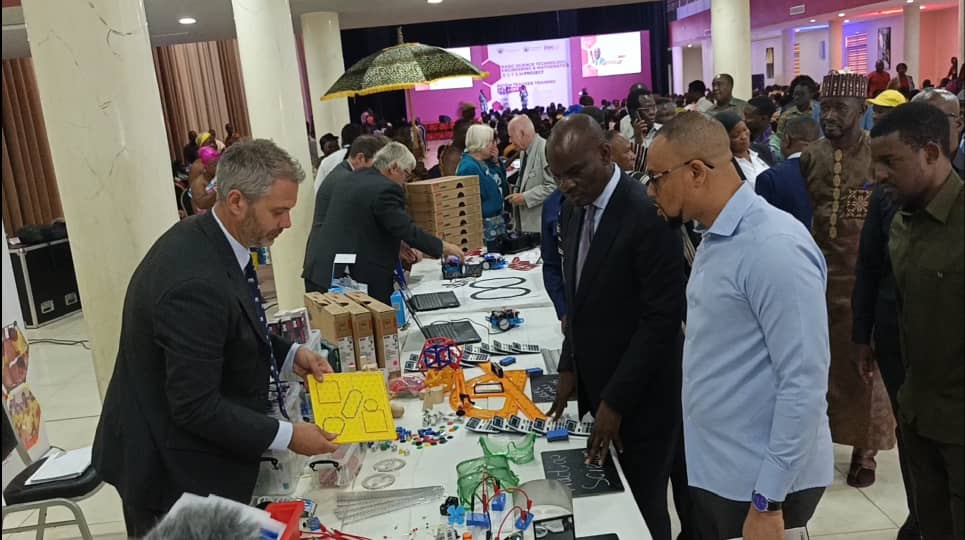
In a major move to strengthen science and technology education at the grassroots level, the Minister of Education on Monday, August 18, 2025, officially launched the revitalized Basic Science, Technology, Engineering, and Mathematics (BSTEM) training programme in Sunyani.
The event brought together educators, policymakers, and stakeholders committed to advancing STEM education in basic schools across the country.
Originally introduced during the tenure of former Education Minister Prof. Jane Naana Opoku-Agyemang (2012–2016), the BSTEM initiative was designed to address persistent challenges in teaching science and mathematics at the foundational level. The programme had seen years of dormancy—until now.
“This is not just a re-launch,” said the Honourable Minister. “It is a re-commitment to empowering our teachers and transforming the way we teach science and mathematics in our basic schools.”
The Minister emphasized the growing importance of STEM in shaping Ghana’s future economy.
“Emerging fields like AI, robotics, and renewable energy are reshaping the world,” he said. “To compete globally, we must nurture a generation of problem-solvers and innovators from the basic education level.”
With the BSTEM revival, the focus is shifting away from traditional rote learning methods towards more interactive, inquiry-based learning. The programme is aligned with current curriculum reforms and aims to make STEM education more engaging and practical.
“Teachers are at the heart of this transformation,” the Minister stressed.
“No curriculum can succeed without well-trained educators. That’s why we are investing in their professional development, equipping them with digital tools and creative strategies to make STEM accessible and exciting.”
He further highlighted the broader societal impact of STEM education:
“STEM is not just about labs and formulas—it’s about solving real-world challenges, from food security to sustainable energy.”
Under the partnership with Itec Global, the Ministry of Education and the Ghana Education Service plan to train 38,000 teachers nationwide. This large-scale training initiative is intended to improve classroom delivery and ensure the sustainability of BSTEM education.
The relaunch of the BSTEM programme signals a renewed national effort to inspire the next generation of scientists, engineers, and technologists—laying a strong foundation for Ghana’s resilience and competitiveness in a rapidly evolving global landscape.
Government will prioritise STEM education for upper primary pupils – Education Minister
By Claude Kumi Abisa