
During the recent media encounter, President John Mahama addressed a pointed question from Joy FM’s Morning Show host, Kojo Yankson, regarding the Gold Board (GoldBod) and its possible purchases from illegal miners.
The President’s response was both revealing and controversial. “If it is from illegal sources it is from illegal sources, so at least it is our land that is getting destroyed, so let’s get the benefit from it.”
I am paraphrasing, but still this statement highlights a deep contradiction at the heart of Ghana’s natural resource policies.
How can we, as a nation, openly concede that our rivers are poisoned, our forests degraded, and our soils rendered infertile, yet justify it on the grounds of revenue capture? It is as though the destruction of our environment has been normalized, so long as it brings in foreign exchange or plugs short-term fiscal holes.
What is most troubling and deeply dismaying is that this posture almost reflects a defeatist acceptance of environmental ruin.
Instead of designing policy to stop the bleeding, restore degraded lands, and invest in sustainable alternatives such as industrial hemp cultivation, we are effectively telling Ghanaians that the destruction of their land is an unavoidable cost of development.
This mindset undervalues the health of our people, the security of our water systems, and the long-term future of our agricultural base. It sends a dangerous message: that environmental devastation is tolerable so long as the government collects its share of the proceeds!
However, to his credit, the President also acknowledged that the GoldBod is developing mechanisms to track the origins of the gold it purchases in order to reduce, and eventually eliminate, the possibility of buying from illegal miners, which is commendable but this is still very much a work in progress. That acknowledgement shows the recognition for the need of reform.
Yet the fact that the system remains incomplete means that for now, a portion of revenue may still be coming from the very galamsey activities that poison our rivers and endanger our future.
Adding to that, President Mahama has proposed under his “Promote Responsible Mining” policy a program aimed particularly at small scale miners.
The policy instructs them to undertake training in land reclamation, adopt safer and more efficient extraction methods, and abide by environmental safeguards so that gold mining does not continue to degrade land and water beyond repair.
It is a promising plan, but as yet there is no clear published evidence that it has been fully rolled out on the ground; with many small-scale miners still operating under conditions that fail to meet those standards. This means that while the intentions are good, much of the damage continues, and ordinary Ghanaians are left bearing its cost.
On the other hand one pressing question arises; why is a licence to mine gold an activity that irreversibly damages Ghana’s lands and rivers a fraction of the cost of a licence to cultivate cannabis, particularly the one with low-THC notably called industrial hemp? Gold mining licences are historically cheap, designed decades ago under a frameworks that prioritized rapid extraction and export earnings.
By contrast, proposed cannabis licence fees especially for industrial hemp are prohibitively high, locking out indigenous farmers and cooperatives from a market that could generate comparable or greater revenues with far less environmental harm.
Much credit must go to the CEO of the GoldBod, Sammy Adu-Gyamfi who has so far delivered impressive results by generating huge revenue flows for the country.
For the first time, Ghana is capturing significant value from gold that would previously have slipped through private hands or been smuggled out entirely. This achievement deserves commendation.
But now that the revenue aspect is under control, it is imperative that his attention shifts decisively to the Responsible Mining agenda. The challenge before us is not just revenue capture; it is environmental rehabilitation.
This is where industrial hemp becomes indispensable. Across Ghana there are vast tracts of land where mining activity has ceased, yet the soils remain poisoned with mercury and cyanide, the rivers clogged with silt, and the forests stripped bare.
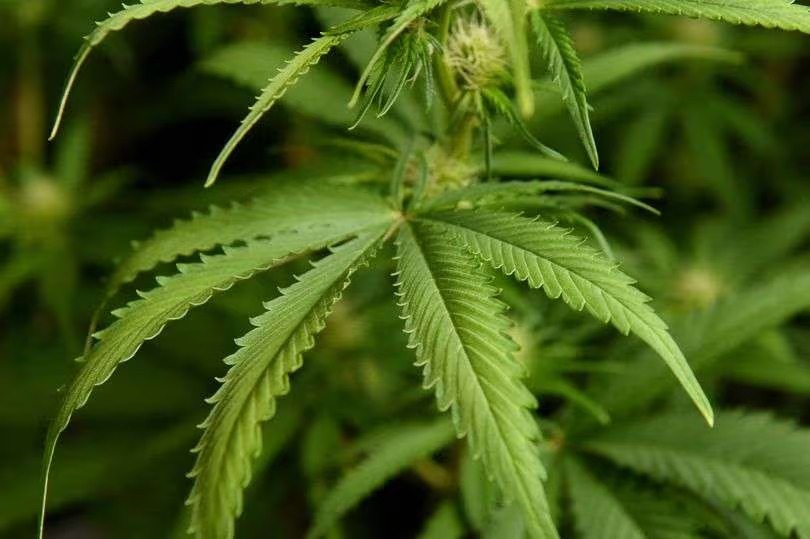
Hemp cultivation, with its proven phytoremediation properties, offers a way to restore fertility, cleanse contaminated water systems, and rebuild rural livelihoods.
And this discussion is particularly urgent because next month Parliament will approve the fees and charges that will officially launch Ghana’s cannabis industry. This should be a turning point but only if we get it right!
Unfortunately, the institutions tasked with shaping this future appear to be wearing blinkers and are oblivious to what I am going to say next and have been saying for many years. NACOC, which has been handed regulatory authority, has its entire focus on policing and punishing “illegal cultivation,” as if that is the only lens through which cannabis can be understood.
This enforcement mindset is then replicated across the other government institutions from the Forestry Commission to the Ministry of Interior, Ministry of Lands & Natural Resources, and the Ministry of Environment Science & Technology to the Ministry of Agriculture, who in particular has not said a dickie bird because they also fail to see that cannabis, and particularly industrial hemp, is not only a source of revenue but a strategic tool for land restoration and climate resilience.
If policymakers were thinking strategically, beyond revenue generation and enforcement and control they would be accelerating the conclusion of the Legislative Instrument and ensuring that the fees and charges are affordable for Ghanaians first and foremost, not inflated to extortionate levels.
That way, companies like Hempire Agric Ghana (HAG) could be contracted to clean up degraded mining lands and contaminated forest reserves, turning liabilities into long-term productive assets instead of getting the door slammed firmly in our face because they don’t like how we look or articlate such an important issue.
The national focus has narrowed to treating cannabis merely as a fiscal cash cow, a new stream of revenue without any imagination about how it can be utilised to solve the very ecological crisis caused by the extractive industries.
The recent seizure of what is believed to be cannabis hidden in the back of a private ambulance may give the impression that government institutions are working effectively. But the truth is that cultivation continues precisely because those same institutions have dragged their feet for years in finalizing the law on cannabis cultivation.
Not all of us live in luxury, driving four-wheel drives on free fuel and enjoying comfortable allowances. Many Ghanaians especially in the rural areas toil daily just to make ends meet. So when the opportunity finally arose to cultivate cannabis legally, (back in March 2020) it was welcomed across the country. Yet the delay in issuing licences has left farmers in limbo.
How can they simply stop cultivating and wait indefinitely? They too have families to feed, just as the illegal miners argue when they stand up boldly against the now-defunct Task Force, the Police, and even the Military.
It is unreasonable to expect ordinary citizens to fold their arms in poverty, without food, clothing, or shelter, while those in authority push paper around for five long years. Those in authority must begin to think about the livelihoods at stake, the wasted potential of delayed policies, and the pressing need to balance regulation with the realities of survival. Until the legal framework becomes an affordable reality and licences are issued the cultivation will continue because survival leaves people with no other choice just as in the case of the illegal miners.
Not only is Ghana not serious about land restoration, Ghana still does not recognise that HAG is the missing link! Industrial hemp cultivation can and should underpin a national reclamation strategy that integrates with Responsible Mining, delivers jobs, restores ecosystems, and still provides government with sustainable revenues.
Whilst HAG fully support the state’s desire to generate income from cannabis, it should not be through policies of financial exploitation. What Ghana needs is a licensing fees and charges framework that empowers its people not disenfranchises it whilst simultaneously reclaiming its lands, and ensures that future generations inherit a country healed rather than scarred!
This policy imbalance has wide-reaching consequences. While illegal mining contaminates rivers with mercury and cyanide, properly regulated cannabis cultivation can restore degraded soils, generate sustainable employment, and create diverse value chains in hemp-based textiles, construction materials, pharmaceuticals, bio-plastics, and carbon-negative energy solutions.
In other words, Ghana’s licensing framework rewards the destruction of land while punishing an industry capable of healing it! Why can’t they see the bigger picture?
The consequences of this imbalance are becoming unmanageable. This week, the Ghana Water Company Limited (GWCL) announced plans to increase water tariffs by an unprecedented 280%, citing the extreme costs of treating water sources contaminated by illegal mining.
GWCL’s engineers report alarming turbidity levels in major river systems, with heavy siltation, chemical pollution, and sludge accumulation driving up treatment costs exponentially.
Essential inputs like alum and lime are being consumed in unsustainable volumes, while equipment at water treatment facilities are rapidly deteriorating. GWCL warned that if the Public Utilities Regulatory Commission (PURC) rejects the proposed tariff hikes, water supply systems in several regions could collapse.
Entire communities risk losing access to clean, drinkable water because the government has failed to contain galamsey’s devastation.
President Mahama’s position that Ghana should at least “get the benefit” from gold extraction even if it involves illegal sources in the short term clashes with the reality on the ground.
The nation will be paying more, not less, for the costs of gold-driven destruction. Communities face water insecurity as treatment plants struggle to handle contamination. Public health risks are climbing as rivers turn toxic.
Farmlands are degraded and rendered infertile. The state now indirectly subsidizes environmental damage by keeping gold licences cheap while citizens bear rising treatment costs.
Meanwhile, industrial hemp and medical cannabis remain locked behind some of Africa’s highest proposed licence fees, despite their potential to remediate degraded lands and reduce dependence on environmentally destructive industries and dare I mention, help so many people within our communities wean themselves from depending on Opiods; the latest drug canker in town!
In my view, this dual posture; on the one hand conceding the damage but accepting its proceeds, and on the other hand promising eventual traceability, leaves Ghanaians in a state of limbo. It is not enough to promise reforms “in progress” while our lands are being destroyed in real time.
Leadership requires urgency, clarity, and the political will to choose restoration and sustainability over short-term revenue, no matter how tempting that revenue may be.
There may not be grounds for the President to declare a formal state of emergency today, but Hempire Agric Ghana (HAG) is declaring that there is, without question, a state of Hempmergency right now. Our rivers are poisoned, our forests degraded, our farms weakened, and yet the national conversation still struggles to see the bigger picture.
Whilst, political appointments are and have been made and people are being placed in high offices, how many of them are able to adopt a holistic view of the crisis at hand? Too often, our institutional leaders behave as if they are wearing blinkers, unable to connect the dots between environmental damage, public health, food security, and the potential of industrial hemp as part of the solution.
Worse still, our entire political system seems only able to think for two and a half years out of every four, caught up in electoral cycles rather than long-term planning. That is a crying shame.
And try as I might, securing an audience with the very people whose mandates touch directly on this crisis has proven almost impossible. The Minister of Interior, the Minister of Lands, the Minister of Agriculture, the Acting Minister of Environment, Science & Technology, and even the Forestry Commission.
These are the offices that should be listening most intently, yet they remain out of reach. At a time when urgent, cross-sector collaboration is needed, the doors that matter most are closed.
The irony is that the only figures who seem to outlast these short-sighted cycles are the Chief Directors career civil servants who, unlike the politically appointed heads, remain in office long enough to appreciate the long arc of national policy. Yet even they are constrained by a system that prioritises expedience over vision and to be honest they are fine with that as it does not affect them one bit because they will be there come hell or high water!
Anyway, enough said so finally if we are serious about saving our lands and waters, and about giving Ghanaians a fair chance at sustainable livelihoods, then the Hempmergency must be recognised and acted upon. Industrial hemp is not a side issue, nor merely a new revenue stream. It is a national survival strategy!
By Hempire Agric Ghana (HAG)