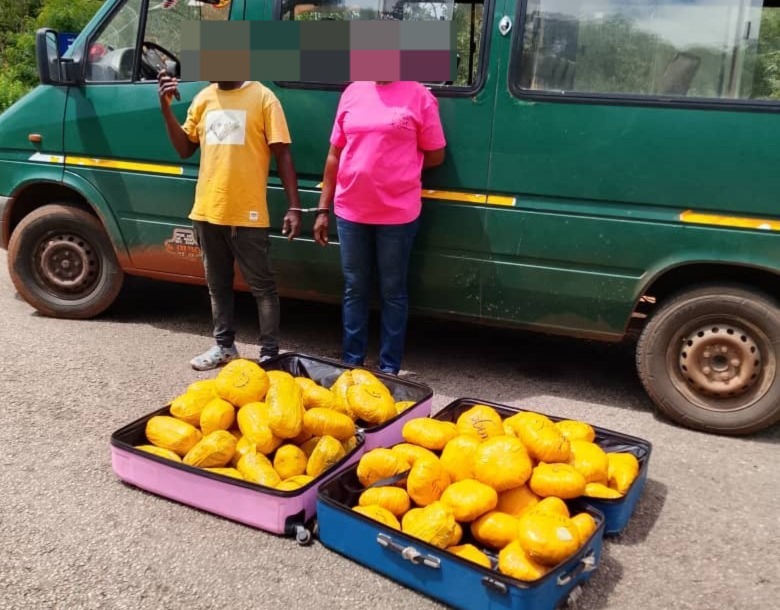

The Bole District Police Command has intercepted seventy-three (73) parcels of a substance suspected to be cannabis, popularly known as Indian hemp, during a routine highway operation along the Banda Nkwanta–Teslima road in the Savannah Region.
The suspected narcotics were discovered in a Techiman-to-Wa bound commercial vehicle bearing registration number AS 4874-25, which was stopped at a police checkpoint for inspection.
Police officers reportedly became suspicious after inconsistencies emerged regarding the contents of luggage loaded onto the vehicle, prompting a thorough search.
The search led to the recovery of 73 parcels of the suspected cannabis concealed in bags. Consequently, the driver of the vehicle and a woman believed to be in her early forties, who allegedly claimed ownership of the consignment, were taken into custody to assist with investigations.
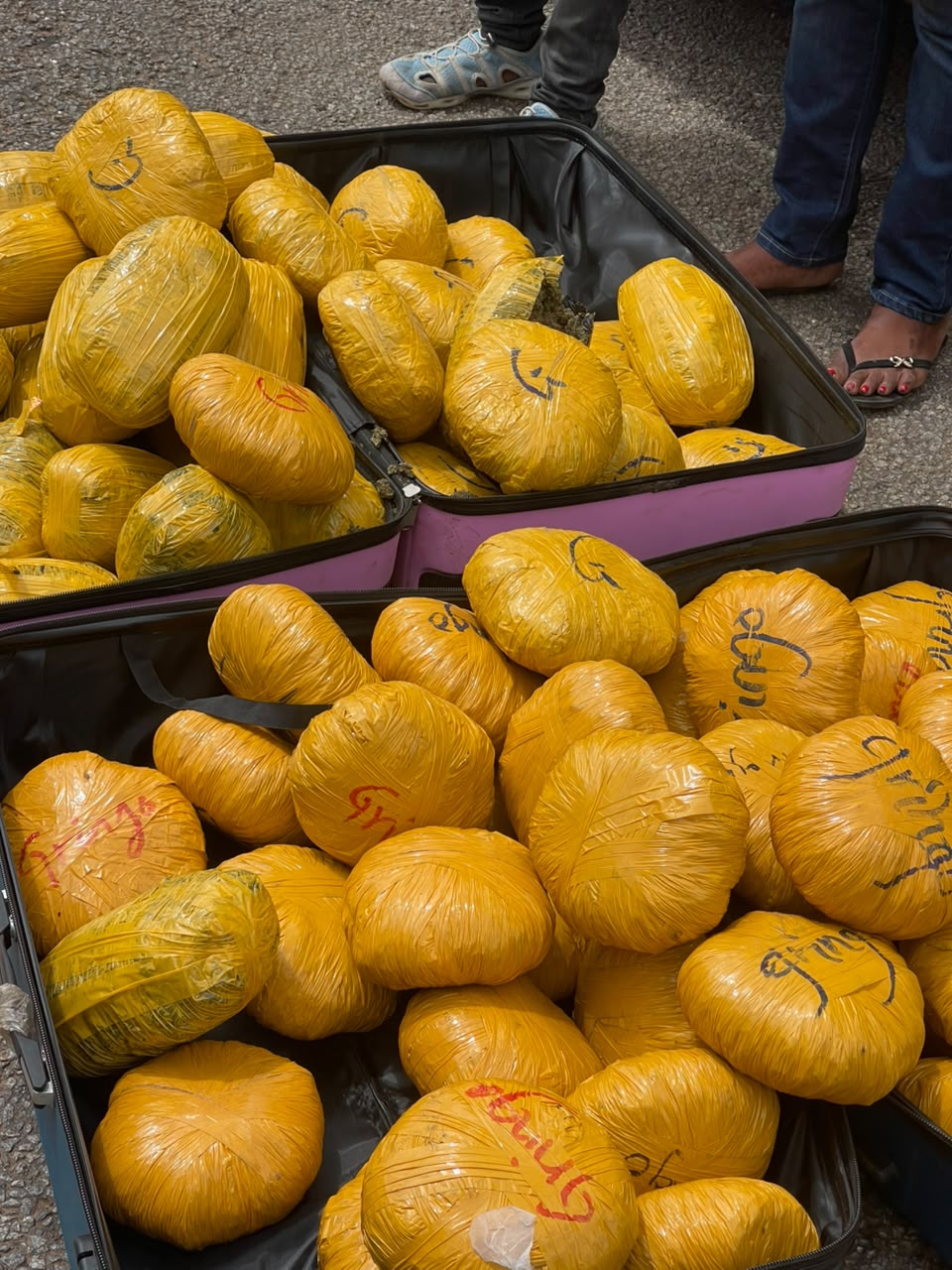
According to sources familiar with the investigation, the female suspect allegedly admitted responsibility for transporting the suspected narcotic substance to Sengye, a community near Bole. The destination is alleged to have been linked to illegal mining activities, although investigators are yet to establish the intended purpose of the consignment.
The sources further indicated that the suspects allegedly attempted to induce the police officers with an amount of GH¢300,000 to facilitate their release.
The officers reportedly declined the alleged offer and proceeded with the arrest in accordance with established police procedures.
The two suspects remain in police custody while investigations continue. The suspected substance is expected to undergo forensic analysis to confirm its composition before any formal charges are preferred.
The seizure comes at a time when security agencies have intensified efforts to clamp down on the trafficking and distribution of illicit drugs across the country.
Under Ghana’s Narcotics Control Commission Act, 2020 (Act 1019), the unauthorized cultivation, possession, transportation, trafficking, importation, exportation, sale, and distribution of narcotic drugs, including cannabis, constitute serious criminal offences.
Convictions for drug trafficking-related offences attract severe sanctions, including substantial terms of imprisonment, while any attempt to obstruct law enforcement officers in the execution of their lawful duties—including the offering of bribes—also constitutes a criminal offence under Ghanaian law.
Investigations into the matter are ongoing, and the suspects are expected to be arraigned before court upon their completion.
By Christopher Amoako