
A coalition of NGOs, civil society groups, and youth organizations is urging the Ghanaian government to prioritize renewable energy in the national energy policy.
They believe this would ensure secure livelihoods, environmental protection, and a resilient future for generations.
The groups have petitioned the Minister of State for Climate Change and Innovation, pushing for a sustainable, equitable, and thriving energy future.
Communities are already feeling the brunt of the climate crisis, facing unpredictable weather that impacts agriculture and rising sea levels that threaten coastal homes.

Energy inequality remains a challenge, with many lacking accesses to reliable and affordable electricity. Meanwhile, environmental damage from fossil fuel expansion and illegal mining continues to harm the country.
Despite Ghana’s vast potential for solar and wind power, only a small portion of these renewable resources has been tapped. Ghana’s ongoing reliance on fossil fuels, including the proposed expansion of the gas plant, risks entrenching climate vulnerability, environmental harm, and economic instability.
The 350 Ghana Renewable Energy for Communities Coalition is demanding a shift towards a sustainable future, citing concerns over environmental degradation, public health, and the well-being of future generations.

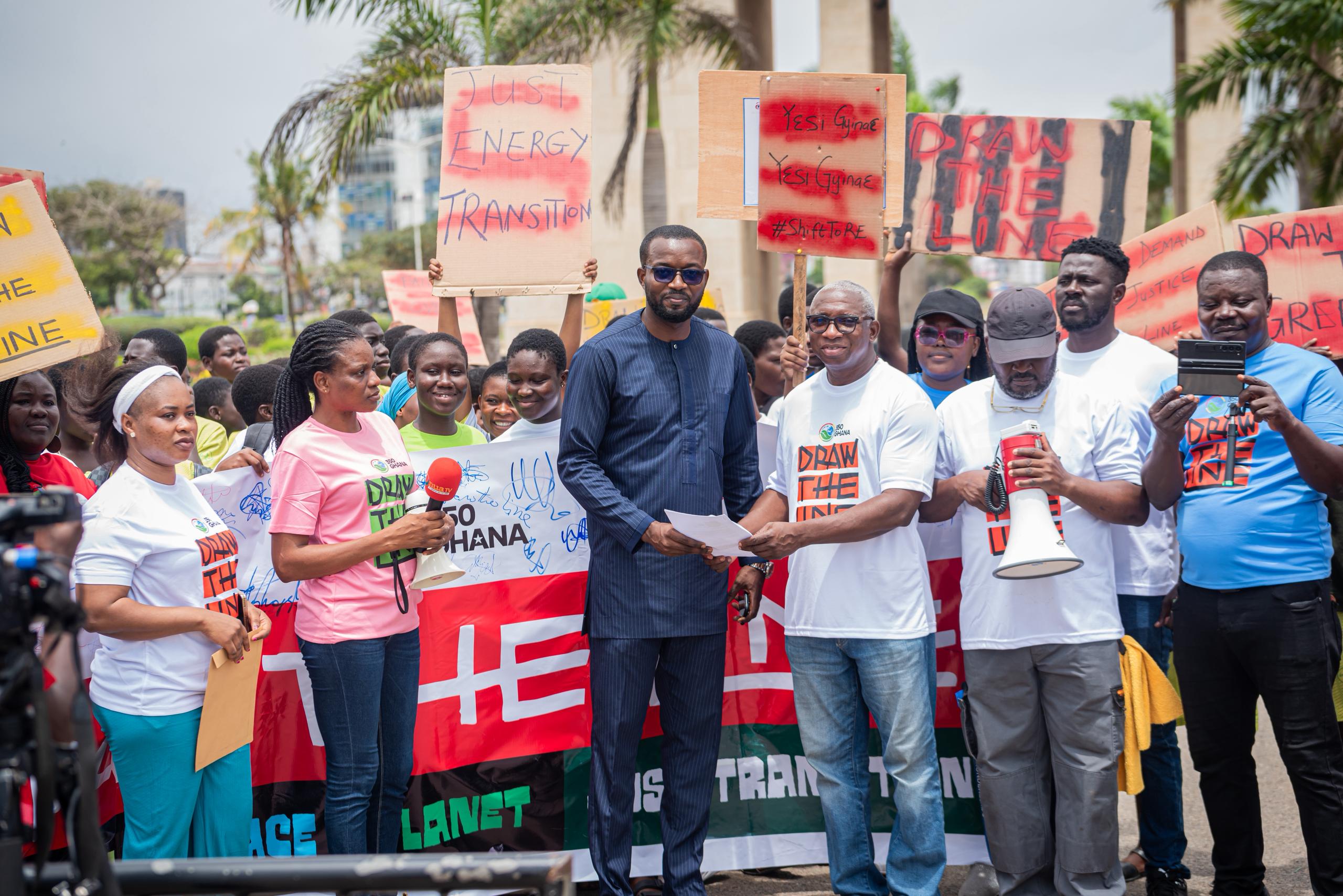
Through the “Draw the Line” March, citizens, youth, faith leaders, and civil society groups have presented a petition to the Minister of State for Climate Change and Innovation, calling for a more equitable and sustainable energy path.
Under the theme “Just Transition – for Life, for People, and for the Planet,” the group marched from Children’s Park to Independence Square to deliver a petition calling for a sustainable, equitable, and prosperous energy future for all Ghanaians.
The petition represents the collective voice of youth, faith leaders, civil society, and frontline communities concerned about Ghana’s energy direction. They are urging the government to prioritize and massively invest in renewable energy.
Convener of the Ghana Renewable Energy for Communities Coalition, Portia Adu-Mensah, is pushing the government to show greater commitment to achieving the 10% renewable energy target by 2030.
She emphasized the need for a significant shift in public funding and policy, phasing out support for new fossil fuel projects and redirecting investments towards scaling up Ghana’s renewable energy sector.
This includes promoting decentralized, community-based renewable energy solutions that empower local economies, create green jobs, and provide clean power to communities in need.
She demanded a fair, transparent, and inclusive process for developing the national energy transition agenda, prioritizing frontline communities’ needs, protecting workers’ rights, and ensuring equitable benefits for all Ghanaians.