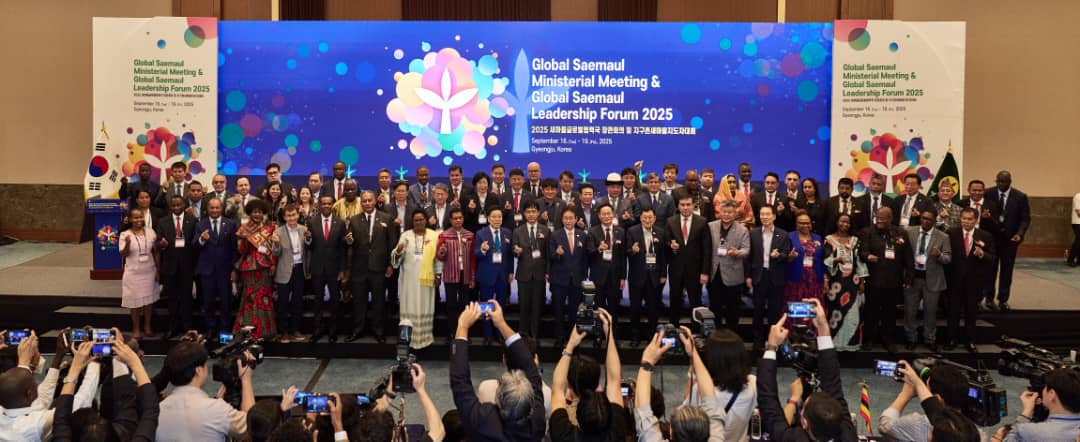

Ghana has reaffirmed its commitment to community-led development and decentralization reforms at the 2nd Global Saemaul Undong Ministerial Meeting in Gyeongju, Republic of Korea.
The meeting brought together ministers, diplomats, and development leaders to discuss sustainable community-driven development.
Ghana’s Ministry of Local Government, Chieftaincy, and Religious Affairs has implemented several initiatives to promote community-led development, including:
– Community Ownership: Citizens participate in local planning and budgeting to ensure programs reflect local priorities.
– Leadership Training: Training for assembly members, political functionaries, youth leaders, and volunteers inspired by Korea’s leadership academies.
– Infrastructure and Livelihoods: Initiatives like the Ghana Productive Safety-Net Project II and the Gulf of Guinea Northern Regions Social Cohesion Project deliver essential infrastructure and support livelihoods for over 48,000 individuals.
– Accountability and Innovation: Mechanisms like the District Assemblies Common Fund – Responsiveness Factor Grant and the Digital Development Data Platform strengthen transparency and monitoring across 261 local government areas.

Partnership with Korea
Ghana has strengthened its cooperation with the Republic of Korea, particularly with institutions like the Korea Environmental Industry and Technology Institute (KEITI). Recent bilateral discussions focused on sustainable waste management, circular economy practices, and urban resilience.

The Global Saemaul Ministerial Meeting, marking the 55th anniversary of the Saemaul Undong movement, reaffirmed the movement’s value as a model for sustainable community-driven development.

Ghana will continue to build on its partnership with Korea and share experiences with other African nations through South-South and Triangular Cooperation.

Mr Ibrahim emphasized that empowering communities is key to Ghana’s development agenda. “When people are empowered, communities become resilient, and nations prosper,” he said. “The Saemaul spirit is not only about infrastructure, but also about mindset transformation and the renewal of communal pride.”