
Some parents in the Western Region are preventing their wards from taking the Human Papillomavirus (HPV) vaccines.
They have thus instructed Heads of Schools to exclude their wards from taking the vaccines.
On Tuesday 7 October 2025, the Western Region Directorate of the Ghana Health Service undertook a mass registration exercise in all basic schools to identify eligible recipients of the HPV vaccine.
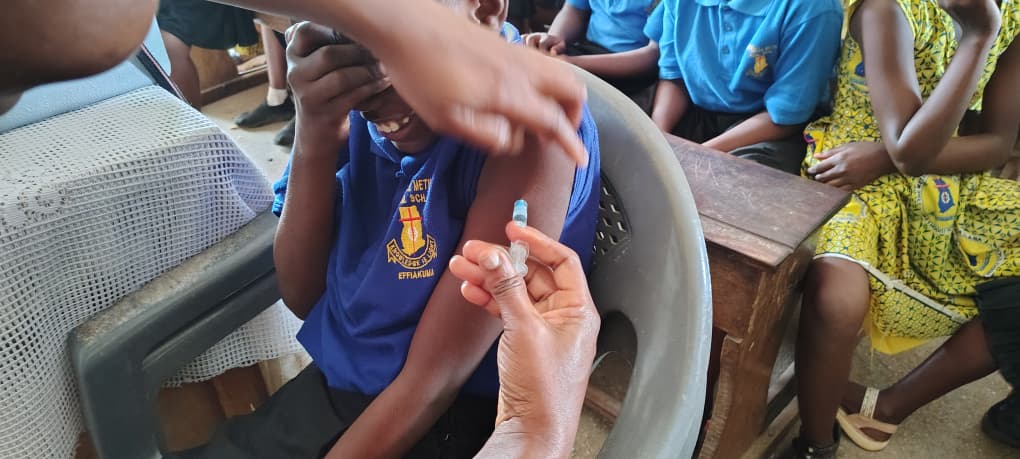
As planned, the vaccine was expected to be administered to eligible recipients from Wednesday 8 October 2025 and ending Sunday 12 October 2025.
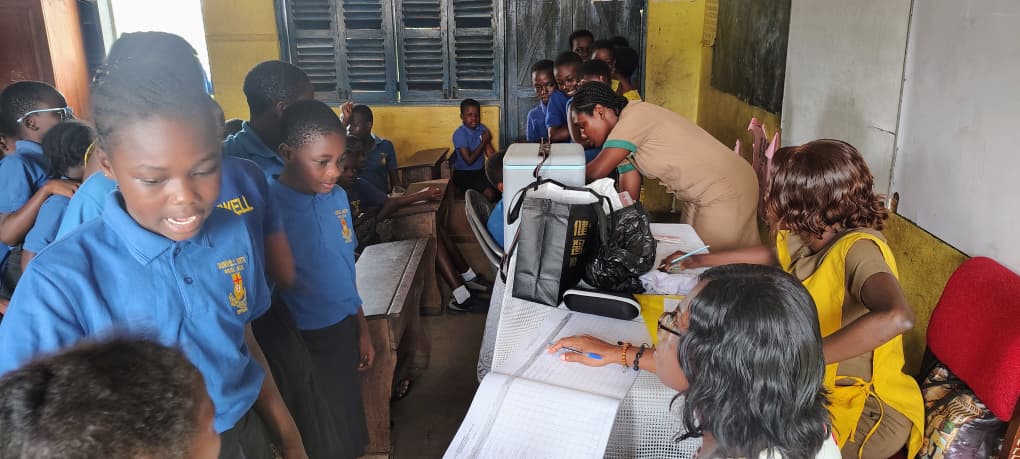
However, a tour of some schools in the Sekondi Takoradi metropolis and the Effia Kwesimintsim municipality, revealed that many parents were apprehensive about getting their wards vaccinated.
The fear stemmed from what they described as unpleasant experiences from the COVID 19 vaccination. This fear, if not managed properly, could be detrimental to the success of the entire vaccination campaign.
The HPV vaccine is being introduced into Ghana’s routine immunization to protect girls aged 9-14 years against cervical cancer. A single dose administered offers protection for life.
Specific Cases
At the Archbishop Porter Basic School in the Effia Kwesimintsim Municipality, parents had been called to officially consent to having the vaccine administered to their wards.
Relatedly, notices had been served on some heads of schools in the municipality to attend consultative meetings on Thursday 9 October 2025. The Parents Association of these schools were also required to partake in that meeting.
Meanwhile, the Western Regional Coordinator of the Expanded Immunization Program, Nicholas Asare Adomako is hopeful their target of vaccinating a total of 148,320 girls aged 9 to 14 years would be achieved.

He indicates 96 and 161 teams have been deployed for urban and rural targeted populations respectively, with each team having a daily target of 300 girls.
He adds that there will be a mop up exercise after the main vaccination exercise is completed to enable the Ghana Health Service adequately cover as many girls as possible in the region.