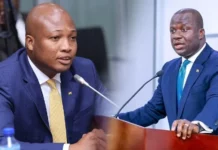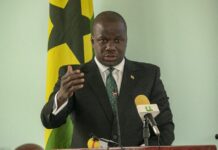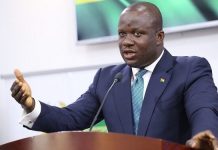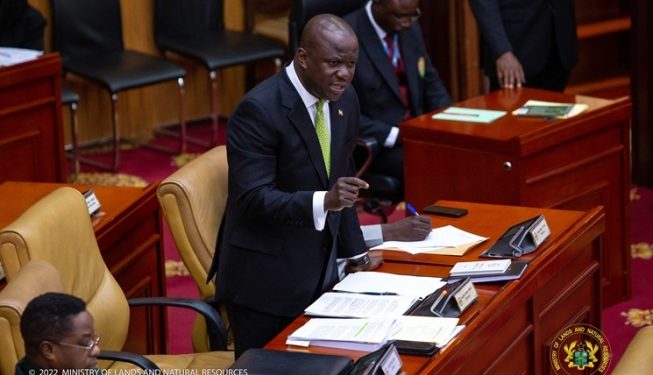

The Member of Parliament for Damongo, Samuel Abdulai Jinapor, has accused the government of failing to deliver on its flagship campaign promises and presiding over what he describes as a “disconnect between positive data and harsh living conditions.”
Debating on the 2026 Budget Statement in Parliament on Wednesday, November 19, 2025, the Damango MP stated that Ghanaians were yet to see any meaningful impact from the government’s commitments, despite the high expectations that accompanied its electoral victory.
He was of the view that promises to reduce the cost of living, ease the burden of doing business, and create “hundreds of thousands of jobs” have not materialised almost a year into the government’s term.
He expressed doubt over 24-hour economy rollout.
His major point of concern was the government’s claim that its 24-hour economy initiative was fully underway.
He stated there was no evidence of the three-shift system as touted in the ruling party’s 2024 manifesto.
“Where is the 1:3:3 formula? Even the Ministry of Finance closes at 5 p.m.,” Mr. Jinapor said, interrogating how a “round-the-clock economic model” could work when public institutions themselves were struggling with basic operational capacity.
He observed that the pledge to expand one job into three shifts for three different people had stalled, and in some cases contrasted sharply with reports that workers in key sectors such as nursing and teaching were allegedly working without pay. “Good numbers, bad reality”
In his opinion, while the 2026 Budget highlights improved macroeconomic indicators — including reduced expenditure and lower inflation — he stated that these gains were not being felt by the average Ghanaian.
In his view, government spending in the first three quarters fell 15% below target, a situation he described as “under-spending disguised as discipline.”
He said that the spending shortfall was constricting business activity, weakening access to credit, and leaving several sectors — including contractors and farmers — cash-strapped. “There is no trickle-down effect,” he cautioned.
Touching on reports of over one million metric tons of paddy rice going bad in storage due to weakened purchasing power and absence of buyers, he stated that the real sector was showing “alarming signs of distress.”
Mr. Jinapor further slammed what he described as the government’s growing appetite for appointments. He mentioned the recent addition of new presidential staffers, envoys, and 18 deputy heads of mission — appointments he stated were unprecedented and costly.
As a result, he noted, the budgetary allocation for compensation at the Office of the President had ballooned by nearly 50%, from GH¢326 million in 2024 to GH¢540 million in 2025. He referenced warnings from the Bank of Ghana about rising compensation costs and their potential fiscal risks.
He also expressed concerns about the government’s US$1.2 billion allocation for military aircraft and a new naval vessel at a time when, he said, “traders, farmers, nurses and teachers are suffering.”
He said, the economy is under serious stress from delayed payments, weak credit flows and unfulfilled job creation promises — all of which have eroded public confidence.
He appealed to the Finance Minister and the Bank of Ghana to inject liquidity into productive sectors to revive demand and support growth.
“The budget will only achieve its purpose if spending becomes timely, strategic and targeted.
Gov’t to build 24-Hour Markets in all 261 Districts – Local Government Minister
By Benjamin Aidoo