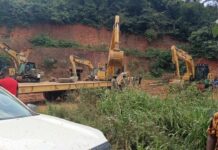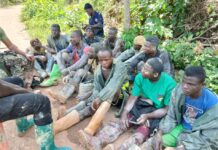

Pan Africanist, Legal Practitioner and Governance Expert, Prof Patrick Loch Otieno (PLO) Lumumba has cautioned young men who desire to be rich quickly and therefore are engaged in illegal small-scale mining (Galamsey) to desist from their action.
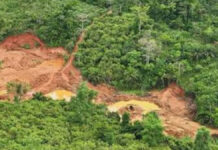
He reminded the illegal miners that the desire to make quick money through galamsey ends up destroying the environment and the food chain.
Prof Lumumba said this when speaking during a virtual environmental conference organised by the Institute of Governance Ethics and Religion, IGER-AFRICA Friday, December 5. The conference was held under the theme: ‘Navigating the Challenges of Illegal Mining in Ghana: Impact on Individuals, Communities, Health and Policy.’
IGER-AFRICA promotes ethical leadership, good governance, and interfaith dialogue to foster peace, prosperity, and social justice across Africa.
He said, “People are abandoning employment to go into a place where they will make money, It reminded me of a saying which I heard as a young boy that the fly that follows the corpse to the grave is buried with the corpse and the extent to which we are that very fly, if we are not very careful in our quest to make quick money we destroy our soil, we destroy the food chain; ultimately, everybody suffers. The time, therefore, is now for us to do the right thing.”
He added I do not want to belabour the issue. I think one of the speakers made the statement that summarizes the way forward, from crisis to renewal. We know what is wrong, we must move from crisis to renewal, and the government, which campaigned on the platform of addressing this problem, must be reminded that this is a problem that really requires to be dealt with as an emergency case.
“We must also remember that one of the greatest mistakes is to judge policies and laws, and programmes by their intentions. We must judge laws, policies and programmes on implementation and results. If we do so, then we will be talking about things that are measurable, things that change people’s lives and shape the continent of Africa in a manner that is necessary and sustainable.”
Also speaking at the forum, Dr Charles Sagoe-Moses, former World Health Organisation (WHO) Representative to Tanzania and Namibia and a fellow of the Frimpong-Manso Institute, warned that Ghana is edging towards a public health disaster driven by illegal mining — one he said is entirely preventable.
“We have scientific evidence that mercury used in gold processing contaminates air, soil and water,” he said, adding that WHO data show mercury levels in artisanal gold mining areas can be up to 50 times higher than safe limits.
He disclosed that in some Ghanaian mining communities, mercury contamination of water bodies is between 20 and 30 times above WHO thresholds.
Explaining the human health implications, Dr Sagoe-Moses said mercury exposure causes memory loss, tremors, kidney failure, severe fatigue and muscle weakness, as well as developmental delays and permanent neurological damage in children.
He noted that prolonged exposure to heavy metals such as mercury and arsenic leads to chronic kidney disease, hypertension and kidney failure, even among young adults.
“The tragedy becomes generational,” he added. “Mercury crosses the placenta during pregnancy and contaminates breast milk, resulting in reduced brain development in babies, increased risk of cerebral palsy, learning difficulties and poor academic performance.”