
Parliament’s Trade Committee has pledged triggering procedures towards enacting strict legislation to halt the export of raw cup lumps in a bid to protect indigenous rubber processors.
The Committee says the move has become necessary as processors continue to suffer severe raw material shortages, putting hundreds of jobs at risk.
GREL, Ghana’s leading rubber producer, is reeling from the menace of raw export of cup lumps warning of more job losses in 2026 if the uncontrolled export of raw cup lumps is not stopped.
The company, designed to process 178,000 tonnes of dry rubber annually, has seen its operational capacity drop from 69% in 2023 to 41% in 2024, and declined to 36% this year. Projections indicate a further decline to 33% by 2026 if the export of raw cup lumps persists.

The shortage has already forced GREL to suspend its three-shift production system, affecting productivity and livelihoods. According to Perry Acheampong, Secretary of the Association of Natural Rubber Actors of Ghana (ANRAG), some displaced workers have turned to illegal mining to survive
“Between January 2025 to the end of October 2025 the work force for processing factories alone in Ghana reduced by 25% and we are in areas where we have illegal mining when they are out of job they resort to illegal mining. ”
“So, we are fighting illegal mining with one hand as we promote illegal mining with the other hand when we keep exporting the cup lumps,” he said.
In a bid to resolve the situation, Government is proposing a ban on raw rubber exports under the Feed the Industry Programme.
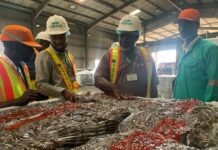
To support this policy, the Parliamentary Select Committee on Trade, Industry and Tourism visited GREL to assess the crisis firsthand.

Committee Chairman Alexander Roosevelt Hottordze described the current rubber value chain as harmful to Ghana’s economic interest and called for urgent reforms.
“The wanton exportation of raw rubber is having a negative impact on the country as it is depriving the country of the much-needed forex and it is also creating the opportunity for some middlemen to be exploiting farmers and this must be stopped,” the MP said.
He reiterated the Committee’s commitment to fast-tracking legislation to stop raw cup-lump exports and protect local processors.
“As a committee, we will collaborate with sister ministries to get the Legislative Instrument to stop the export of cup lumps and fight for the progress of the industry by putting certain interventions in place which will inure to the benefit of the company,” he said.
“For the rubber processes the ban on raw export of cup lumps should be done as soon as possible as per their projection the nation stands losing GHC276,002,243,128 cedis in taxes in the next 6 years should the situation persist,” he added.
By Stephen Cudjoe