
Imagine stepping into a stream, knowing crocodiles glide beneath the surface. For the people of Egyambra in the Ahanta West Municipality of the Western Region, this is an act of sacred faith, not folly.
A generations-old bond with the water overrides primal danger.
Why do they trust so completely? What beliefs allow both young and old to swim alongside one of nature’s most formidable predators?
In this special report, Ebenezer Atiemo visits this unique community to uncover the traditions that make such coexistence possible.

Just 30 kilometers from Mile 32, the coastal community of Egyambra thrives on fishing and farming, home to roughly 5,000 residents.
Beyond its daily rhythms, the community guards a remarkable secret a unique cultural and tourism site, where history, spirituality, and nature converge, still waiting to be discovered.
As narrated by the Chief, Nana Farbin Amantwe V, their ancestors’ story tells of a pivotal moment during their migration, a crocodile was their guide and helper, enabling them to cross the stream safely.
“This was no ordinary stream. Our history tells us a crocodile aided our ancestors in crossing it to found this settlement. It subsequently served as their guardian and sacred oracle, a being they consulted for guidance and protection.” He stated.

Echoing the history Abusua Payin of the community Bright Nyamekye Yalley, begins with the migration.

The sacred importance of this stream, he explains, was revealed over five centuries ago.
A prophet of the Harrison Divine Church, traveling from Monrovia, visited the site and blessed it, unlocking a spiritual significance that defined the community’s destiny and cemented their home.
“Our forefathers traveled from Assin Nyankomase in the Central Region and settled here. They came upon this stream, but its importance remained unknown until a prophet of the Harrison Divine Church, who was traveling from Monrovia, visited the site and disclosed its true significance to them.” He mentioned.
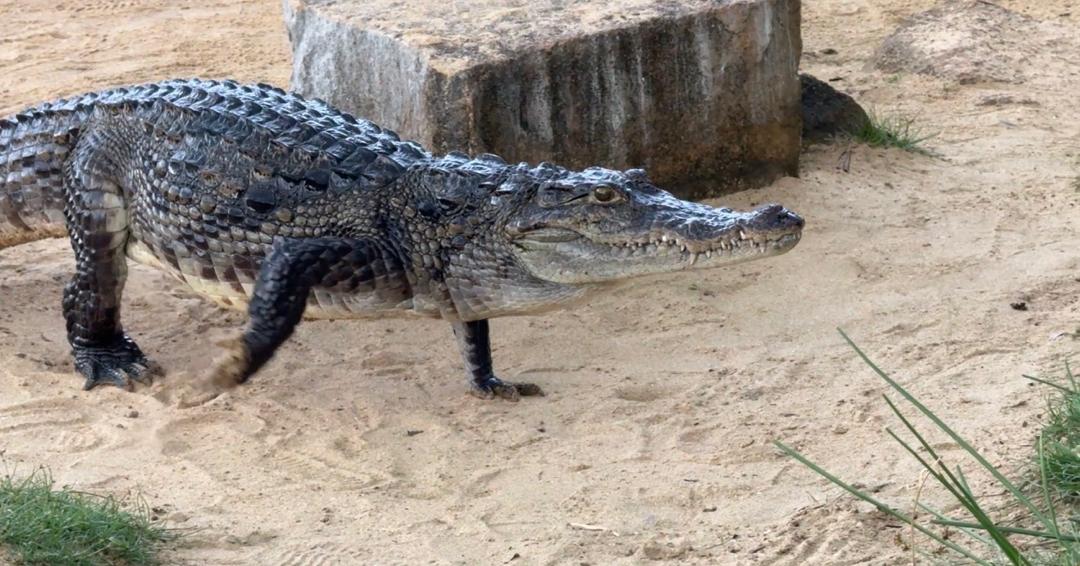
The stream is home to crocodiles, yet they exhibit an atypical relationship with the human community. Contrary to the well-known dangers these reptiles pose, they are reported to live in a state of non-aggressive coexistence with the residents of Egyambra.

This allows for the extraordinary sight of both children and adults swimming in the stream, fully cognizant of the crocodiles nearby, a phenomenon that underscores the site’s unique cultural and spiritual character.
“This stream protects the children. When they swim, the crocodiles bypass them without causing harm. If a child faces any danger, the stream warns them.
It has never been recorded that these crocodiles have attacked anyone here; otherwise, no one would dare to swim in this water.”
This spiritual bond is further evidenced by a unique ritual. According to Nana Farbin Amantwe V, the crocodiles can be summoned by the community three times a week: on Wednesdays, Fridays, and Sundays while wearing special traditional attire

“If someone wishes to visit on a Friday and there is a scheduled funeral, the visit will be postponed until Sunday. This is because black attire is not permitted. For this reason, the priest wears white, and visitors may wear any attire, provided it is not black”. He added.
To witness this unique interaction, our news team visited the Egyambra community at 7:00 AM on Friday after fasting a day before. The chief priest, a direct relative to the stool, and his mentee, both dressed in white ceremonial attire, performed the necessary rituals.
They then positioned themselves behind the stream to begin the incantations that call to the crocodiles.
After ten to fifteen minutes of continuous incantation, the crocodiles began to stir. The chief and the priest then spoke directly to them, first stating their needs.

Following this, any community member with a request could step forward and present it.
The ritual concluded with the priest providing a fowl as an offering to seal the prayers.
The community also believes the sand disturbed by the crocodile’s steps whie returning to the water holds potent medicinal power, to heal infertility, spiritual problems, and other serious diseases.
Nana Kaku Amiyah, is the Nzema Mbrante Hene.

“When the crocodile appears and returns to the water during the ritual, its path becomes sacred. The sand and a specific leaf from this trail are combined into a powerful remedy for infertility and spiritual problems.”
Now, the community wants the Ghana Tourism Authority: to adopt their sacred crocodile shrine as a tourism destination.
Farbin Amantwe V said, “We are appealing to the Ghana Tourism Authority, on behalf of our community, to adopt our sacred crocodile shrine as a certified tourism site to help drive economic development here.”
But could designating it a tourist destination dilute the very traditions and cultural integrity the community seeks to preserve?
“We will not compromise our cultural traditions. Should the shrine become a tourist attraction, we are prepared, as we already observe specific days for our rituals.
The primary task will be collaborating with the Tourism Authority to design a strategy that benefits both the community and the tourism sector.”
By Ebenezer Atiemo