
A cloud of controversy has emerged over the disbursement of funds under the Bloomberg Philanthropies supported Youth Climate Action Fund in the Sekondi-Takoradi Metropolis of the Western Region, with the Member of Parliament for Sekondi, Blay Nyameke Armah, accusing some assembly members of pocketing money meant for youth-led climate change projects.
The disputed funds form part of a $100,000 second-round grant awarded to the Sekondi-Takoradi Metropolitan Assembly (STMA) by Bloomberg Philanthropies to support climate action initiatives spearheaded by young people.
The money was intended to finance approved projects addressing environmental challenges such as flooding, coastal, erosion, and urban heat within the metropolis.
However, the MP alleges that the funds, instead of reaching qualified youth groups, were paid directly to assembly members.
“When I heard Bloomberg had provided such funds at the assembly, I informed some youth groups in my constituency to apply. Some of these groups, after their proposals were presented, had approvals from the assembly and they were presented with dummy cheques, indicating they had been approved to embark on the project. However, the money has instead been given to assembly members instead of the approved youth groups,” Mr Armah told Connect FM’s Omanbapa Morning Show, hosted by Nhyiraba Paa Kwesi Simpson.
Reports indicate that individual assembly members received between $2,000 and $3,500 each, raising concerns about transparency and the true beneficiaries of the programme.
Official Information on Assembly website
Information published earlier by the STMA paints a different picture of the initiative.
In its official announcement launching the Youth Climate Action Fund programme, the Assembly stated that the project implemented in collaboration with United Cities and Local Governments and the Bloomberg Centre for Public Innovation at Johns Hopkins University was designed to empower young people aged 15 to 24 to implement climate action projects under the Sekondi-Takoradi Climate Action Plan.
The Assembly indicated that grants ranging from $1,000 to $5,000 per project were available to qualified individuals or groups, provided they submitted detailed proposals, budgets, and demonstrated the capacity to manage funds.
On June 12, 2025, the STMA further announced on its official website that it had launched Round 2 of the Youth in Climate Action (SYCA) Project, following what it described as a successful first round.
According to the Assembly, STMA was selected in August 2024 as one of the global beneficiaries of the Bloomberg Philanthropies Youth Climate Action Fund and received $50,000 in the first round, which supported nine youth-led groups.
The reported success of those projects, the Assembly said, led to a doubled grant of $100,000 for the second phase.
Focal Person for the project, Alhaji Abu Mahama, was quoted as acknowledging the achievements of the first cohort and thanking Bloomberg Philanthropies for its continued confidence in the project.
Metropolitan Chief Executive Hon. Fredrick Faidoo also highlighted that 67 applications were received in Round 2, with 30 youth groups selected after what he described as a “rigorous screening and evaluation process.”
Assembly members respond
The Presiding Member of the Assembly, Patrick Brempoh, has admitted that the funds were paid into the hands of assembly members but rejected claims of misappropriation.
“It is true the funds have landed in the hands of assembly members. There are as well four schools who also benefited from the disbursement. The funds were not given to assembly members to spend, but they have been tasked to work towards the purpose of the money, which is climate change projects,” he said.
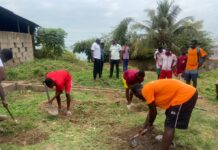
Mr Brempoh insisted that many assembly members have already commenced their projects and have submitted photographic evidence to demonstrate that the funds are being used for their intended purpose.
He further explained that concerns emerged after the selection process.
“Sixty-seven youth groups applied and 30 were selected by the assembly, but after they were selected, we realised some of the youth group names who had been provided dummy cheques were not in existence in the communities they claimed they represented. The assembly is ready to provide any explanation to Bloomberg on how the money was disbursed,” he added.
Questions linger
Despite the Assembly’s explanation, questions remain over why funds meant for youth-led initiatives were not directly managed by the approved youth groups, and how “dummy cheques” were issued to entities later described as non-existent.
As pressure mounts, stakeholders are calling for greater transparency, clearer accountability mechanisms, and possible independent scrutiny of how the Bloomberg funds were ultimately allocated and spent.