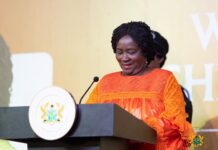

The Vice President Professor Naana Jane Opoku-Agyemang has reaffirmed Ghana’s commitment to advancing women’s and youth political participation across West Africa, calling for practical, measurable action to turn regional commitments into lasting institutional change.
Delivering the closing remarks at a high-level regional consultation meeting on political and leadership in Accra, on Friday, February 20, 2026 the Vice President said West Africa has made significant normative commitments under the framework of the Economic Community of West African States (ECOWAS), including the ECOWAS Gender Policy, the ECOWAS Youth Policy, the African Charter on Democracy, Elections and Governance, and the African Union Maputo Protocol.
While these frameworks are worth celebrating, she noted that evidence from across member states shows women and young people remain underrepresented in political leadership and decision-making processes, particularly at national and local levels.

“The future of West Africa depends on our ability to harness the talents and leadership of all our people,” she said. “It would be to our own detriment if we excluded women and young people,”she added.
The Vice President highlighted Ghana’s ongoing efforts to strengthen its legal and policy framework to promote women’s political participation and youth engagement in governance. She referenced the recent passage of the Affirmative Action Act aimed at promoting women’s leadership in public life.
Under President Mahama’s leadership, she said, gender equity remains a key governance priority, with benchmarks set for appointing women to significant leadership roles across major government sectors.

“This is not symbolic representation,” she stressed. “It is a practical commitment to inclusive decision-making, grounded in the view that institutions perform better when leadership reflects the society itself.”
She also pointed to initiatives by the Ministry of Youth Development and Empowerment and the National Youth Authority, which have established youth engagement platforms and integrated youth representation within local governance structures. Young people, she noted, are increasingly participating in policy dialogue, civic education and decision-making processes.
The Vice President emphasized that while progress has been made, challenges remain and must be addressed with urgency.

She pledged Ghana’s readiness to collaborate with ECOWAS partners by sharing best practices and learning from diverse approaches across the region. “There is no one-size-fits-all model,” she said, adding that progress depends on honest sharing and practical cooperation.
She underscored the need for sustained investment in leadership development, mentorship and capacity-building for women and young people, especially at the grassroots level.
“Empowerment is most sustainable when it equips people with skills, confidence and networks to lead — not only in moments of opportunity, but over the long term,” she stated.

Describing the meeting as critical, the Vice President said inclusion is not mere rhetoric but determines whose perspectives shape policy and whose lived realities inform development agendas.
She commended the ECOWAS Commission and the ECOWAS Gender Development Centre for their continued commitment to advancing gender equality, as well as Ghana’s Ministry of Gender, Children and Social Protection for championing inclusive leadership and accountability.
She reaffirmed the Government of Ghana’s commitment to translating pledges into concrete action and urged governments and partners across the sub-region to take more practical steps to ensure meaningful inclusion of women and young people in political life.
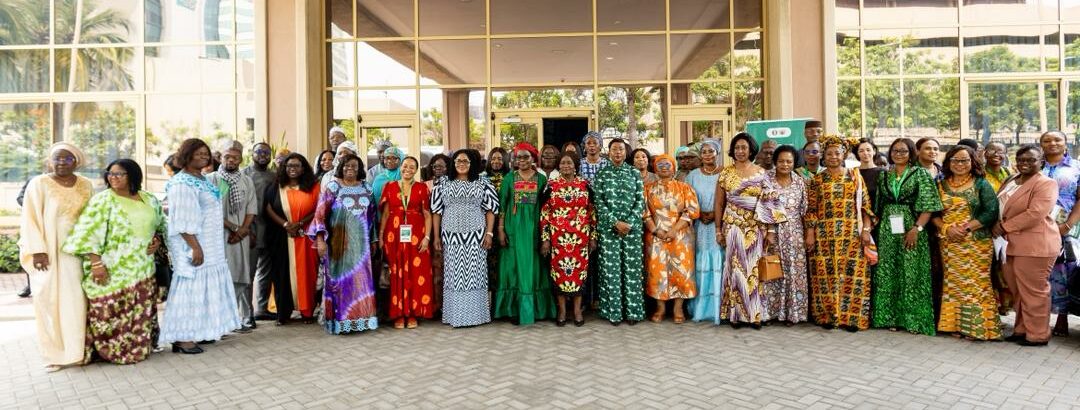
The meeting brought together policymakers, gender advocates and regional stakeholders to advance strategies for strengthening women’s and youth political participation across West Africa.
By Evelyn Tengmaa