
A senior lecturer at the Kwame Nkrumah University of Science and Technology (KNUST) has called for a fundamental shift in the country’s approach to fighting poverty, arguing that sustainable solutions require a direct confrontation with its root causes in gender inequality and social class structures.
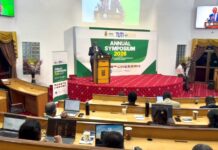
Professor Prince Osei-Wusu Adjei of the Department of Geography and Rural Development made the call while delivering his Professorial Inaugural Lecture themed “Eradicating Poverty in the Age of Sustainable Development: The Basic Means Approach.”
He positioned poverty not merely as a lack of income, but as a multidimensional “global scourge” that is deeply intertwined with health, gender, and rural development.
Drawing on empirical studies conducted in Ghana, Prof. Osei-Wusu Adjei highlighted a cyclical relationship between poverty and poor health, explaining that poverty breeds ill-health, whilst ill-health in turn entrenches poverty.
He identified six major social pathways linking poverty to disease in Ghana: low levels of education and income, poor nutrition, inadequate housing, limited access to water, sanitation and hygiene (WaSH), restricted access to healthcare, and unhealthy lifestyle patterns.
“Social conditions, including poverty and its manifold manifestations, breed severe morbidity and mortality,” Prof. Osei-Wusu Adjei stated.
He urged the government to implement comprehensive, policy-driven social protection interventions to break this cycle, arguing that a healthier population would significantly reduce the burden on Ghana’s health facilities.

A central theme of the lecture was the gendered nature of poverty. Prof. Osei-Wusu Adjei noted that while Ghana has made significant strides in educating girls over the past two decades, this progress has not translated into proportional economic opportunities or political power for women.
“Poverty has a woman’s face,” he asserted. Without deliberate and affirmative policy measures such as quotas or targeted financial support, he warned that closing the gender inequality gap could take over a century. He linked women’s empowerment directly to national development, suggesting that true poverty eradication is impossible without gender equality.
On rural poverty, Prof. Osei-Wusu Adjei described it as disproportionately severe, particularly among crop farmers.
He pointed to increasing rural-urban migration and the declining contribution of agriculture to GDP as indicators of growing rural distress. According to his findings, seven out of every ten economically active rural residents expressed a desire to migrate to urban centres in search of better opportunities, a trend he cautioned could threaten food security and sustainable rural transformation.
To address these interconnected challenges, Prof. Osei-Wusu Adjei proposed the Basic Means Approach (BMA) . Unlike previous policies that focus on short-term relief, such as cash transfers, the BMA is a structural solution designed to build long-term resilience.

Rooted in the capability theories of economist Amartya Sen and sustainable livelihood principles, the BMA focuses on strengthening the assets and productive capacities of the poor. It aims to empower vulnerable populations to build resilient livelihoods rather than merely treating the symptoms of their deprivation.
Prof. Osei-Wusu Adjei was critical of past poverty reduction interventions in Ghana, citing limited beneficiary participation, the politicization of programs, and weak targeting mechanisms as key reasons for their limited impact.
In contrast, he argued that the BMA offers a sustainable pathway by simultaneously addressing poverty across geographical space, gender, and social class.
A comprehensive strategy based on this approach would: Improve public health by lowering the incidence of preventable diseases, advance Gender Equality and Social Inclusion (GESI) by enhancing women’s economic and political participation, and promote sustainable rural transformation by reducing migration pressures and strengthening local economies.
The lecture drew a large audience of academics, policymakers, development practitioners, and students, contributing a vital Ghanaian perspective to the global discourse on achieving the Sustainable Development Goals (SDGs), particularly SDG 1 (No Poverty) and SDG 5 (Gender Equality).