
Health workers across the country are currently being sensitised and equipped ahead of the implementation of the Free Primary Healthcare policy, which is designed to bring basic healthcare closer to underserved communities.
It is expected to prioritize early diagnosis and management of non-communicable diseases such as hypertension and diabetes.
For many families, early intervention could mean avoiding life-threatening complications or the financial burden of long-term treatment.
Officials say part of that preparation includes improving ambulance services, referral systems and the readiness of frontline facilities to handle critical cases.

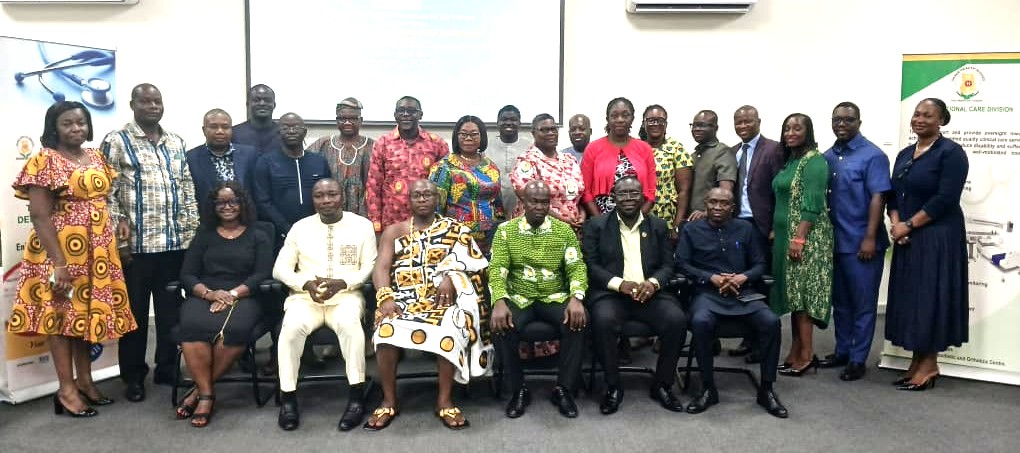
Speaking at a clinical care retreat organized by the Institutional Care Division of the Ghana Health Service, the Director-General of the Service, Dr Samuel Kaba Akoriyea explained that orienting regional and district health directors to ensure smooth implementation of the policy is crucial.
“We’ve noticed that with the leaders of the health facilities, we need to have our mindset very well oriented when it comes to the benefits of these projects. So that we don’t take them as one of those projects that you do in two minutes, after two or three years. They should be things that should become part of our health service and our health care delivery system.”

On strengthening emergency services, he said, “When it comes to emergencies, normally we need to look at the pre-hospital stage and then the hospital stage. Because when you travel down the line or even if you are in your house and you fall sick, the first person is the bystander or the person in your house.
And everybody needs to be trained in basic life support. So, we are planning to make sure that every health worker, not doctors, not nurses alone, every health worker, from the cleaner to the consultant, at least, they will be able to do basic life support activities.”
Dr Kaba also stressed that early detection and swift intervention will be key to saving lives as the policy rolls out.
The Free Primary Healthcare policy forms part of Ghana’s drive to achieve Universal Health Coverage by 2030.