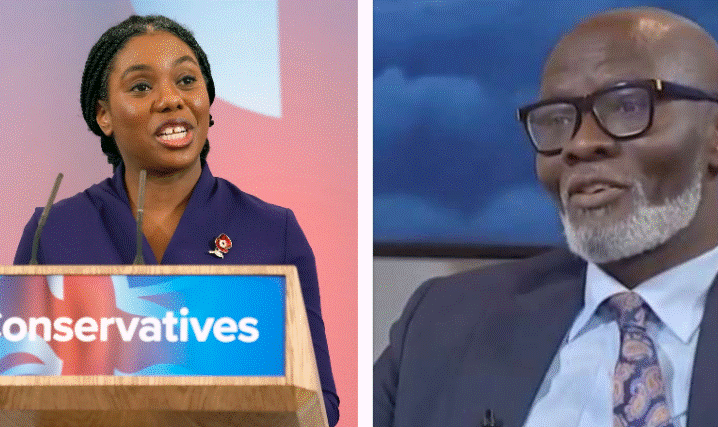

Executive Director of the Africa Prosperity Network, Gabby Otchere-Darko, has replied to the leader of the UK Conservative Party, Kemi Badenoch who had indicated that Britain should have voted against the United Nations resolution on slavery.
Mr Otchere Darko expressed surprise at her comment.
Kemi Bandenoch had made the point that Britain led the struggle to end the slave trade; therefore, it should not be paying any reparations.
A post on her X page said “Russia, China and Iran vote with others to demand trillions in reparations from UK taxpayers…and the Labour government abstain! Britain led the fight to end slavery.
“Why didn’t Starmer’s representative vote against this? Ignorance…or cowardice? We shouldn’t be paying for a crime we helped eradicate and still fight today.”

The United Nations passed a historic resolution introduced by Ghana that labels slavery “a grave human rights violation.”
This was with 123 votes in favor,
The decision referred to the enslavement of about 12 million Africans and their descendants through the transatlantic slave trade. It is seen as a key step toward official apologies, the restitution of cultural artifacts, and reparations.
The United States was among the three countries that voted no, citing concerns about the resolution’s language and potential legal implications.
In a post on his X page replying to Kemi, Mr Othcrere0-Dar said “I am disappointed in Kemi Badenoch and I suspect many Black British conservatives are too. Britain, which played a central role in the transatlantic slave trade, also saw the early campaign against it driven by Tory evangelicals like William Wilberforce in the early 1800s. But it took a Whig government, under Charles Grey, 2nd Earl Grey, to pass the Slavery Abolition Act of 1833, ending slavery across most of the Empire while compensating slave owners, NOT THE ENSLAVED.
And even then, caution shaped the politics. Tory instincts then leaned toward protecting economic and imperial interests, wary of disruption. Which brings us to today. That history should not be used to retreat into old positions. It should be a platform for new leadership thinking and under the first Black Briton to lead the Tories. A woman of 100% black West African parentage.
“Kemi has an opportunity, given her heritage and position, to move this conversation forward: not by merely amplifying defensiveness, but by helping shape a modern response rooted in honesty and partnership. It is in the interest of Britain to invest in Africa’s economic transformation efforts and even if in ways that support British economic interest.
“The real question today is not about relitigating the past, but about how Britain chooses to engage its legacy, through meaningful support for Africa’s development, trade, and integration in a way that reflects both history and shared future and in a way that will practically make Africa more attractive to her young people than the lure to migrate to places like Britain.
“Kemi, don’t make the Conservative Party less attractive to Britain’s growing black middle-class and all.”