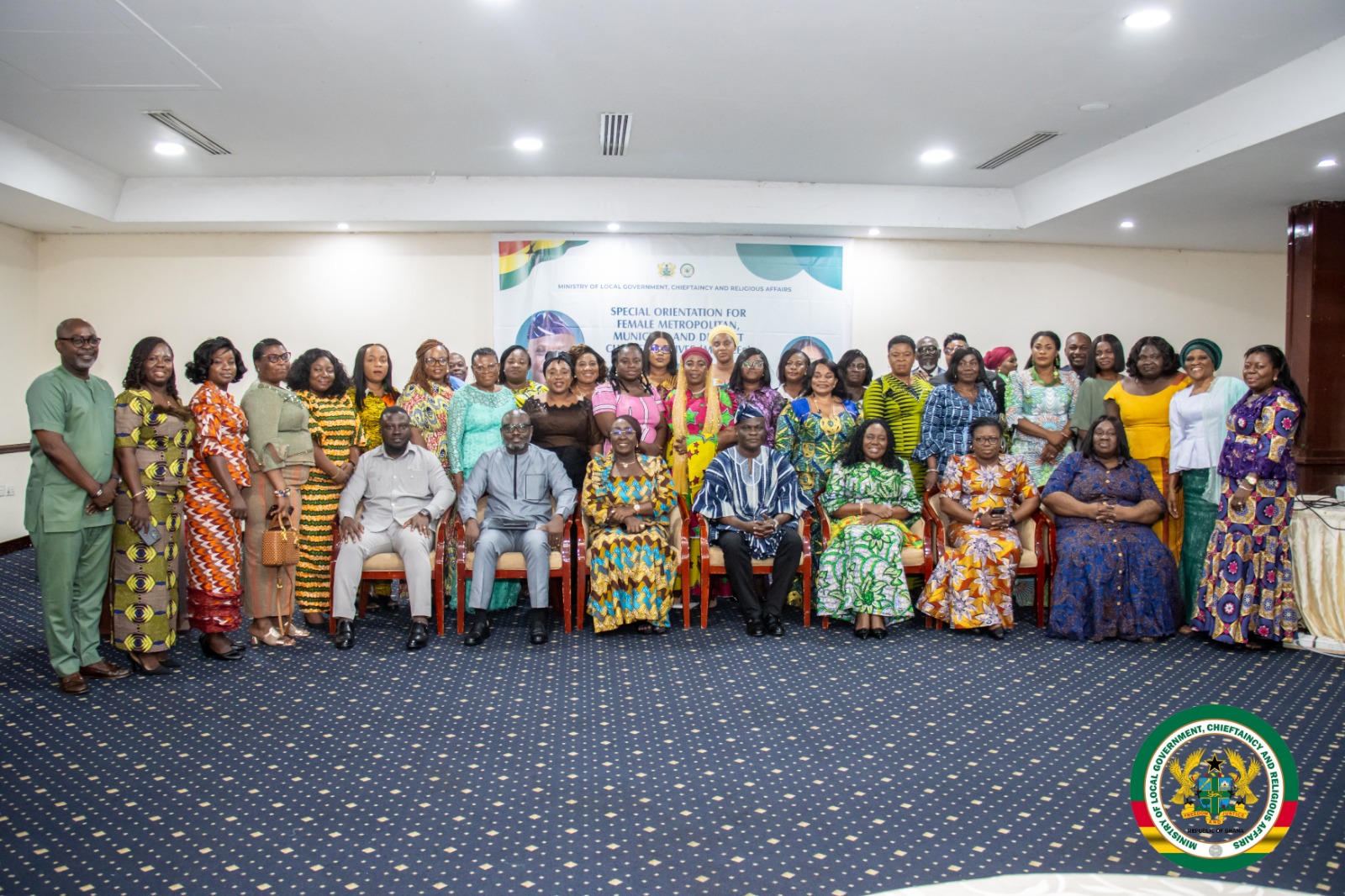

Ghana’s Minister for Local Government, Chieftaincy and Religious Affairs, Ahmed Ibrahim, has emphasized the crucial role of female Metropolitan, Municipal and District Chief Executives (MMDCEs) in driving inclusive local governance.
Speaking at a special orientation and leadership development programme for female MMDCEs, Mr Ibrahim urged the participants to act as change agents and break barriers to achieve responsive and people-centred governance.
The two-day programme, themed “Breaking Barriers, Building Legacies: Unlocking Leadership Excellence in Local Governance,” brought together female MMDCEs from across the country to equip them with the tools and confidence needed to navigate the complex demands of local governance.
Minister Ibrahim noted that women’s leadership is essential for inclusive, accountable, and sustainable governance, and that the programme was a strategic national effort to strengthen inclusive governance at the local level.
Ghana’s female representation in governance is currently low, with women occupying only about 15% of seats in Parliament and 30 out of 261 MMDCE positions. The Minister urged participants to take proactive steps to encourage more women to contest and win in the 2027 District Level Elections, and to mentor young women to create a sustainable pipeline of future female leaders in local governance.
Deputy Minister Hon. Rita Naa Odoley Sowah emphasized the importance of targeted capacity building for female MMDCEs, stating that it is essential for strengthening inclusive governance.
The programme featured expert-led sessions on public financial management, procurement compliance, digital governance, and local economic development, among other areas.
Ashanti Regional Minister Dr. Frank Amoakohene expressed pride in the region’s performance, noting that Ashanti has the highest number of female MMDCEs in the country.
Participants are expected to leverage the knowledge gained to strengthen governance outcomes in their districts and drive development in their communities.
The programme is part of the Ministry’s broader efforts to promote gender-responsive governance within Ghana’s decentralised system, and to achieve the targets set out in the Affirmative Action (Gender Equity) Act, 2024 (Act 1121).
By Emmanuel Nelson Ebelin