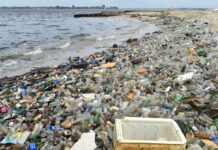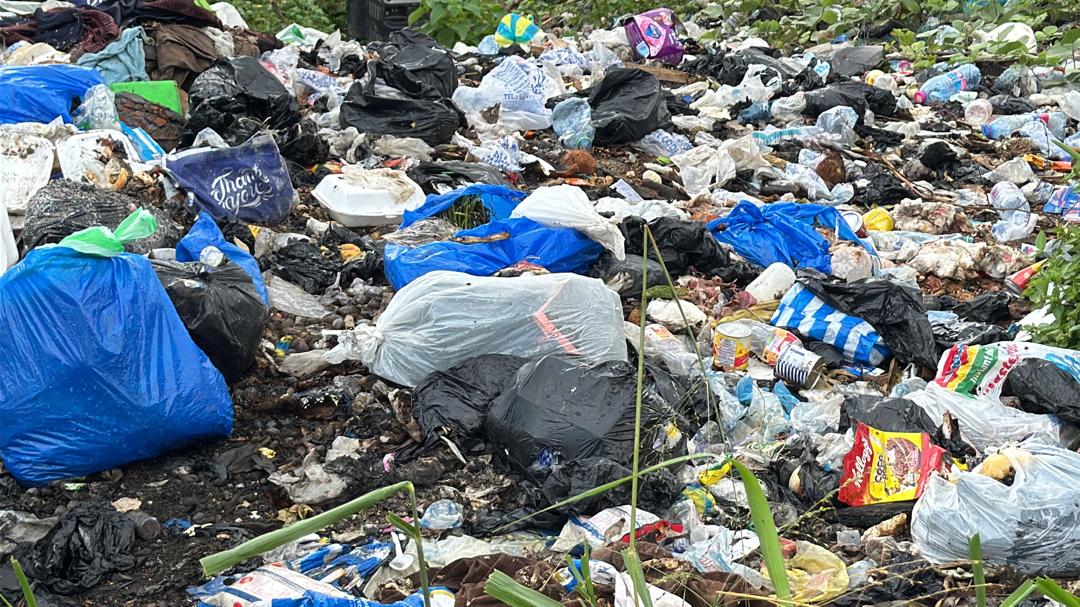

Waste does not disappear. It moves from homes to gutters, to landfills, and back into the air and water we depend on. Across Africa, this has become a defining crisis.
Less than 5 percent of plastic waste is recycled, and by 2050, total waste is expected to rise by more than 200 percent. This is not just an environmental issue. It reflects a broken system of production and consumption.
In Ghana, the impact is immediate. Over 600 containers of used electronics arrive in Tema each month, contributing to an e waste stream of about 13,000 tons a year, often processed under unsafe conditions.
Behind this are real lives, workers exposed to toxins and communities living with pollution, while valuable materials are lost instead of reused.
Small businesses are at the center of the solution, yet they remain constrained. About 86.5 percent have never accessed climate or green funding, even though over 80 percent of those who do say digital tools helped them secure it. The gap is clear. The tools exist, but access does not.
It is within this context that stakeholders gathered in Accra for the Digital Innovation for Circular Economy inception and launch meeting at Coconut Grove Regency Hotel on April 1, 2026.
The programme, supported by IDRC Canada and Global Affairs Canada, focused on how digital solutions can strengthen circular economy businesses, improve resilience, and drive inclusive green growth.
In his opening remarks, Country Coordinator Caleb Toxla stressed the need to move beyond ideas. “We are not short of solutions. The real challenge is connecting innovation to opportunity and ensuring businesses can scale.”
Representing Global Affairs Canada, Counsellor Barnabe Ndarishikanye, speaking on behalf of the Canadian High Commissioner, emphasized inclusion. “Digital innovation can accelerate progress, but only if it is accessible to those who need it most.”
Industry voices echoed this urgency. CEO of Coliba Waste Management Systems, Prince Agbata, highlighted the need to integrate informal waste collectors. “If we exclude the informal sector, we are excluding the backbone of waste recovery in Ghana.”
On the policy side, CEO of Ghana Digital Centres, Hon. Dzifa Gunu, reaffirmed government’s commitment to digital transformation as a key driver of growth and sustainability.
The launch brought together policymakers, innovators, academia, and SMEs not just to introduce the project, but to align on practical solutions. The focus was clear. Use digital innovation to close gaps in funding, skills, and access, and build a circular economy that works for everyone.
Because the real issue is not waste itself. It is whether the systems around it are ready to change.
By Wisdom Sarfo