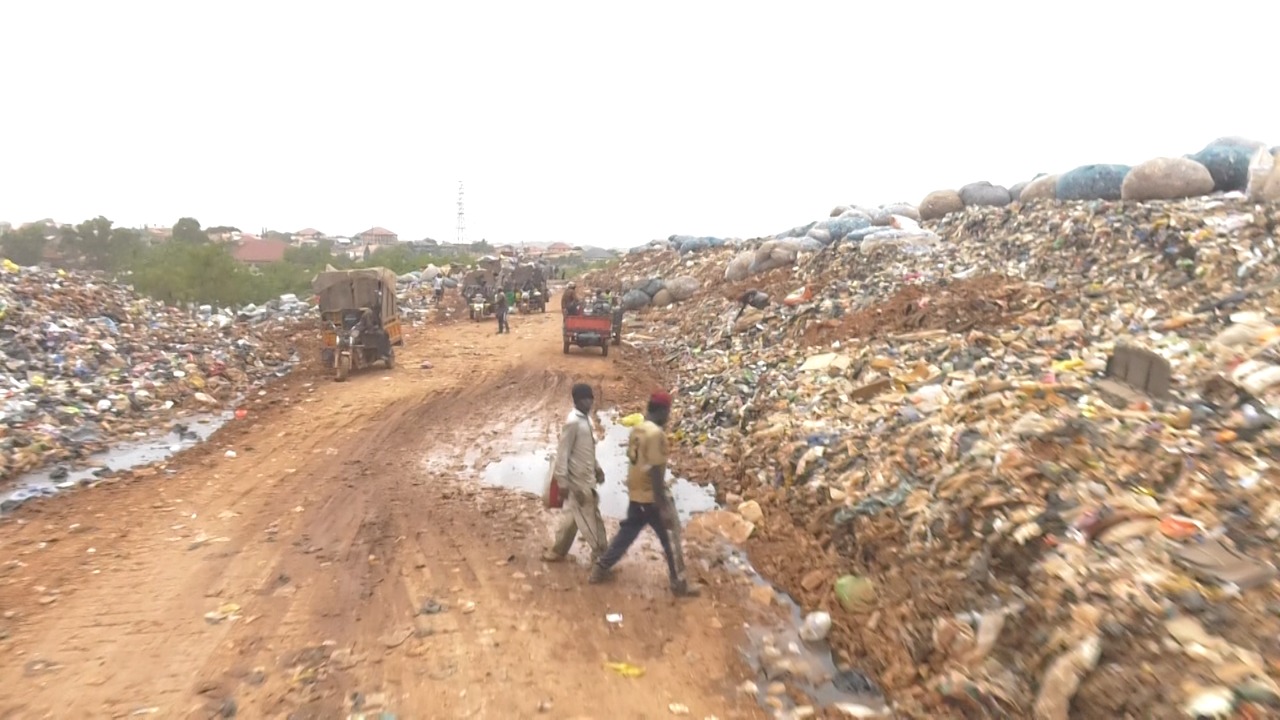

Mountains of unprocessed waste and an overwhelming stench now define the deteriorating state of the Oti landfill site, the main waste disposal facility serving Kumasi and its surrounding districts.
The landfill, which receives refuse from across the Greater Kumasi area, is currently operating far beyond its intended capacity.
Authorities warn that without urgent intervention, the site could be forced to shut down within the next three months raising fears of a major sanitation crisis in the Ashanti regional capital.
The Waste Management Director of the Kumasi Metropolitan Assembly, Prosper Kotoka, indicated that the facility is now handling between 2,000 and 2,500 tonnes of waste daily.
This surge, he explained, is largely due to additional waste inflows from adjoining districts that rely on the already overstretched site.
“The quantity has increased tremendously,” he noted, highlighting the growing pressure on the landfill.
The situation is further compounded by inadequate waste management infrastructure and the absence of efficient recycling systems. At the site, long queues of tricycle waste collectors have become a daily occurrence, with operators spending hours waiting to offload refuse.
Operational challenges have also intensified due to aging equipment.
“Bulldozers and other machinery used to manage and level waste have been in use for years and are due for replacement. However, the contractor managing the site has not been paid for over two years, making it difficult to maintain or upgrade equipment”, Mr Kotoka hinted.
City authorities say the situation has reached a critical point. Earlier projections indicated the landfill could remain operational for several more months, but current conditions suggest otherwise.
“If nothing is done urgently, within the next three months, we may have to shut down the final disposal site,” the mayor of Kumasi, Kwasi Ofori Agyemang Boadi warned.
Such a move would force municipal assemblies within Greater Kumasi to seek alternative dumping grounds, a scenario experts say could worsen sanitation conditions across the metropolis.
To address the looming crisis, the Kumasi Metropolitan Assembly has outlined plans to construct two additional landfill cells at an estimated cost of six million euros.
“We are currently engaging the sector ministry to secure partial funding, with hopes of completing at least one cell in the medium term to extend the landfill’s lifespan by two to three years,” the mayor disclosed.
Environmental observers caution that failure to act swiftly could trigger a full-blown sanitation emergency, with serious public health implications.
As pressure mounts, the fate of the Oti landfill now hangs in the balance, with city authorities racing against time to implement sustainable solutions to Kumasi’s growing waste challenge.
By Ibrahim Abubakar