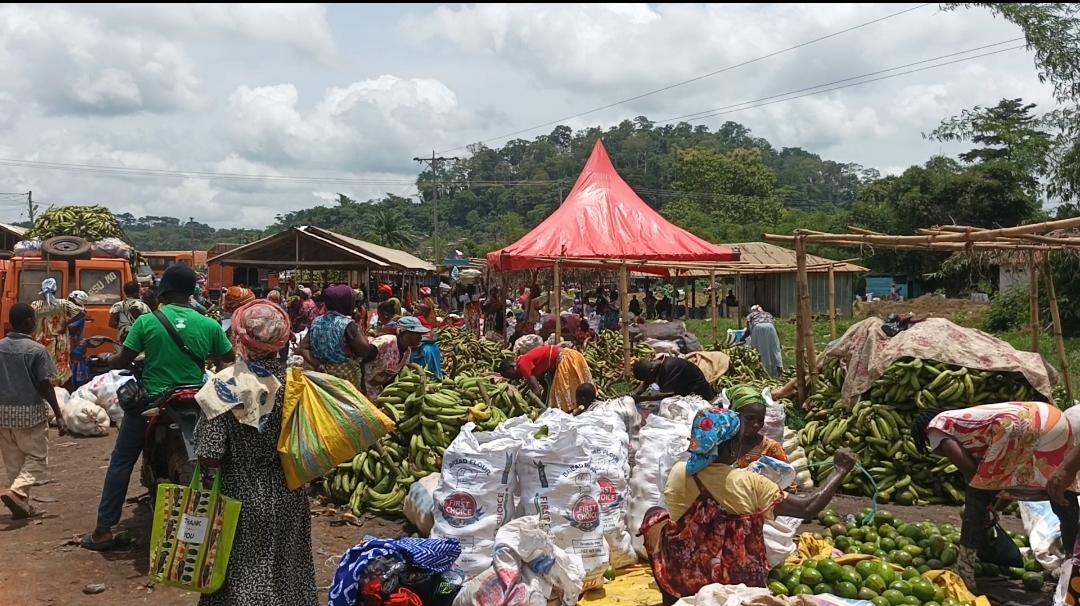

Plantain and avocado farmers in the Sefwi area are grappling with a worsening crisis as oversupply of produce continues to outstrip demand, leaving large quantities to rot and causing significant financial losses.
What should be a peak season of profit has instead turned into a period of waste, with farmers struggling to find buyers for their harvest.
According to the Deputy Queen Mother of the Plantain Market, Afua Yankey, the situation is becoming increasingly dire for both farmers and traders.
“We are seeing more produce than the market can absorb. A lot of it goes bad before it is sold,” she said.
Farmers attribute the situation to limited market access and the lack of reliable systems to manage surplus produce during peak harvest periods.
They are now calling on government and relevant agencies to intervene by creating sustainable market opportunities, including support for exports and bulk purchasing during peak seasons.
Traders, who play a key role in the supply chain, describe the situation as alarming.
A trader, Agartha Serwaa Akoto said much of the produce that should feed communities is instead going to waste.
“Sometimes we are forced to sell at very low prices, and even then, a lot still spoils. Some of it is even diverted for animal feed,” she explained.
Market women say the losses run into millions of cedis each season, threatening their livelihoods.
They believe that with proper storage facilities, improved transportation, and stronger market linkages, the current challenges can be turned into opportunities for growth.
Beyond the local impact, the situation reflects a broader national concern about agricultural losses and missed economic opportunities.
While Ghana exported more than $56 million worth of bananas and plantains in 2023 to markets including France, Belgium, and the United Kingdom, experts say the country continues to lose significant value by exporting raw produce without processing.
Estimates suggest Ghana forfeits as much as $2.5 billion annually due to limited value addition across its agricultural sector, including crops such as plantain.
This highlights the gap between production and the ability to maximise earnings through processing and structured export systems.
In addition, post-harvest losses remain a major challenge. Poor handling, inadequate storage, and transportation constraints contribute to substantial waste, with some studies indicating losses of over GH¢2 million in specific markets.
For farmers in Sefwi, these national figures mirror their daily reality, one where abundance does not translate into profit.
Without urgent intervention, stakeholders warn that the cycle of waste, loss, and reduced farmer confidence could persist, undermining both livelihoods and the country’s agricultural potential.