
In a move to strengthen public engagement, the government has provided the Information Services Department in the North East Region two new information vans.
The North East Regional Minister, Ibrahim Tia, officially handed over the vans to the Regional Information Services Department.
This initiative, he says, aims to bridge the communication gap across districts, ensuring that vital information regarding security, health, education, sanitation and government policy reaches every corner of the region including the most remote areas.
During the official handing-over ceremony, the North East Regional Minister, Ibrahim Tia, emphasized the importance of these resources. He noted that the vans are essential tools for educating the public on government policies and providing updates on health and security matters.
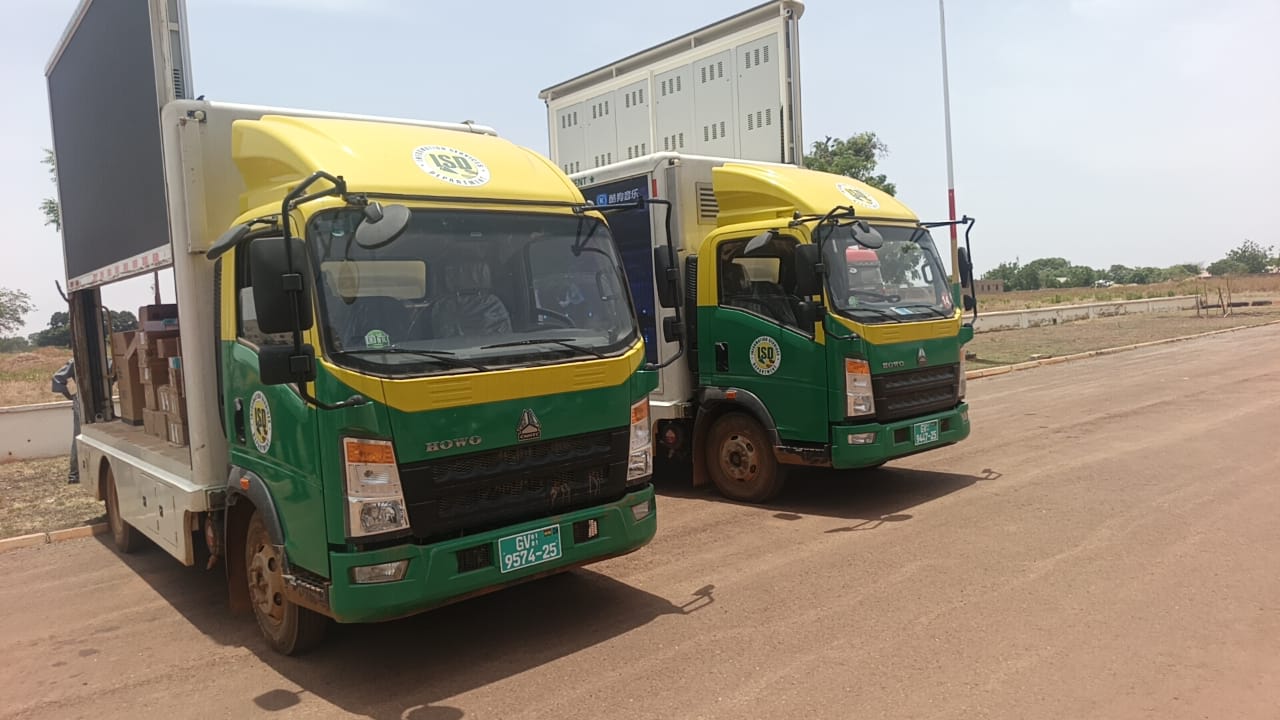
Addressing the officials, Minister Ibrahim Tia issued a stern directive regarding the management of the vehicles. He urged the staff to ensure the vans are used strictly for their intended public service duties rather than for any personal gain.
He stated “I charge you to use these vans for their intended purpose and not for personal gains. These vehicles must be managed in a way that all districts in the region benefit from them. Furthermore, the vans should not be on the road when their services are not required, as we must ensure they are properly maintained for a long term.”
The North East Regional Head of the Information Services Department, Mrs. Felicia Fati Mijimah commended the government for its initiative to revitalize the department’s operational capacity.
In her address, she emphasized that the deployment of these information vans will significantly enhance the department’s outreach, ensuring that the populace of the North East Region remains adequately informed.
She formally urged the Municipal and District Chief Executives within the region to foster inter-agency collaboration, thereby ensuring the optimal utilization and maintenance of these logistical assets.
By Solomon Kwame Kanaluwe