
The Pediatric Society of Ghana has successfully trained 244 healthcare professionals in the Upper West Region under an 18-month maternal and newborn health project aimed at reducing complications during childbirth and improving neonatal care.
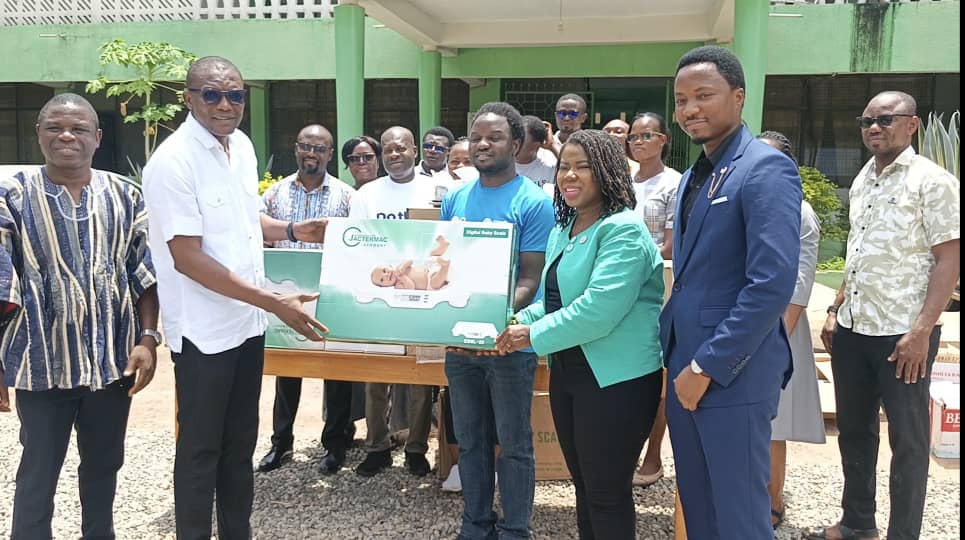
The project, implemented in partnership with the Ghana Health Service and the Upper West Regional Health Directorate, officially ended with a close-out meeting and donation of medical equipment to participating health facilities.
Speaking on the sidelines of the close-out meeting, Dr Hilda Mantebea Boye, President of the Pediatric Society of Ghana and project lead, said the intervention focused on strengthening newborn resuscitation and labour monitoring among frontline healthcare workers across the region.
She explained that healthcare professionals, including midwives and nurses, were trained to respond effectively to maternal and newborn emergencies, particularly in helping newborns breathe within the “golden minute” after delivery.
“We are happy about the feedback that they have shared so far. The healthcare professionals have indicated that their knowledge has improved and their confidence in resuscitating newborns has also improved,” she said.
Dr Mantebea Boye, highlighted the introduction of a digital innovation known as the “Live Digital Blackboard,” which enabled health workers in smaller facilities to relay information on pregnant women in labour to district hospitals in real time.
According to her, the system allowed district-level professionals to monitor labour remotely, provide immediate feedback and intervene quickly in cases of prolonged labour or other complications.
“So assuming that the labour is getting prolonged or there’s a problem with the labour, they can know earlier and quickly intervene to help prevent complications associated with delivery,” she explained.
She added that the project also donated mannequins and neonatal resuscitation equipment to support continuous training and improve newborn care in the region.
Dr Hilda Mantebea Boye expressed optimism that the intervention would be sustained beyond the project period because participating facilities had embraced ownership of the initiative.
Upper West Regional Health Director, Dr Josephat Ana-Imwine Nyuzaghl, described the project as a major boost to maternal and newborn healthcare delivery in the region.
He said the Pediatric Society of Ghana was among ten innovators supported through funding from Grand Challenges Canada to improve maternal and newborn health outcomes in six regions across Ghana.
Dr Nyuzaghl noted that in the Upper West Region, the project was implemented in the Nandom, Nadowli, Jirapa, Wa Municipal and Tumu districts.
He explained that the intervention focused on building the capacity of health workers to manage conditions such as bleeding, obstructed labour, hypertensive disorders in pregnancy, premature births and birth asphyxia.
“The good thing about their training is that when they train the staff, they also follow up to see how they are performing in their health facilities,” he said.
Adding that the project had also created a pool of facilitators who would continue to train healthcare workers in districts that were not initially covered.
On the digital innovation, Dr Nyuzaghl explained that district hospitals were equipped with smart televisions while peripheral health facilities received tablets to upload patient information directly to higher-level facilities for support and referrals.
Despite the intervention, Dr Nyuzaghl expressed concern about rising maternal deaths in the region, revealing that the Upper West Region recorded 27 maternal deaths last year.
“Once you lose even a single person, I think it’s problematic,” he stated.
Adding that the Ministry of Health had already begun stakeholder engagements to address gaps in human resources, equipment and capacity building to help reduce maternal deaths nationwide.
By Ibrahim Abubakari Wangara