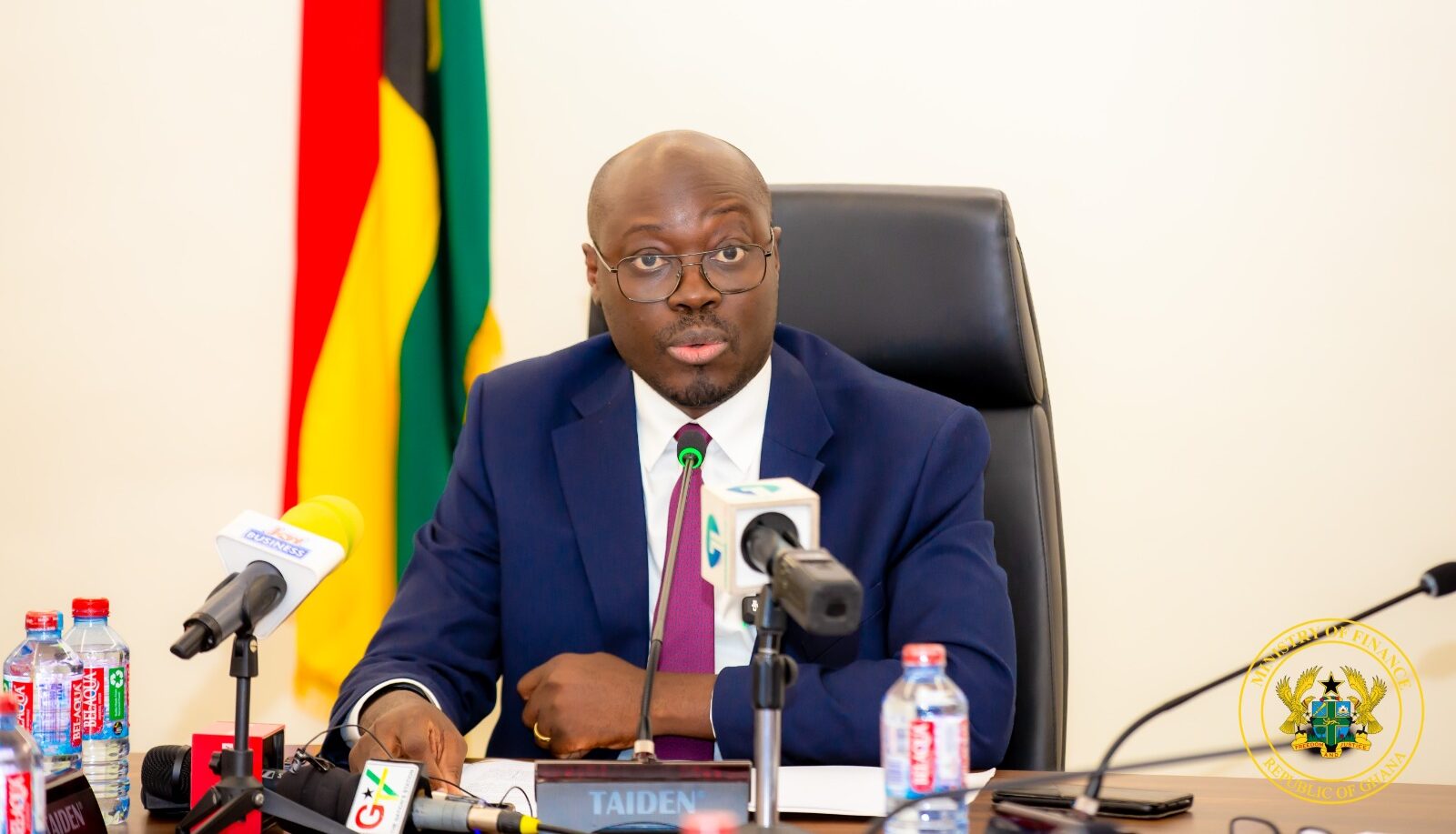

Minister of Finance, Dr. Cassiel Ato Baah Forson, has expressed confidence in Ghana’s inflation rate remaining below 5% by the end of 2026 despite the tensions in the Middle East which may potentially impact global energy and commodity prices.
Dr. Forson’s outlook stems from Ghana’s disinflation run which hit a pause in April 2026, with headline inflation edging up to 3.4% from 3.2% in March. It is the first increase after 15 consecutive months of declining price pressures.
The country’s projected inflation rate remains within the Bank of Ghana’s (BoG) medium-term target band of 8%, plus or minus 2 percentage points.
Dr. Forson, in an interview with Bloomberg, admitted that the conflict in the Middle East poses risks to Ghana’s inflation outlook, particularly through higher fuel and fertilizer prices and disruptions to global supply chains.
“The conflict poses conflict on the price of petroleum product and then impact on the most importantly, fertiliser and supply chain. Availability isn’t a concern to us at the moment. I think the challenge has to do with price increases,” he said.
Despite these risks, the Finance Minister argued that Ghana remains well-positioned to absorb external shocks due to strong foreign exchange reserves, rising gold exports and favourable commodity prices.
“The good news is that in Ghana, we do not have subsidies on petroleum product. But the good news is that we had built some significant reserves,” he stated, adding that Ghana’s reserve buffers and growing gold receipts provide sufficient support to meet foreign exchange demand for critical imports.
“And our gold production is also going up and gold prices is also very high. And so Ghana is in a comfortable position to be able to withstand those shocks,” Dr. Forson added.
He, however, admitted that inflation could come under some pressure in the months ahead.
“Where I think we may see a bit of pressure will be on the back of inflation. We expect that inflation may inch up today, it’s about 3.4. I still think we’ll be better off. And I don’t think the country’s inflation will exceed 5% by the end of the year.”
Dr. Forson further opined that the improving conditions in Ghana’s export sector will be a key factor supporting the inflation outlook.
“Because our major exports are doing well. Cocoa, yes, dipped, but the cocoa price has started going up. Oil, we’re also an oil exporter. And so foreign exchange, we’re also getting something back.”
The Finance Minister’s expectations come amid the BoG’s quest to instill robust monetary policies to keep Ghana’s economy in shape.
In May, the central bank held its policy rate at 14% after a series of rate cuts earlier in the year, citing the inflationary risks posed by the Middle East conflict and rising global crude oil prices.
Policymakers warned that higher energy costs and supply chain disruptions could threaten recent gains in price stability.