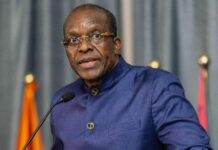

The Head of Research at Transparency International Defence and Security, Dr. Michael Ofori-Mensah, has raised concerns over persistently high corruption risks in defence institutions across Sub-Saharan Africa, despite the existence of legal and institutional frameworks intended to promote accountability.
Presenting findings from the 2025 Government Defence Integrity (GDI) Index at a stakeholder engagement in Accra, on Wednesday, June 17, 2026, Dr. Ofori -Mensah said all 17 countries assessed in the region fell within the high-risk to critical-risk categories for corruption in the defence sector.
The Government Defence Integrity Index, developed by Transparency International Defence and Security, assesses corruption risks in defence institutions by examining both legal frameworks and their implementation. The index evaluates five key areas: political affairs, defence finances, personnel management, military operations and procurement.
According to Dr. Ofori-Mensah, no country assessed in Sub-Saharan Africa achieved a low-risk, moderate-risk or very low-risk rating. The regional average score of 29 places the region firmly within the high-risk category.
“The results clearly show that we have a challenge that needs to be addressed,” he said.
Dr. Ofori-Mensah explained that while many countries have established anti-corruption laws and oversight mechanisms, enforcement remains weak, creating a significant gap between legal provisions and actual practice.
He cited access to information in the defence sector as one example. While 12 of the 17 countries assessed have legal frameworks governing access to information, implementation remains poor, resulting in substantial disparities between policy and practice.
The report found that parliamentary oversight structures exist in many countries, with 88 per cent of assessed states having formal oversight mandates. However, these mechanisms are often ineffective due to executive overreach, inadequate technical expertise among parliamentary support staff and limited information sharing between defence ministries and legislatures.
Defence finances emerged as one of the most concerning areas. Dr. Ofori-Mensah noted that only two countries scored within the moderate-risk category, while the rest were classified as high-risk or critical-risk. He attributed this largely to the lack of transparency surrounding actual defence spending and limited public disclosure of expenditure reports.
Although personnel management recorded the strongest performance among the five risk areas, it still fell within the high-risk category. Challenges identified included limited transparency regarding personnel numbers, rank structures and payroll verification systems, creating opportunities for payroll fraud and the existence of ghost names.
Military operations were identified as the most vulnerable area. Dr. Ofori-Mensah revealed that none of the countries assessed had incorporated corruption as a strategic concern within their military doctrines.
“One key thread running through the analysis is that none of the countries assessed had a military doctrine that identifies corruption as a strategic issue to be addressed during military operations,” he said.
He argued that integrating anti-corruption measures into military doctrine would help shape training programmes, operational planning and institutional policies aimed at reducing corruption risks during deployments.
The report also highlighted widespread concerns about defence procurement practices. Dr. Ofori-Mensah pointed to excessive secrecy, limited transparency in acquisition planning and the frequent use of single-source procurement arrangements as major risk factors.
According to the findings, more than 70 per cent of countries assessed scored poorly in procurement-related indicators, while information on actual purchases and procurement decisions was often unavailable to auditors and external stakeholders.
The report further found limited opportunities for public and civil society engagement in defence policy discussions. Apart from South Africa, which was assessed as having a robust civic space, and Ghana, which recorded moderate performance, most countries demonstrated restricted public debate on defence matters.
Dr. Ofori-Mensah said 82 per cent of countries assessed lacked meaningful public discussion on defence policy, reflecting a culture of “defence exceptionalism” where security matters are treated as beyond public scrutiny.
To address the identified weaknesses, he called for stronger independent oversight mechanisms, greater transparency in defence spending, improved whistleblower protections, enhanced anti-corruption training for military personnel and increased use of open competition in defence procurement.
He stressed that integrity risks within the defence sector are systemic rather than isolated incidents.
“Strong laws alone are insufficient. Transparency, accountability, institutional culture and effective integrity risk management are essential,” he said.
Dr. Ofori-Mensah urged governments, defence institutions, civil society organisations and development partners to focus on prevention and early risk management rather than reacting after corruption problems emerge.
The Government Defence Integrity Index is conducted every five years and is based on 77 questions and 212 indicators. The 2025 assessment marks the completion of the Sub-Saharan Africa phase, with findings from other regions expected to be released later this year.
By Evelyn Tengmaa