
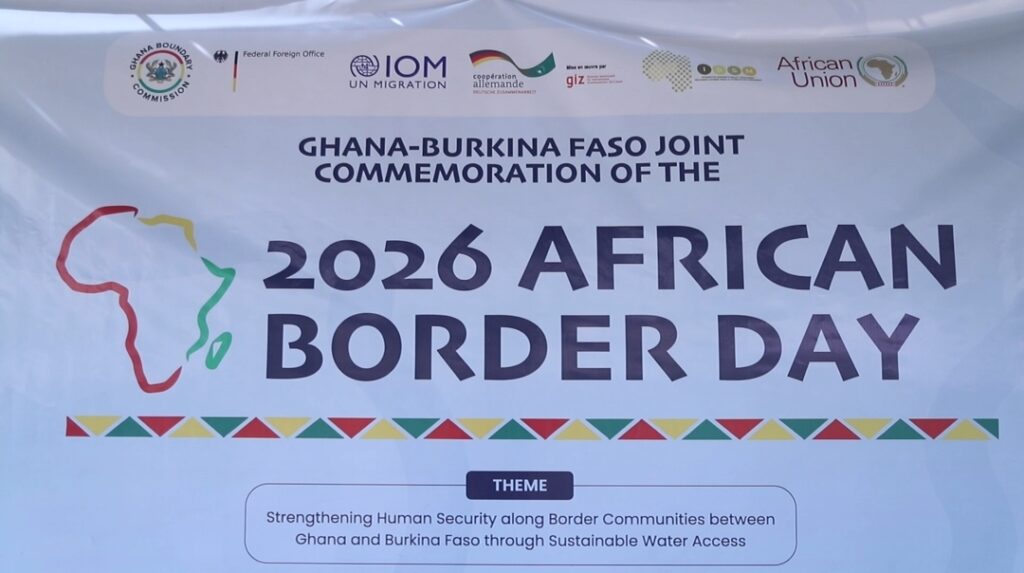
The Ghana Boundary Commission has marked the climax of the 2026 African Border Day celebrations with a joint durbar and the commissioning of a borehole for residents of Paga in Ghana and Nakolo in Burkina Faso.
The initiative, funded by the German Federal Foreign Office through the International Organization for Migration’s Integrated Border Stability Mechanism, is aimed at improving access to clean water and promoting peaceful coexistence among border communities.
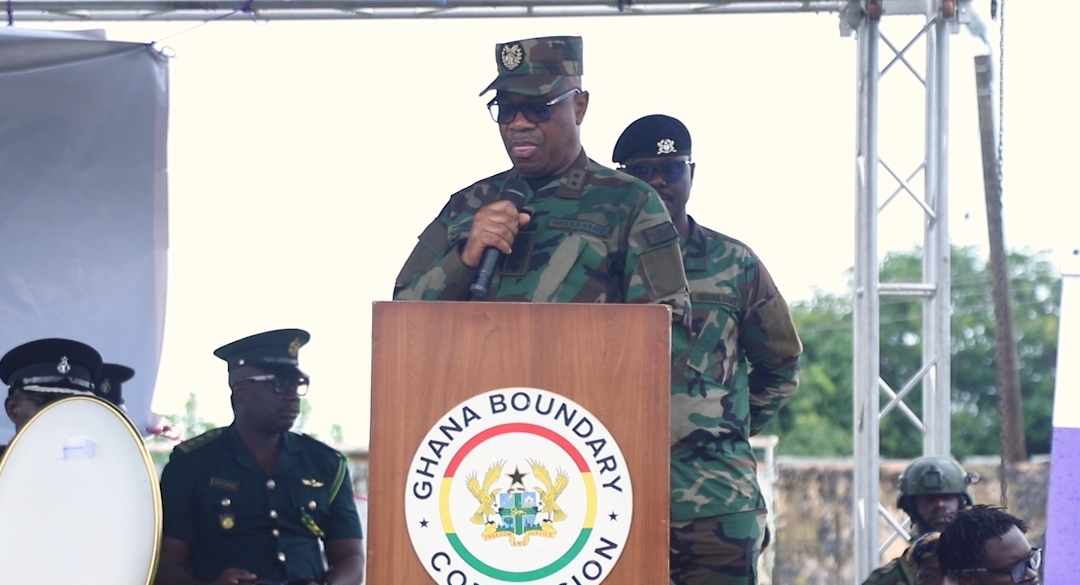
Speaking at the event, the Commissioner-General of the Ghana Boundary Commission, Major General Anthony Ntem, said effective border management must place people at the centre of development efforts.
He noted that providing sustainable water sources will enhance human security, improve public health, and reduce tensions over limited resources.
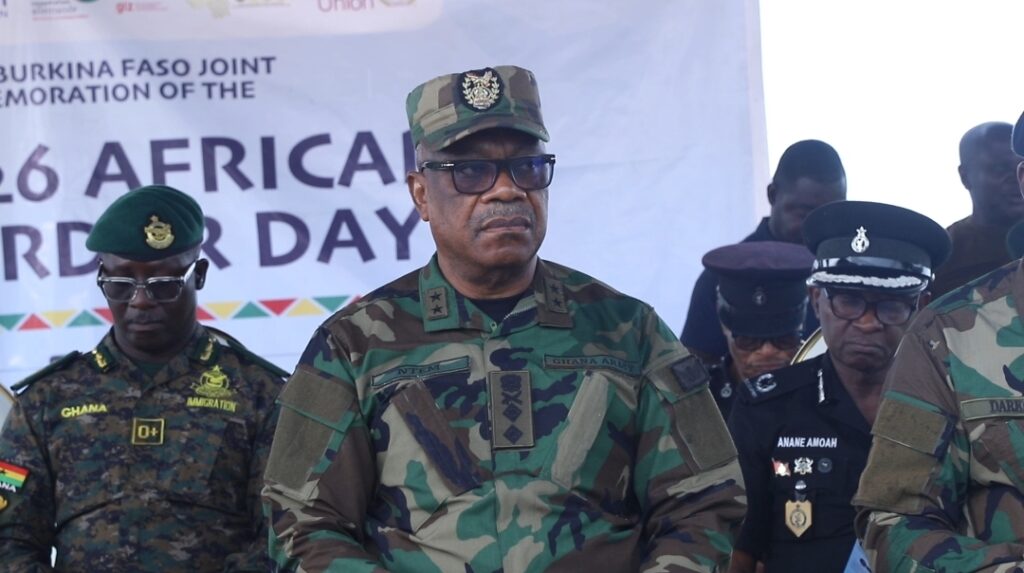
Major General Ntem also appealed to residents to help protect international boundary pillars, stressing their importance in safeguarding Ghana’s territorial integrity and preventing conflicts.
“For us as a Commission, facilitating water access to you all reflects our conviction that effective boundary management must place people at its centre. It makes practical investments in human security, public health, peacebuilding, and sustainable development along our shared boundaries,” he emphasized.
The Kassena Nankana West District Chief Executive, Stephen Aeke Akurugu, urged communities along the Ghana-Burkina Faso border to strengthen the longstanding friendship between the two countries and work together for peace and development.
Leading the Burkina Faso delegation, Governor Yvette Massadalou Sanou called for stronger cross-border cooperation and community engagement to deepen regional integration.
Representatives of the International Organization for Migration also emphasized the role of border communities in promoting peace, protecting boundary markers, and supporting cross-border collaboration.
This year’s African Border Day was celebrated under the theme: “Strengthening Human Security along Border Communities between Ghana and Burkina Faso through Sustainable Water Access.”