
According to new figures released by the Ghana Statistical Service. Informal cross-border trade between Ghana and three neighbouring countries was worth GHC31 billion during the first nine months of 2025, far exceeding the value of formal trade.
The new data released by the Ghana Statistical Service (GSS) on July 15 2026, shows that informal trade with Togo, Burkina Faso and Côte d’Ivoire reached GHC31 billion between January and September 2025.
Informal cross-border trade is playing a much larger role in Ghana’s sub-regional economy than previously measured, with trade outside official channels significantly outpacing formal commerce that compares with GHC20.1 billion informal trade recorded over the same period, meaning informal transactions were more than one-and-a-half times higher.
The findings are based on a survey that tracked movements across 321 active border points.
According to the report, informal trade accounts for more than two-thirds of total trade with Togo, around two-thirds with Côte d’Ivoire and about half of all trade with Burkina Faso.
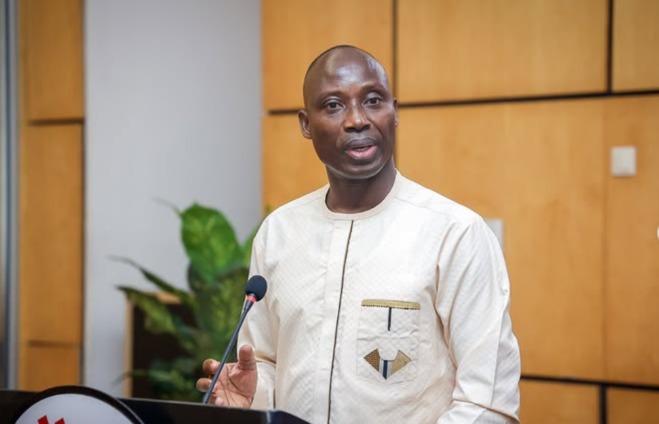
Speaking at a briefing in Accra, Government Statistician Dr Alhassan Iddrisu said the sector was also crucial to Ghana’s food supply.
“It also plays a massive role in food security, with food items making up 49.4% of informal imports,” he said.
Dr Iddrisu highlighted that, measuring informal trade is essential for effective economic planning.
“You cannot plan for what you cannot measure, and you cannot protect what you cannot see. Measuring informal cross-border trade is the first step towards understanding its contribution to Ghana’s economy,” he added.
Despite its importance, the report found that Ghana’s informal food trade deficit widened sharply during the period under review, doubling from 400 million cedis in the first quarter to 800 million cedis by the third quarter, largely because of increased cooking oil imports.
The survey also highlighted a gender divide in cross-border trading activities.
Men accounted for 70% of those transporting exports, while women made up more than 60% of import transporters, most of whom used motorbikes and tricycles.
Government Statistician said the findings should guide future policy aimed at supporting small-scale traders.
“Every trader counts, and every trade should be counted. The evidence must now inform policy, simplifying registration and improving infrastructure at our borders,” he said.
The Ghana Statistical Service is recommending that the government simplifies registration and licensing procedures for informal traders, improve access to finance and invest in border data systems to better integrate the sector into national economic planning.
By Coffie Mawuedem Noel