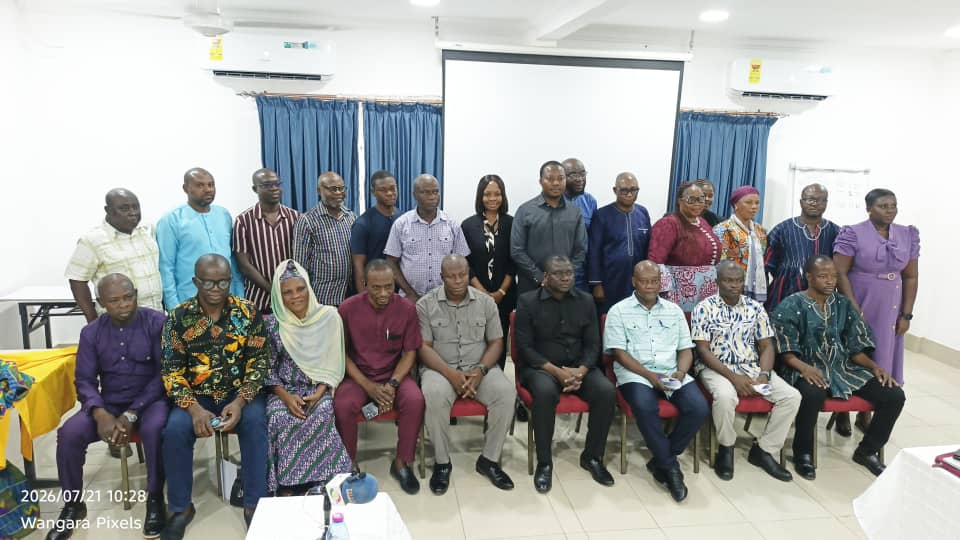

The Minister of State for Climate Change and Sustainability, Seidu Issifu, has called for stronger local-level action to tackle the growing impacts of climate change, and announced government plans to establish dedicated Climate Change Units (CCUs) in all Metropolitan, Municipal, and District Assemblies (MMDAs) across Ghana.
Speaking at the Sub-National Stakeholder engagement on Climate Change and Sustainability in Wa on July 21, the Minister said climate change is felt most acutely within communities, making local governments central to Ghana’s climate resilience agenda.
“When we talk about the climate crisis, one vital truth stands clear: individuals, communities and nations experience its impacts differently,” Issifu said.
“Because climate impacts are fundamentally local, our response must be equally local. Local Government Authorities are on the front lines and represent our most powerful allies for building community resilience through targeted investments.”
He acknowledged that many assemblies face significant challenges in implementing climate interventions due to institutional barriers, inadequate resources, limited technical expertise and political constraints.
Frank Aggrey, the Director of Administration & Climate Finance at the Ministry, who read the speech on behalf of the sector minister, said the Ministry was established to bridge the gaps by coordinating climate action, mobilising climate finance, and supporting Ghana’s commitment to its Nationally Determined Contributions (NDCs) under the Paris Agreement.
To strengthen climate governance, the Minister announced that his office has established an Inter-Ministerial and Agency Technical Working Group to coordinate national climate interventions while plans are underway to establish a Climate Change and Sustainability Hub to serve as the country’s focal point for climate solutions.
He said the proposed Climate Change Units within the MMDAs would provide technical support to integrate climate action into Medium-Term Development Plans, strengthen institutional and financial capacity, build partnerships with international organisations and assist assemblies in developing climate-resilient, investment-ready projects.
“Our goal for today’s engagement is clear: to shape policy together, identify regional climate priorities and equip your Assemblies with the practical tools and support needed to develop bankable, investment-ready projects,” he stated.
The Upper West Regional Minister, Charles Lwanga Puozing, whose speech was delivered on his behalf by the Regional Development Planning Officer, Nii Adjaye Laryea, described climate change as one of the greatest development challenges facing the world today.
He said the effects of climate change are already being experienced across the Upper West Region through erratic rainfall, declining agricultural productivity, water shortages, biodiversity loss, floods and prolonged droughts.
“In the Upper West Region, climate change is not a theoretical concept. It is experienced daily by the farmer whose planting season has become increasingly unpredictable; by the livestock farmer searching for pasture and water; by communities whose livelihoods are disrupted by prolonged dry spells and occasional flooding,” the statement noted.
The Regional Minister said the proposed Climate Change and Sustainability Hubs and dedicated Climate Change units would improve climate planning, strengthen institutional coordination, facilitate access to climate finance and enable assemblies to develop bankable projects capable of attracting investment.
He urged Metropolitan, Municipal and District Assemblies to mainstream climate resilience into local governance and development planning instead of treating it solely as the responsibility of environmental agencies.
“The time has come for climate considerations to influence how we design roads, construct schools and health facilities, manage water resources, support agriculture, protect our forests and guide spatial development,” he said. “Climate planning should no longer be treated as an appendix to development planning; it must become one of its defining pillars.”
He also encouraged planning officers, coordinating directors and technical staff to strengthen their skills in project preparation and climate finance to enable the region to access global funding opportunities for climate adaptation and mitigation.
Reaffirming the commitment of the Upper West Regional Coordinating Council, the Regional Minister pledged to work closely with MMDAs, traditional authorities, development partners and other stakeholders to promote sustainable investments and strengthen climate governance across the region.
He called on participants to contribute practical and innovative ideas that would transform the Upper West Region into a model of climate resilience and sustainable development.
“Together, let us own this agenda. Together, let us make climate action everyone’s responsibility. Together, let us build a resilient Upper West Region and leave a lasting legacy for generations yet unborn,” he said before officially declaring the stakeholder engagement open.
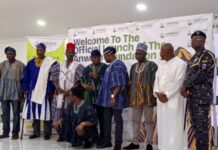
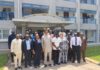
The day’s stakeholder engagement was attended by Municipal and District Chief Executives, planning officers, coordinating directors, among others across the Upper West Region.
By Ibrahim Abubakari Wangara