
The Supreme Court has set Friday, August 21, to deliver its ruling on the injunction application seeking to restrain the specialised courts from sitting during the legal vacation.
Ofoase Ayirebi MP Kojo Oppong Nkrumah filed a writ at the Supreme Court challenging the decision by the Chief Justice to allow some judges to sit and hear criminal matters during the legal vacation.
He is praying the apex court to declare the warrants issued by the Chief Justice as unconstitutional.
Justice Gabriel Pwamang, sitting as a single judge, adjourned the case after lawyers for Kojo Oppong Nkrumah and the respondents presented their arguments on Thursday, August 20.
When the case was called, Counsel for Oppong Nkrumah, led by Frank Davies, raised an objection to the Deputy Attorney General as lawyer for the Chief Justice.
He argued that since the Chief Justice was a defendant in the matter, he should have his own representative other than the Attorney General’s Office.
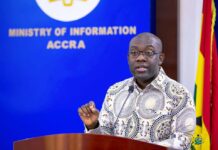
But Dr Justice Srem-Sai disagreed. He maintained that the Chief Justice ought to get his own representation only where there is a conflict between the position of a constitutional office and that of the Attorney General.
He further noted that the general principle is that the Attorney General represents public officials, adding that Frank Davies had not provided any exceptional case warranting an exception in this instance.
Moving the motion for the interlocutory injunction, the applicant’s lawyer argued that it has been the exclusive practice of the court that, during legal vacations, only applications on urgent and non-contentious matters are heard.
“In the event of the conduct of trial in the legal vacation, what we know is that the lawyers and the judges agree to sit and hear the matters in the vacation. The lawyers propose a date, and the judges take a warrant from the Chief Justice and proceed. Otherwise, all cases are adjourned until term time,” he noted
He urged the Supreme Court to grant the injunction and restrain the courts from sitting pending the determination of the substantive matter.
“The harm which will be occasioned to the accused is not something that can be quantified by way of monetary compensation. It is something that affects the rights and liberties of the accused persons and monetary awards cannot compensate that,” Frank Davies posited.
Opposing the prayer for injunction, Deputy Attorney General, Dr Justice Srem-Sai indicated that the applicant had failed to meet the grounds for the grant of an interlocutory injunction.
The authorities are settled that three factors ought to be considered in deciding whether to grant or refuse an application for interlocutory injunction: whether a serious question exists in the substantive matter, whether there is or may be irreparable damage if the app is refused and whether the balance of convenience is in favour of granting this application.
He argued that no exceptional circumstances had been established by the applicant to justify the grant of an injunction, maintaining that the public interest outweighed the interference with the conduct of the trials.
After hearing the arguments, Justice Pwamang set Friday, August 21 to deliver his ruling on the injunction application.
By Laud Adu-Asare