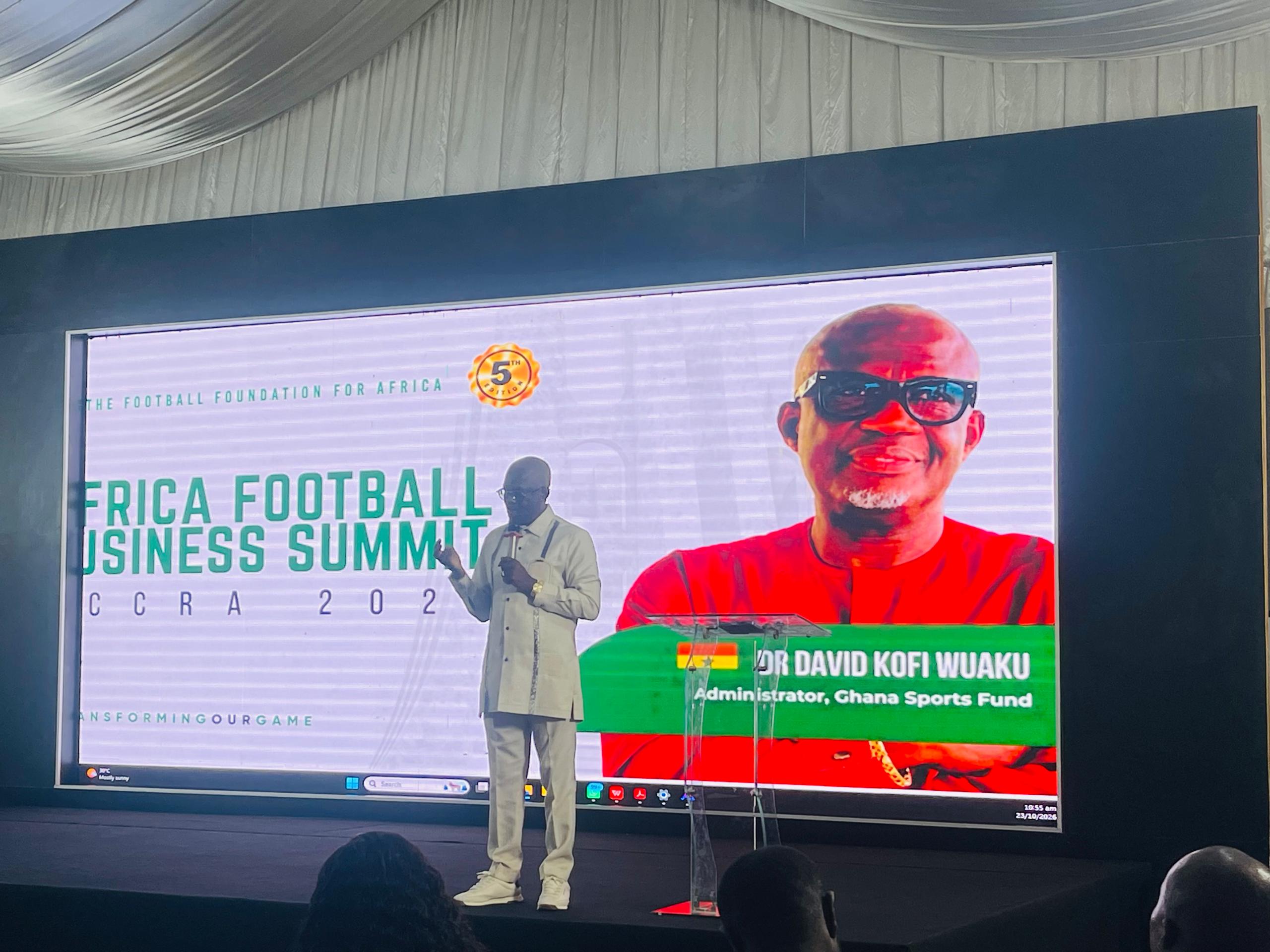

Ghana’s sports industry must establish a structured welfare system that protects athletes from the beginning of their professional careers through retirement, the Administrator of the Ghana Sports Fund, Dr David Kofi Wuaku, has said.
He argues that athletes should no longer be left to navigate short careers, irregular earnings, health risks and financial insecurity without adequate institutional protection.
Speaking at the Africa Football Business Summit 2026 in Accra, Dr Wuaku said greater African ownership of football would create a stronger incentive to protect players because the clubs and institutions benefiting from their development would also have a greater stake in their long-term wellbeing.
“When the club that develops a player also owns the value, protecting that player becomes good business, not charity,” he said.
Dr Wuaku called for a comprehensive welfare framework covering sports professionals from age 15 through to retirement, extending beyond players to include referees, facility managers and sports administrators.
He said such a system should incorporate pensions, health insurance, financial literacy, education and professional athlete management, with appropriate legislative backing.
The Administrator disclosed that the Ghana Sports Fund was engaging the Ministry of Finance as the pensions law was being reviewed, with the aim of securing pension and insurance arrangements for sports professionals, including family packages.
He also said a policy had been drafted to address the welfare needs of sports professionals.
On players’ earnings, Dr Wuaku pointed to minimum salary provisions announced by the Ghana Football Association in September 2025 for Premier League, Division One and Women’s Premier League players.
The provisions, as outlined in his presentation, set minimum net monthly salaries of GH¢1,500 for Premier League players and GH¢700 for Division One and Women’s Premier League players, with phased application to contracts.
He argued that fair remuneration and enforceable contracts could reduce the financial pressures that push young players to leave local clubs prematurely.
Dr Wuaku further called for transparent transfer systems that ensure training compensation and sell-on fees return to the clubs and academies responsible for developing players.
He said such revenues should be reinvested in talent development, helping clubs improve their financial stability while creating better conditions for future athletes.
Health cover for players and their families, access to sports medicine and retirement planning were also identified as essential elements of the proposed welfare system.
According to Dr Wuaku, athletes’ financial security must not depend solely on how much they earn during their playing years. Education, financial planning and professional management should prepare them for life after competitive sport.
The Ghana Sports Fund, established under the Ghana Sports Fund Act, 2025 (Act 1159), has athlete welfare among the purposes for which it is mandated to finance sport.
Dr Wuaku said a stronger sports ecosystem must recognise the human beings behind the commercial value of the game and ensure that the benefits of football extend beyond the years an athlete spends on the pitch.
He maintained that African ownership of the sport should ultimately translate into greater responsibility for athletes’ careers, welfare and futures.