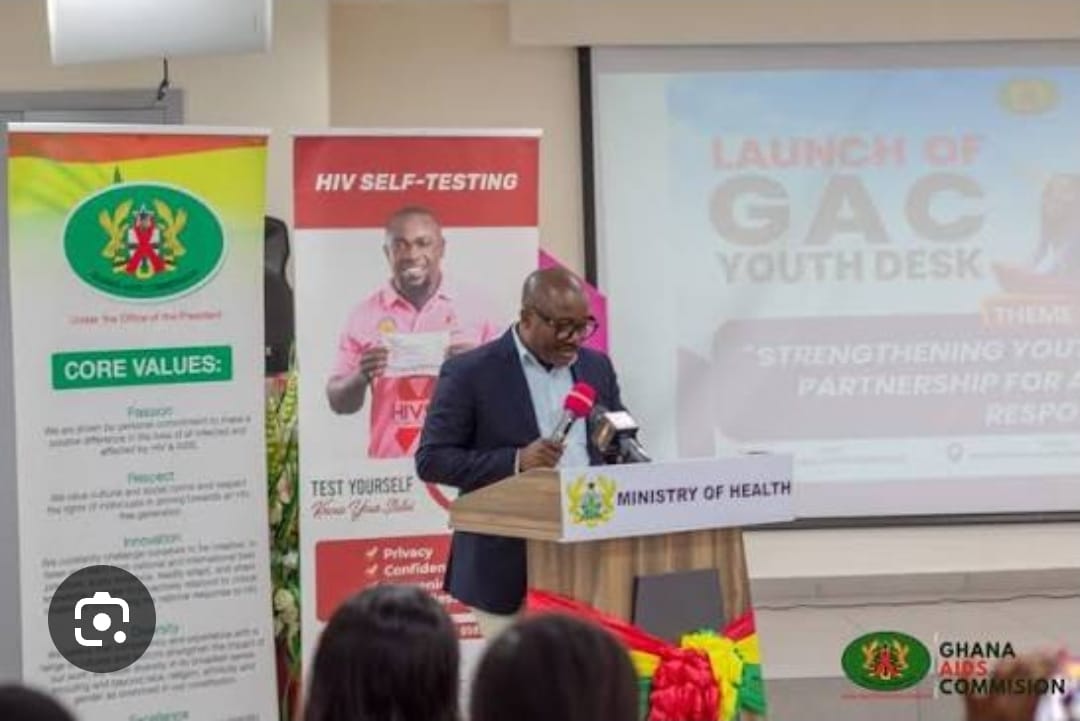

The Ghana AIDS Commission (GAC) has launched a Youth Desk to strengthen young people’s leadership and participation in the country’s HIV response, amid concerns about new infections among adolescents and young adults.
Launched on October 13, 2026, at the Ministry of Health Auditorium under the theme “Strengthening Youth Leadership & Partnership for an Inclusive HIV Response,” the initiative seeks to create a central platform for young people to influence HIV-related policies, research and interventions.
Speaking at the launch, the Director-General of the Ghana AIDS Commission, Dr Kharmacelle Prosper Akanbong, said the desk would connect grassroots youth organisations in both urban and rural communities with technical support and policymakers.
The need for the initiative is underscored by Ghana’s HIV statistics. The 2025 National HIV Estimates and Projections indicate that 33,317 young people aged 15 to 24 are living with HIV, while another 19,528 adolescents aged 10 to 19 are living with the virus. Young people aged 15 to 24 also account for 27.5 per cent of new HIV infections recorded in the country.
The Youth Desk is expected to promote research and evidence-based interventions tailored to the needs of young people, while expanding partnerships and creating opportunities for youth leadership in HIV prevention and advocacy.
It will also provide a platform for young people, including those living with HIV and members of vulnerable groups, to share their lived experiences and concerns directly with policymakers.
Through the initiative, the Commission hopes to ensure that young people’s perspectives are not merely considered in HIV programmes but are actively reflected in national policies and decisions.
The launch forms part of broader efforts to strengthen Ghana’s HIV response, particularly among adolescents and young adults, as the country works towards ending AIDS as a public health threat by 2030.
The success of the Youth Desk will depend on translating young people’s participation into practical interventions that improve access to HIV information, prevention, testing, treatment and care.
By Sarah Apenkroh