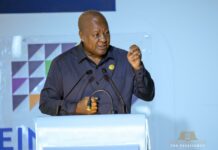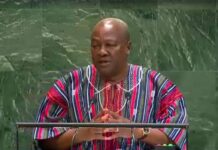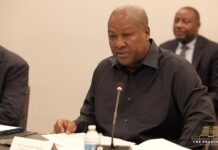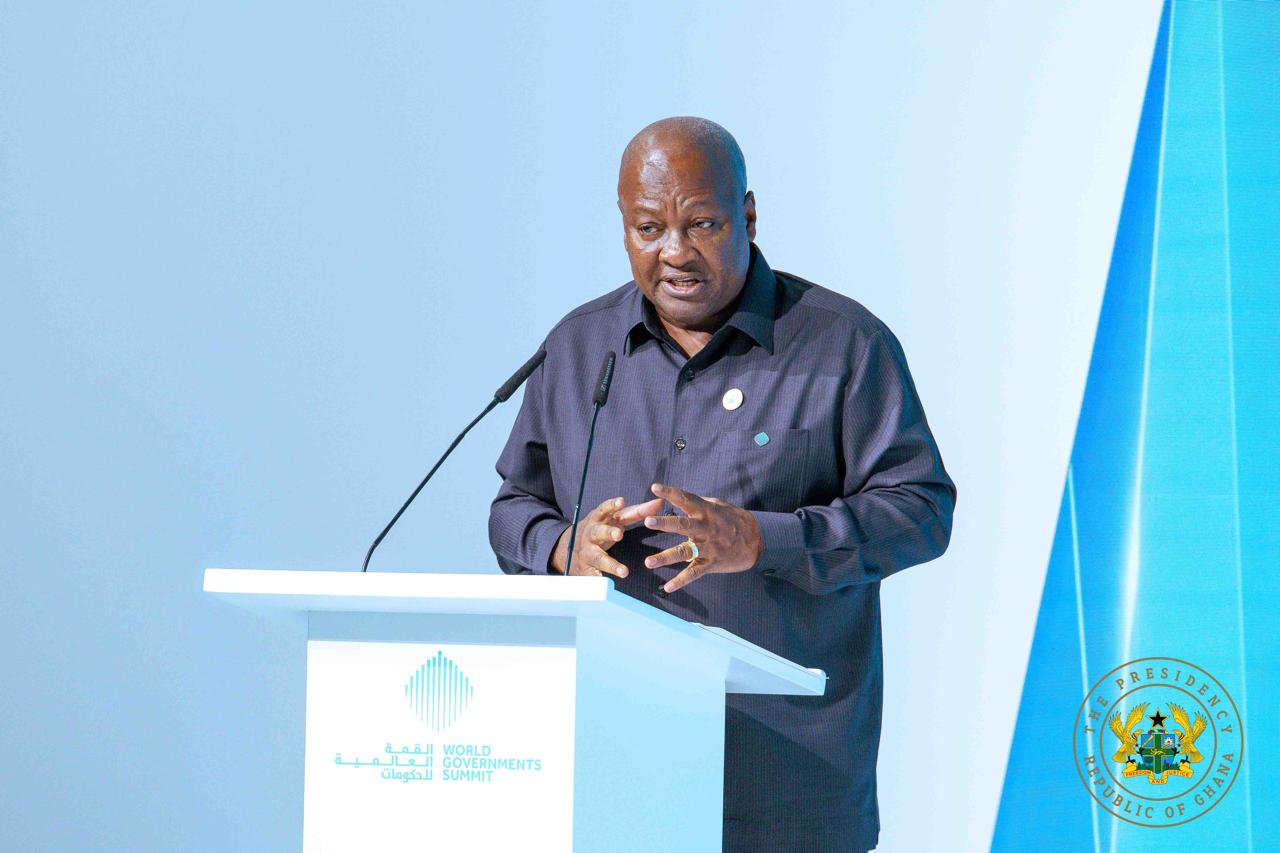

President John Dramani Mahama says developing a robust domestic steel industry is critical to Ghana’s infrastructure ambitions, job creation agenda, and regional economic leadership.
Speaking at the commissioning of the B5 Plus Limited steel manufacturing plant in Prampram on February 20 2026, the President noted that, “Ghana must shift from exporting raw scrap to producing and exporting finished and semi-finished steel products”
He underscored the importance of building a strong local steel industry to support Ghana’s infrastructure expansion and industrial transformation.
According to him, “government’s Big Push infrastructure programme is driving heavy investments across multiple sectors, including roads and highways, railway modernisation, bridges and interchanges, energy transmission lines, affordable housing, and industrial parks.”
He stressed that all these projects depend heavily on iron and steel, describing the commodity as fundamental to both national and continental development.
President Mahama noted that “Africa is projected to require more than 100 billion dollars annually for infrastructure development, with West Africa facing significant deficits.”
He argued that a strong domestic steel base would enable Ghana not only to meet its own infrastructure needs but also supply steel to countries across the sub-region.
The President of Ghana, described infrastructure development as a strategic pathway to industrialisation, stating that investments in steel production link directly to broader economic growth objectives.
Touching on energy-intensive industries, the President said “the government’s 24-hour economy programme is particularly relevant to sectors such as steel manufacturing”
He also revealed that he has assented to the 24-Hour Economy Authority Bill, describing it as a key policy measure to strengthen industrial growth and improve productivity.
President Mahama Further maintained that, “expanding local steel production remains central to Ghana’s vision of accelerating industrialisation, creating jobs, and positioning the country as a regional hub for infrastructure supply.”