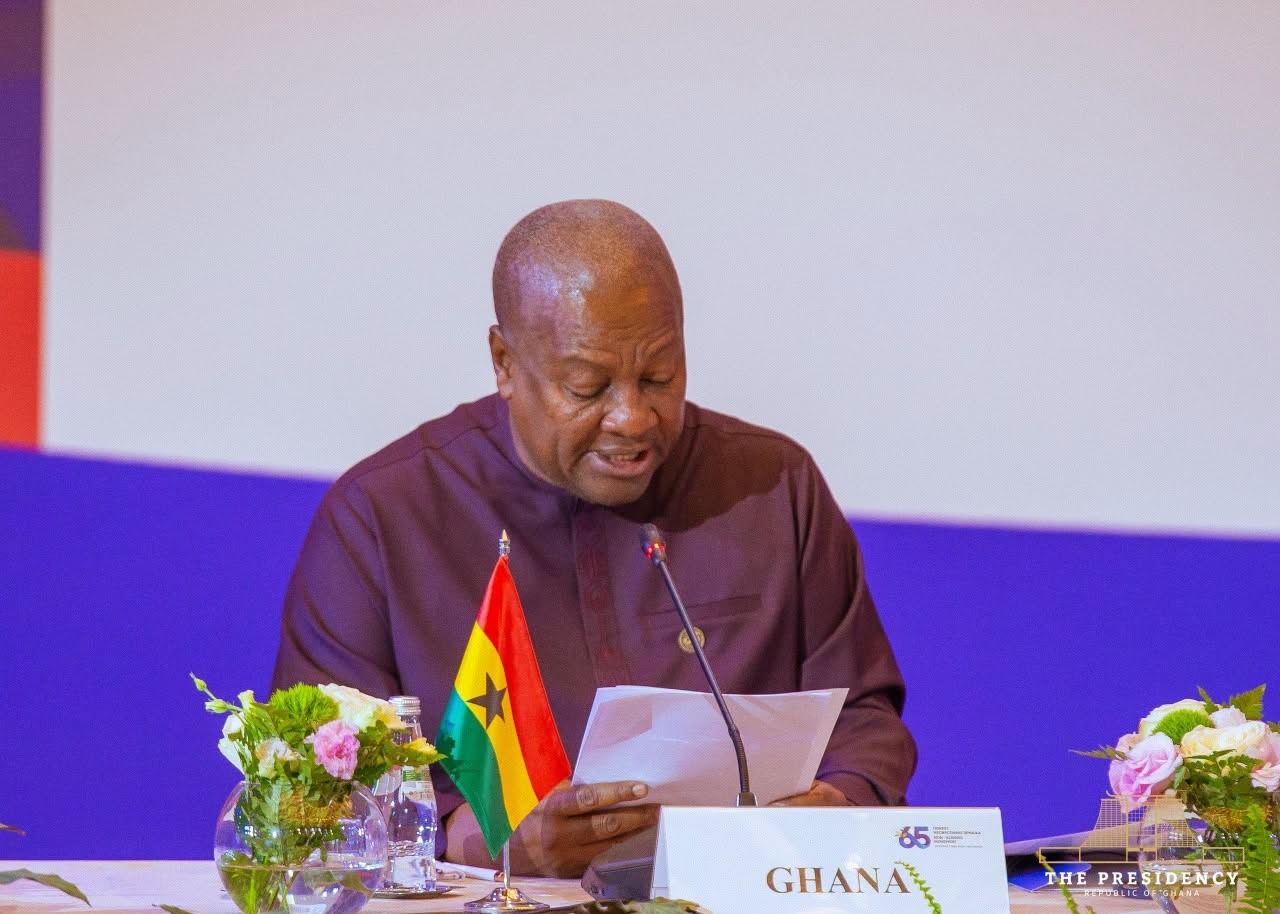

President John Mahama said that non-alignment must not be misconstrued as tolerance of injustice.
He noted that the role of the Non-Aligned Movement remains promotion of equitable international economic order.
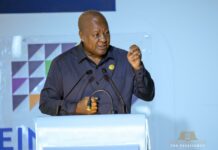
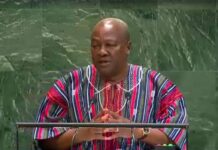
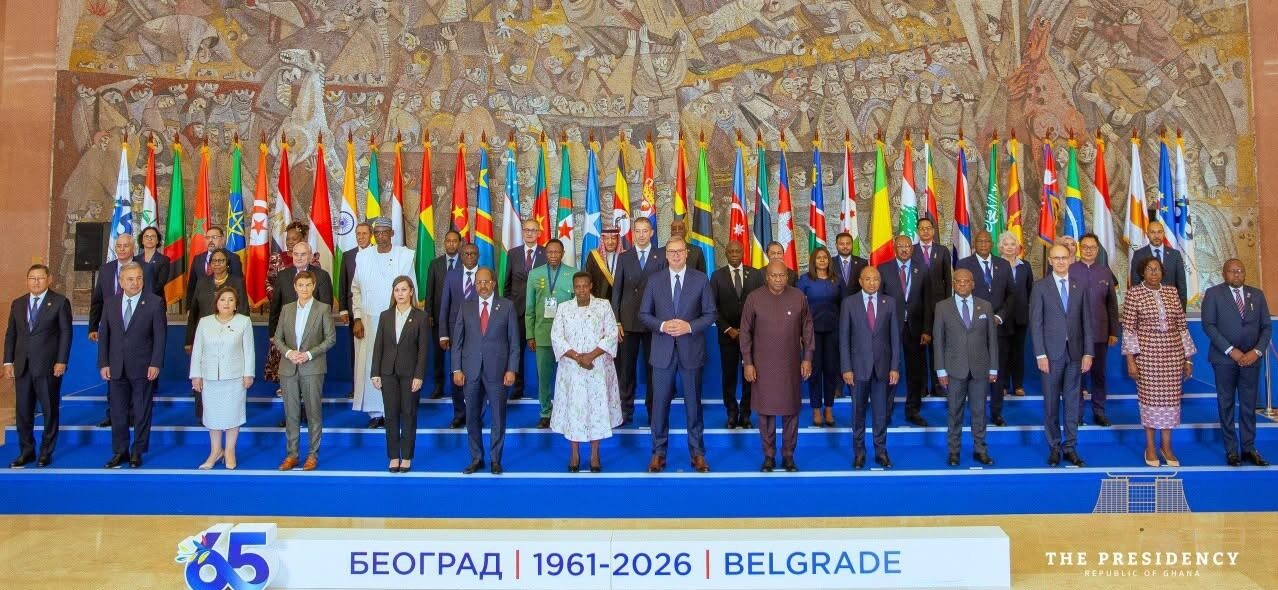
President Mahama made the remark while speaking at the 65th Anniversary High-Level Meeting of the Non-Aligned Movement (NAM) in Belgrade, Serbia on September 1.
“…Ghana reaffirms that non-alignment must never be understood as neutrality in the face of injustice, conflict, or the erosion of international law. The movement remains highly relevant in today’s international system, and although it emerged during the Cold War as a political movement, its role has evolved to address contemporary economic, political, and developmental challenges,” he stated.
“NAM continues to have an important role in advancing the interests of the Global South and promoting a fairer and more equitable international economic order,” President Mahama added.
According to him, “With its broad membership, NAM provides developing countries with a strong collective voice in the multilateral system. It can further strengthen South-South cooperation and advance common positions on development, finance, trade, climate change, debt, technology, and the reform of the global financial architecture.”
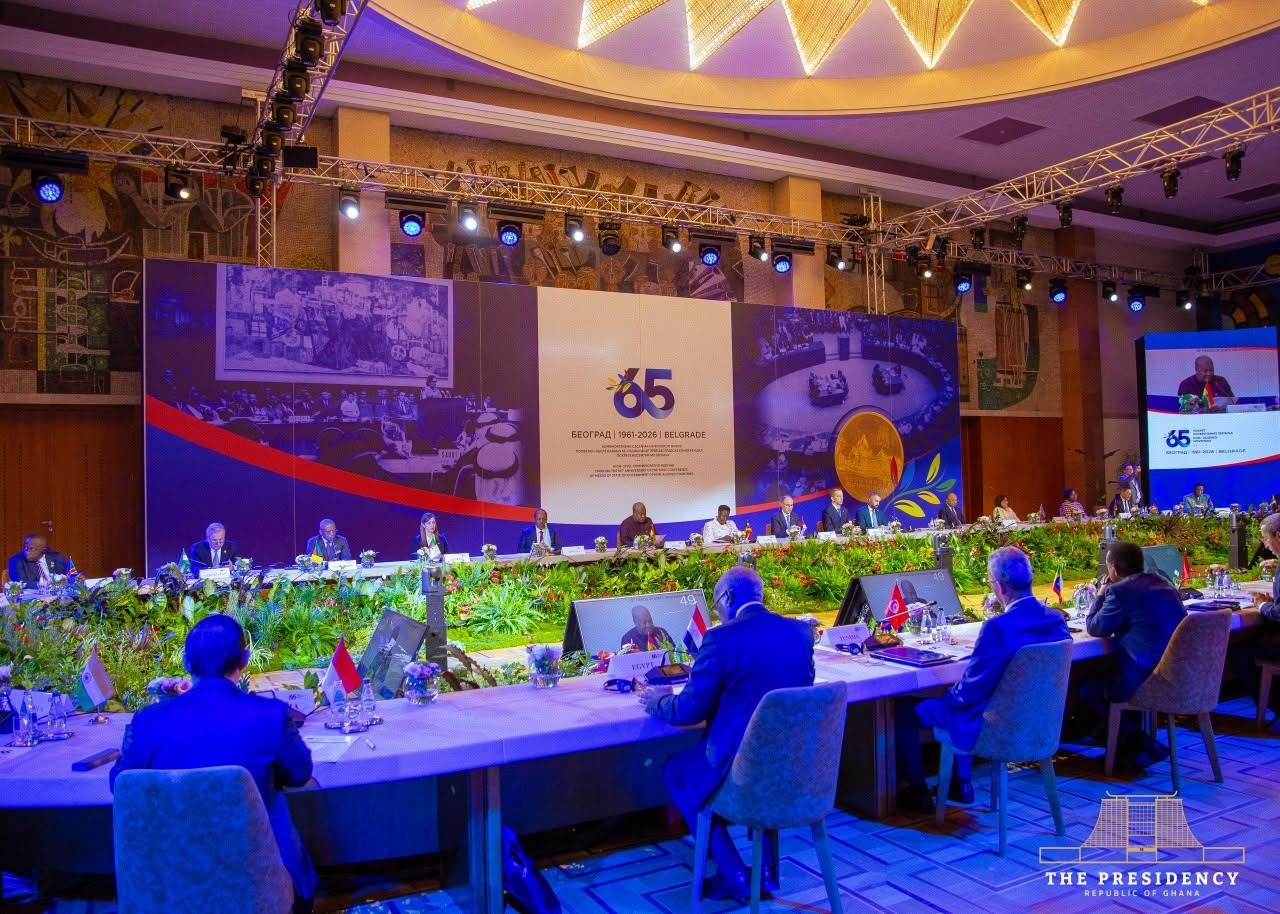
He urged fellow leaders to build on the historical legacy of the founders while adapting to the realities of the changing world.
“We must strengthen coordination among member states and translate our shared principles into practical action. As we confront challenges such as climate change, artificial intelligence, digital inequality, and widening development gaps, NAM must remain a united voice for peace, sovereignty, sustainable development, and a more just and equitable world,” President Mahama urged.
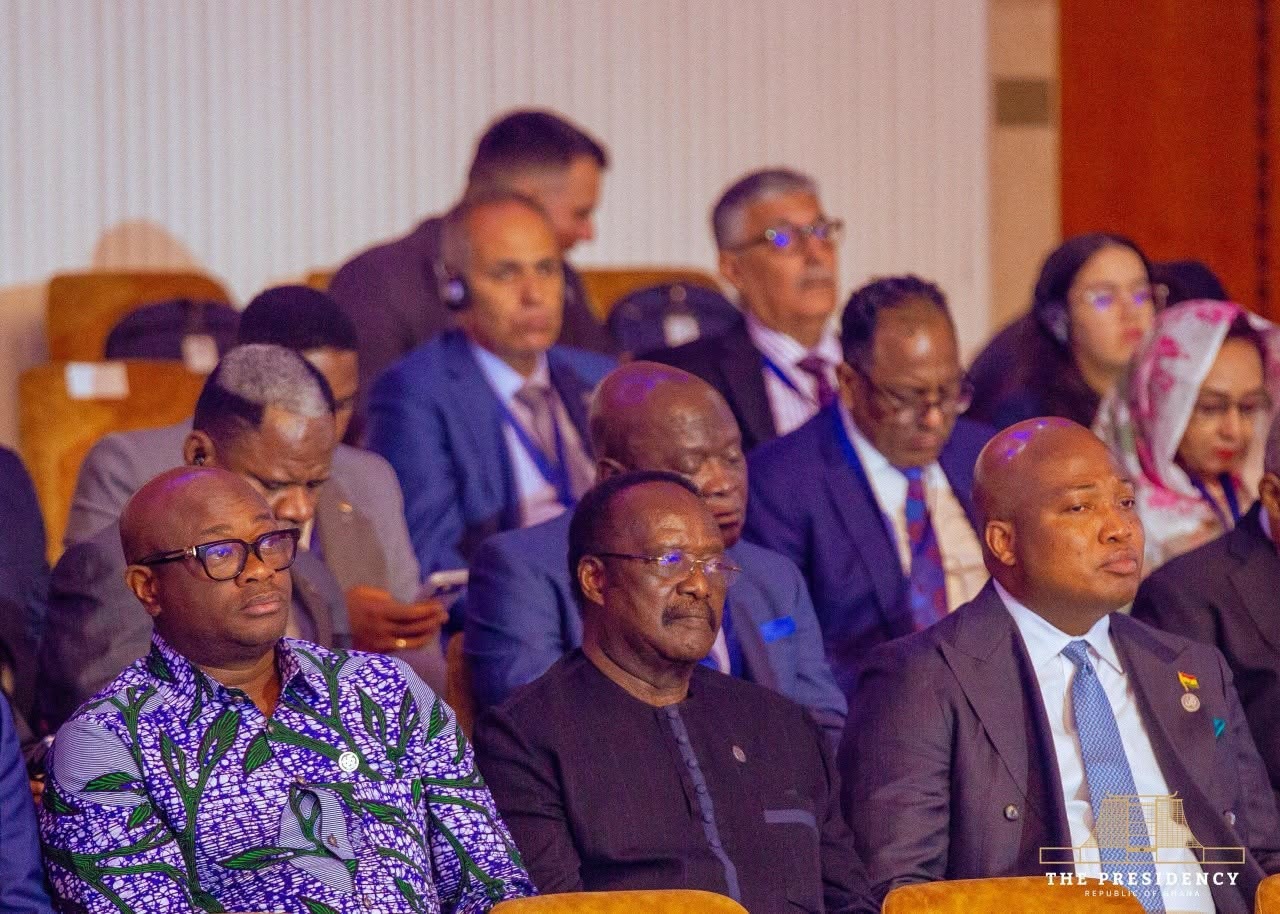
PLEASE READ FULL SPEECH BELOW:
Excellencies, Belgrade holds a distinguished place in the history of international relations. Sixty-five years ago, leaders of newly independent and developing nations gathered here at a defining moment in world affairs united by a shared determination to safeguard their sovereignty and independence, oppose colonialism and foreign domination, promote peaceful coexistence, and contribute to the emergence of a more just, equitable, and peaceful world order.
The history of Ghana’s anti-colonial struggle and the history of the Non-Aligned Movement are inextricably linked and it is a historical connection that Ghana takes immense pride in.
Ghana’s first president, Dr. Kwame Nkrumah, was among the foremost leaders of the generation that gave political expression to the Non-Aligned Movement in the historic Belgrade Conference in 1961.
Alongside President Josip Broz Tito of Yugoslavia, Prime Minister Jawaharlal Nehru of India, President Gamal Abdel Nasser of Egypt, and President Sukarno of Indonesia.
They came together at a time when the world was sharply divided by the Cold War rivalry and newly independent nations faced the danger of exchanging colonial subordination for dependence on competing power blocs.
Dr. Kwame Nkrumah’s vision was clear. Ghana’s independence had to be matched by an independent foreign policy and an unwavering commitment to the sovereignty and self-determination of nations.
He believed that the newly independent states must have the freedom to determine their own course, maintain constructive relations with all countries, and exercise independent judgment on matters of international concern.
In articulating this vision, Dr. Kwame Nkrumah declared, “we neither face east or west, we face forward”. That profound and powerful declaration defined and articulated with clarity Ghana’s position at a defining moment in world history. Ghana chose not to be drawn into the geopolitical rivalry between the power blocs.
Ghana chose instead to look forward to peace, to sovereignty, and to the freedom of nations to determine their own destinies.
We want to be friends of all and enemies to none. The vision of Osagyefo Dr. Kwame Nkrumah drew strength from the Historic Asian-African Conference held at Bandung, Indonesia in 1955, which laid an important political and structural foundation for the emergence of the Non-Aligned Movement.
Although the Gold Coast had not yet attained independence, Dr. Kwame Nkrumah ensured that our voice was present at this conference. The Gold Coast delegation led by Dr. Kwame Nkrumah’s close associates, Kojo Botsio joined the representatives of Asia and Africa in advancing the causes of decolonization, sovereign equality, peaceful coexistence, and African-Asian solidarity. Ghana, therefore, in 1961 came to Belgrade with a tradition of engagement already shaped by the Bandung Conference, a tradition that connected our struggle for independence with the wider determination of newly emerging nations to secure an independent voice in world affairs.
Sixty-five years after the historic Belgrade Conference that gave birth to the Non-Aligned Movement, Ghana is honored to be present once again here in this historic city of Belgrade, which occupies a profound significance in our shared journey. Our presence here today provides an opportunity for us to reflect on the principles that inspired the founding of the Non-Aligned Movement, and in particular the vision, the leadership, and enduring contribution of our leaders of the time whose statesmanship helped define our affirmed conviction that newly independent nations must be free to determine their own destinies and to contribute on equal terms to the shaping of a more peaceful, just, and balanced international order.
Your Excellencies, the world has changed profoundly since that first conference in 1961. The end of the Cold War and the fall of the Berlin Wall opened a new page in international relations, but the pressures that can constrain the strategic autonomy of developing countries to make their own determination have not disappeared.
They now manifest themselves through renewed geopolitical competition, economic vulnerabilities, and unequal access to finance and technology, climate change, and an international architecture in which the voice of the global South is still not adequately reflected in world affairs. In the tradition of Kwame Nkrumah, we understand non-alignment as a policy of positive, principled, and active engagement.
As he aptly stated, our politics of positive neutrality is not passive or neutral politics. This is affirmative politics based on our firm belief in positive action. It is this spirit of positive action that must continue to guide our non-aligned movement.
In an increasingly fragmented and multipolar world, the non-aligned movement must preserve its strategic autonomy and resist the pressures of the politics of power blocs. We must neither be silent spectators of global developments nor instruments of competing geopolitical interests.
Rather, we must be an independent, collective voice for peace, dialogue, disarmament, development, and justice, capable of influencing the international system and advancing a more representative and equitable global order.
However, Ghana reaffirms that non-alignment must never be understood as neutrality in the face of injustice, conflict, or the erosion of international law. The movement remains highly relevant in today’s international system, and although it emerged during the Cold War as a political movement, its role has evolved to address contemporary economic, political, and developmental challenges. NAM continues to have an important role in advancing the interests of the Global South and promoting a fairer and more equitable international economic order.
With its broad membership, NAM provides developing countries with a strong collective voice in the multilateral system. It can further strengthen South-South cooperation and advance common positions on development, finance, trade, climate change, debt, technology, and the reform of the global financial architecture.
Looking ahead, we must build on this historical legacy while adapting to this changing world.
We must strengthen coordination among member states and translate our shared principles into practical action. As we confront challenges such as climate change, artificial intelligence, digital inequality, and widening development gaps, NAM must remain a united voice for peace, sovereignty, sustainable development, and a more just and equitable world.
Your Excellencies, we must move from declarations to actions.
At the first conference of the heads of state of governments of the Non-Aligned Movement here in Belgrade on 1 September 1961, President Josip Broz Tito said, The non-aligned countries can no longer reconcile themselves with the status of observers and voters, and that, in their opinion, they have the right to participate in the solving of problems, particularly those which endanger the peace and the fate of the world at this present moment. Here we are 65 years later. This profound assertion remains very relevant.
The movement’s strength should be measured not only by our numbers, but by our ability to translate its collective weight into coordinated diplomacy and practical outcomes. We must strengthen consultation and coordination among member states, particularly within the United Nations and other multilateral institutions where our interests converge. We should therefore strengthen follow-up decisions of our summits and ministerial conferences and focus on strategic priorities where the movement can have meaningful impact.
Our communication should serve as a basis for coordinated diplomatic action and the credibility of our movement. The current international environment calls for a multilateral system that is stronger and more representative and more responsive to the realities of our time.
The legitimacy of the international order depends in no small measure on whether its institutions reflect the diversity of the international community and give all states a meaningful voice in decision-making.
Ghana’s recent experience demonstrates what can be achieved when we act together. On 25 March 2026, the United Nations General Assembly adopted Resolution ARES-80-250, led by Ghana and strongly supported by the African Union, condemning the trafficking of enslaved Africans and the racialized system of chattel enslavement of Africans as the gravest crime against humanity. This resolution received 123 votes in favour.
On behalf of the Government and people of Ghana, I wish to express our sincere appreciation to fellow members of the Non-Aligned Movement for the strong support Ghana and Africa enjoyed on this historic occasion.
Your solidarity affirmed the value of collective action and demonstrated what we can achieve when we come together in pursuit of justice and a shared sense of historical truth. Ladies and gentlemen, the credibility of the international system is tested more severely when human suffering is met with silence, selectivity or indifference.
In Sudan, the world has too often appeared to turn its back on the people who are enduring the world’s largest and worst humanitarian crisis, with over 12 million people possibly displaced, widespread hunger and grave violations against civilians. The international community must give Sudan the sustained political attention, humanitarian support and commitment to peace that its people urgently deserve. In Gaza, the humanitarian situation remains catastrophic.
Civilians continue to face severe constraints on humanitarian access and critical shortages affecting food, water, health care and electricity. We must insist on the protection of civilians’ full and unhindered humanitarian access. We also reject the selective application of the principles of the United Nations Charter.
Ghana reiterates its call to the long-standing economic, commercial and financial embargo against Cuba. Unilateral, coercive measures that undermine sovereign equality, non-interference and purposes and principles of the Charter weaken the multilateral system we all agreed to defend. Ladies and gentlemen, Your Excellencies, development remains central to the enduring principles of the Non-Aligned Movement.
Political independence is more meaningful when it is accompanied by the economic capacity to pursue national priorities. Resource sovereignty must be at the heart of our development agenda. We cannot accept a global order in which countries of the Global South remain exporters of raw material and importers of village goods, while our people bear the environmental and social costs of extraction.
Excellencies, climate change presents another area where our collective voice must remain strong. Our planet is at risk. Fires in southern Europe, droughts and desertification in Africa, flash floods in China and Nepal due to melting ice glaciers must leave no reasonable person in doubt that climate change and global warming are real.
We must speak with one united voice to advance advocacy and action on climate change. Excellencies, our diversity is a source of strength. By building on our shared interests, we can strengthen the collective voice of the Non-Aligned Movement and focus our efforts where they make a meaningful difference.
Ghana remains committed to working with all members of the Non-Aligned Movement to strengthen multilateralism, advance a fairer international order and ensure the voice of the Global South carries greater weight. As we look to the future, our direction remains clear. Neither East nor West, but forward together.