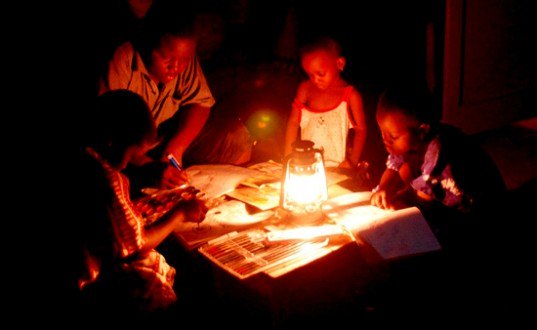

The Africa Sustainable Energy Centre (ASEC) has expressed concern over the ongoing power outages affecting various parts of Ghana.
ASEC has therefore called for urgent structural and technological reforms to improve system reliability across the energy value chain.
ASEC noted that the current disruptions reflect broader operational and infrastructure challenges across key institutions responsible for power generation, transmission, and distribution, including Ghana Grid Company (GRIDCo), the Electricity Company of Ghana (ECG), and Ghana National Gas Company.
“In particular, recent incidents linked to failures in critical control systems further underscore the need for improved maintenance culture and system resilience,” a statement issued on April 25 indicated.
ASEC emphasized that Ghana’s energy institutions must urgently transition from reactive maintenance approaches to predictive maintenance systems, supported by modern digital tools and Artificial Intelligence (AI).
This shift is essential to detect system anomalies early, prevent equipment failures, and reduce the risk of cascading outages across the national grid.
“With the right deployment of AI-driven monitoring systems, faults can be identified before they escalate into nationwide disruptions,” said Ing. Justice Ohene-Akoto, Executive Director of ASEC.
“GRIDCo, ECG, and Ghana Gas must move decisively toward predictive maintenance as the new standard for grid reliability and operational efficiency.”
ASEC further highlights that predictive maintenance must be complemented by broader investments in: Modernization of transmission and distribution infrastructure, Strengthening of gas supply reliability to thermal plants, Enhanced system redundancy and automation Improved coordination across all power sector institutions, Digital transformation of grid monitoring and control systems.
The Centre also noted that improving reliability is not only a technical necessity but an economic imperative, as continued outages place pressure on businesses, households, and national productivity.
ASEC called on all stakeholders—including government, regulators, utility operators, and development partners—to prioritize long-term resilience over short-term fixes. A coordinated national effort is required to stabilize the grid and secure Ghana’s energy future.
“The current power outages are a serious concern,” Ing. Ohene-Akoto added. “However, they also present an opportunity to reset the system—by embracing modern technology, strengthening institutions, and investing in predictive, intelligent infrastructure.”
ASEC remains committed to supporting Ghana’s energy transition through research, policy advocacy, and technical collaboration aimed at building a resilient and sustainable power system.
By Michael Ogbodu