
The Africa Sustainable Energy Centre (ASEC) has urged government and power sector stakeholders to resist calls for a load-shedding timetable and instead focus on addressing the structural weaknesses affecting Ghana’s electricity system.
According to the Centre, growing demands for scheduled outages in response to recent power disruptions risk normalising a challenge that should be resolved through improved planning, coordination and system design.
Executive Director of ASEC, Justice Ohene-Akoto, stressed that the current situation requires long-term solutions rather than temporary management measures.
“The current situation is not one that should be managed with timetables, but one that must be resolved at its root,” he stated, adding that strengthening system resilience particularly through redundancy should be the priority.
“This is not the time to institutionalize outages—it is the time to strengthen the system, especially through robust redundancy that prevents failures from escalating,” the statement added.
ASEC noted that the ongoing disruptions are not primarily due to insufficient generation capacity, but rather gaps in operational planning, especially within the transmission and distribution segments of the power sector.
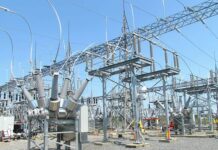
It identified the lack of adequate redundancy in critical infrastructure as a major vulnerability, leaving the system exposed to widespread outages when faults occur.
The Centre highlighted the pivotal role of the Electricity Company of Ghana in stabilising supply, urging the utility provider to ensure that all technical interventions, including ongoing retrofit works, incorporate redundancy measures to prevent service interruptions.
ASEC recommended that ECG temporarily pause its retrofit activities to restore stability, while also strengthening coordination, improving system monitoring and enhancing communication with the public.
It further called for stronger oversight and collaboration among sector institutions, including the Ghana Grid Company and the Ministry of Energy and Green Transition, to ensure redundancy planning becomes a standard requirement across all infrastructure upgrades.
The Centre emphasised that resilient power systems are built on redundancy, warning that without it, even minor faults can escalate into widespread disruptions.
ASEC reaffirmed its commitment to supporting Ghana’s energy sector through policy advocacy, research and technical expertise aimed at building a reliable and future-ready electricity system.