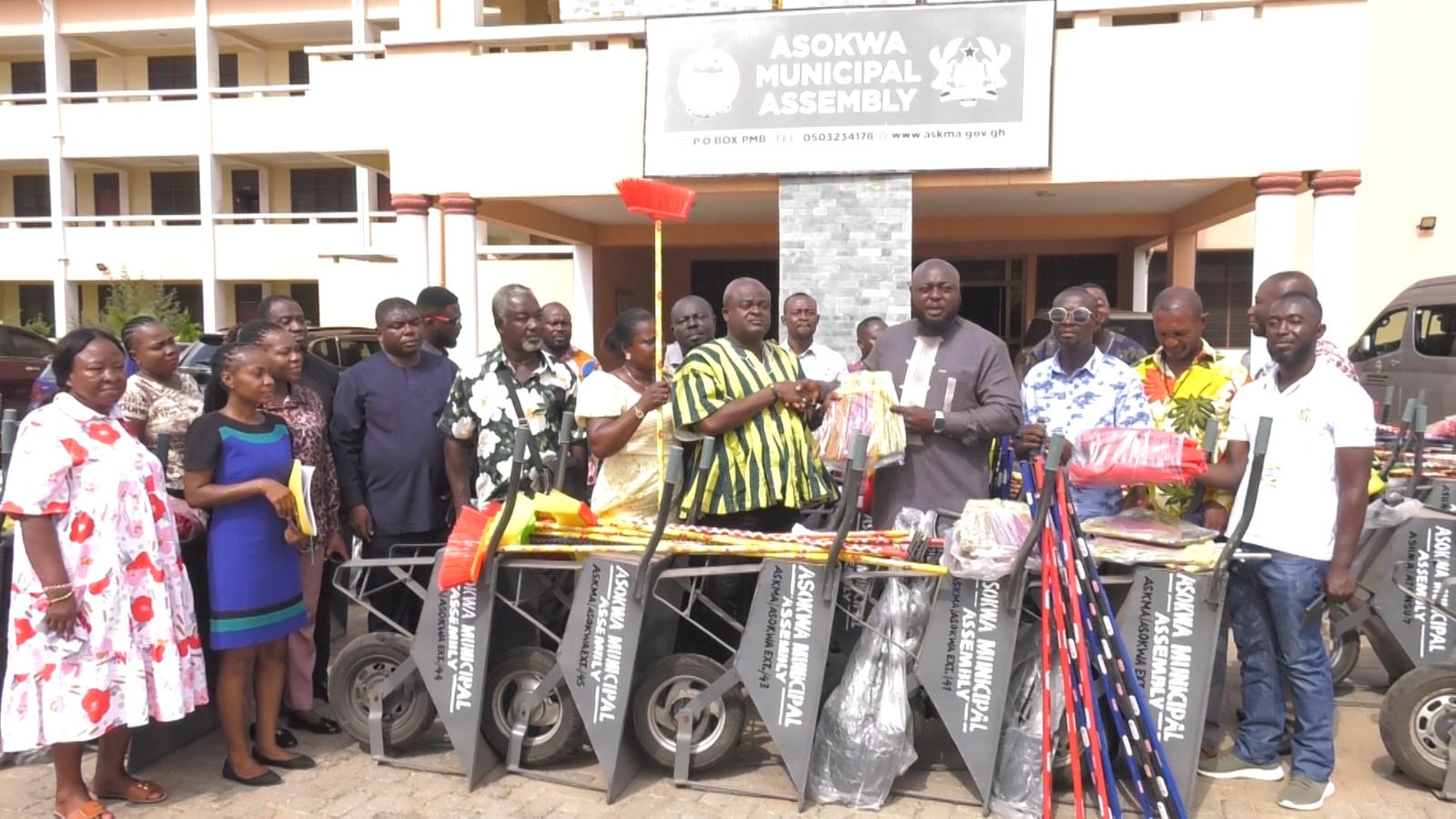

The Asokwa Municipal Assembly has taken a step toward improving environmental cleanliness by distributing sanitation tools to all 12 electoral areas across the municipality.
The initiative, led by Municipal Chief Executive (MCE) Amoh Kamel, forms part of a broader strategy to strengthen sanitation management and encourage community participation in keeping the municipality clean.
Speaking at the distribution exercise, Mr. Kamel said the Assembly is intensifying efforts to address sanitation challenges by equipping assembly members and unit committees with essential tools, including wheelbarrows, shovels, and other cleaning equipment.
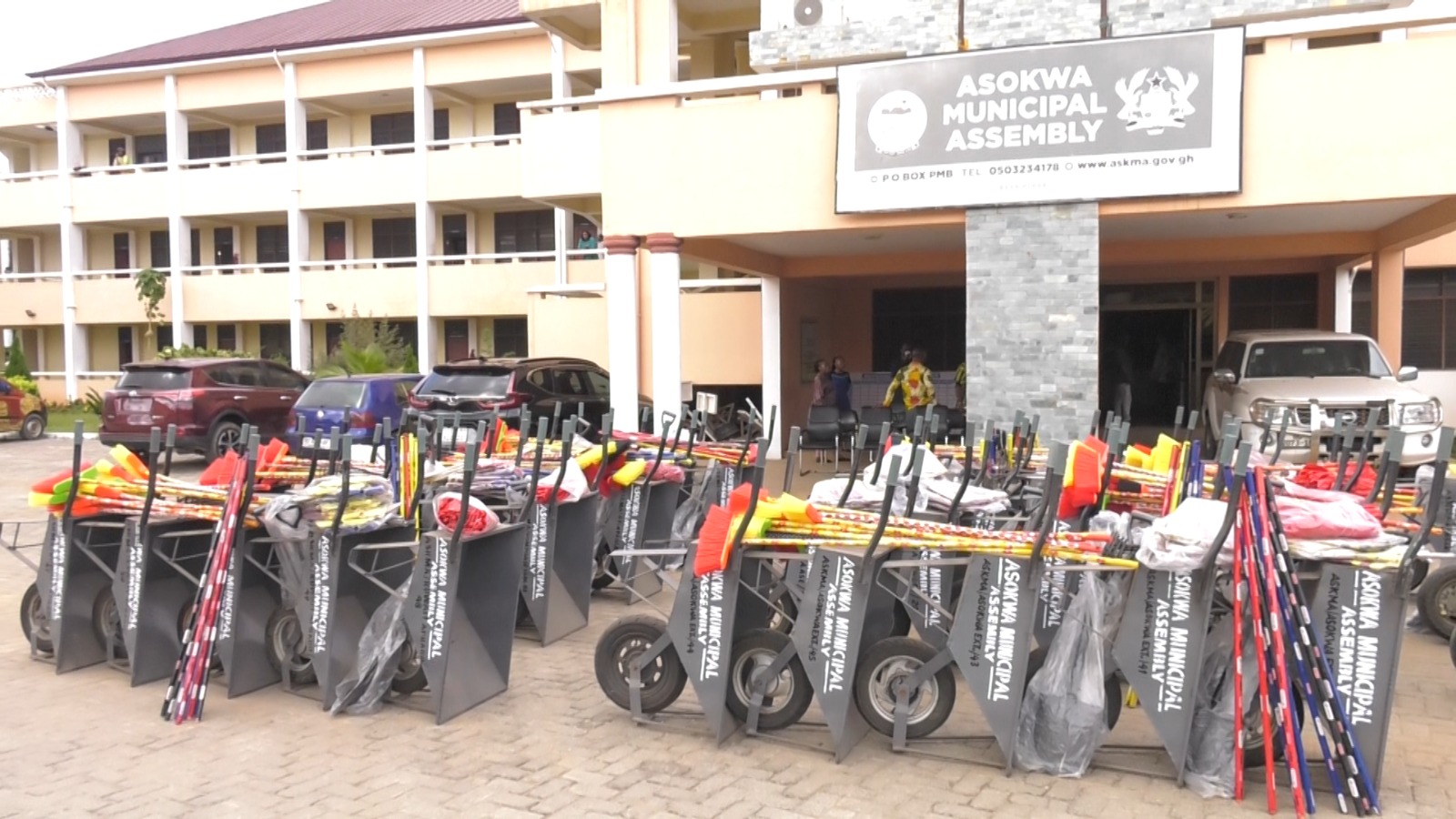
He explained that the move is aimed at enhancing routine clean-up exercises and ensuring that residents actively participate in municipal sanitation days.
“This will strengthen how we clean our environment and ensure that the entire municipality takes part in sanitation exercises. The equipment will also be accessible to community groups and households who wish to organize clean-up activities,” he stated.
Mr. Kamel added that the Assembly has already deployed nearly 70 sweepers along major roads and plans to extend the exercise to markets and other public spaces. He emphasized that sanitation teams are also engaging businesses and industries to ensure compliance with environmental standards.
The MCE further revealed plans to begin strict enforcement of sanitation regulations, including the requirement for businesses to obtain environmental permits.
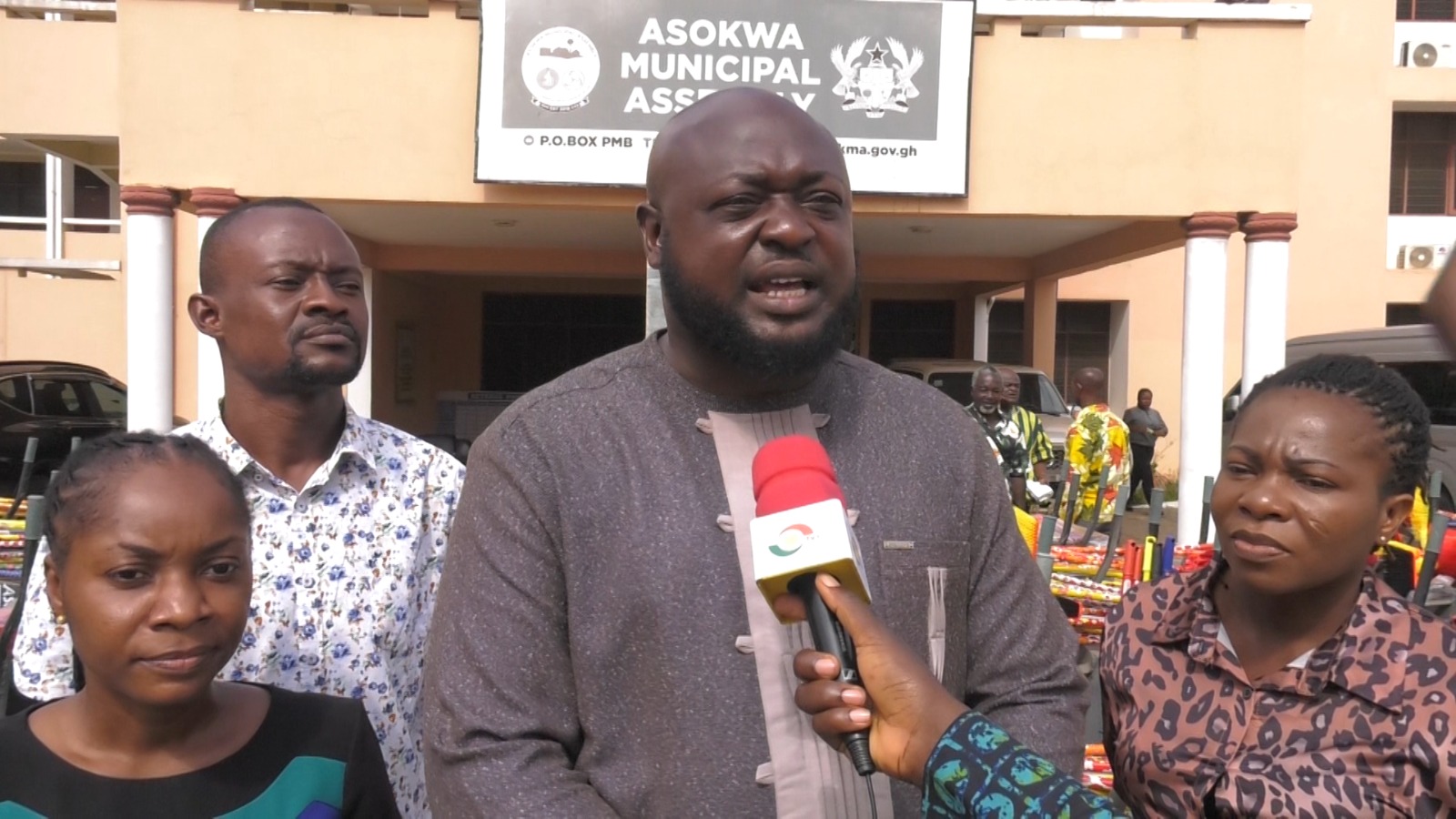
“All businesses must have a sanitation certificate to operate within the municipality. Those without permits should take advantage of this period to comply before enforcement begins,” he warned.
As part of upcoming initiatives, the Assembly will roll out the “Clean Your Frontage” campaign to encourage residents to take responsibility for maintaining cleanliness around their homes and workplaces.
Receiving the items on behalf of the assembly members, Presiding Member for the Assembly, Nana Yaw Wiredu, commended the initiative, describing the tools as essential for effective sanitation work in local communities.
He assured that assembly members would work closely with unit committees and residents to ensure the tools are properly used and maintained.
“Cleanliness is a key part of our activities in the electoral areas. We are grateful for these tools and will ensure they are used responsibly to keep our communities clean,” he said.
Mr. Wiredu stressed the importance of public education in sustaining sanitation efforts, noting that residents must be consistently informed and encouraged to maintain clean surroundings.
He also called for stricter enforcement of sanitation bylaws to ensure compliance, particularly among residents who fail to participate in communal labour or maintain cleanliness in their environments.
The Asokwa Municipal Assembly’s latest intervention underscores a growing commitment to tackling sanitation challenges through a combination of resource provision, public education, and enforcement aimed at creating a cleaner and healthier municipality for all.
By Ibrahim Abubakar