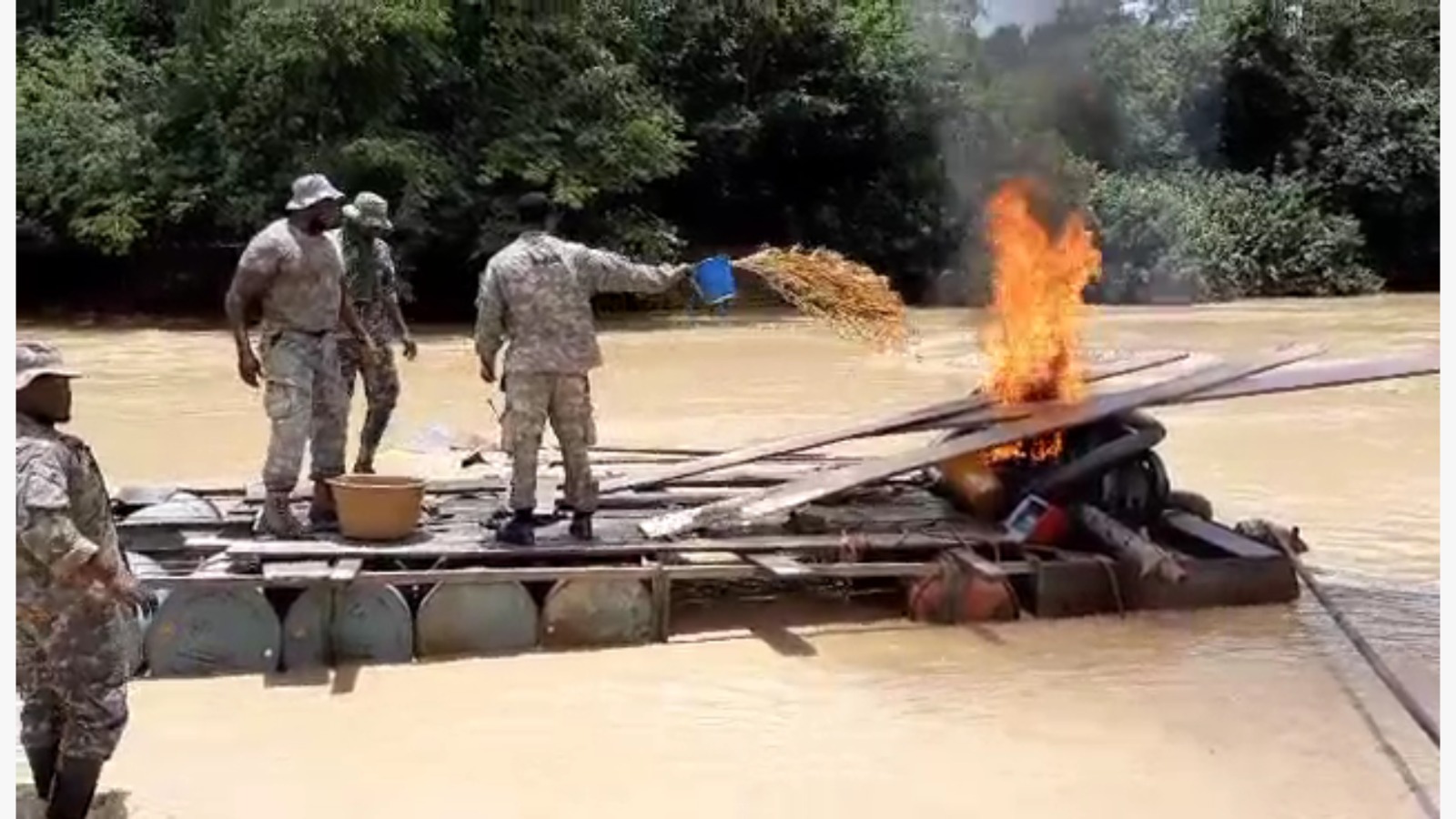

In the past few days, I have heard many make unnecessary comments suggesting that the Church should “modernize baptism,” a reaction that surfaced only after the Chairman of The Church of Pentecost rightly lamented that Galamsey is destroying our rivers and undermining even the practical possibility of water baptism.
But such comments baffle me and miss the point entirely on progress.
It is ironic that instead of confronting the ecological and moral disaster of illegal mining, some people have chosen to question a sacred ordinance that predates modern states themselves.
Baptism is not the problem; the poisoned rivers are. The answer to polluted water is not to redefine the sacrament of baptism so that your galamsey businesses can continue, but to stop the destruction of the waters.
Take, for instance, if some non-Catholics suggest the Catholic Church should abolish the papacy simply because “the world has advanced.”
By that logic, every enduring institution should surrender its foundations to the passing fashions of modernity. But faith is not governed by technological trends or environmental negligence. It is not an iPhone that should be updated every time and every day!
Sacred traditions are not revised because society has failed in stewardship. If a denomination decides to do baptism in a way that would not require immersion in a river, that is their belief, and that would work.
It will be very absurd for the church to change a holy practice because politicians and some selfish people have decided to spoil our rivers and natural habitat.
It would be equally absurd to argue that because our leaders have failed to act, often waiting for international organizations to tell them what to do, we should therefore alter a sacred practice of the Church.
Institutional failure and political inaction do not justify tampering with religious tradition. If leadership has failed to protect our rivers, the solution is not to change Church practice, but to demand accountability and confront that failure directly.
The issue is not that the Church must modernize baptism; the issue is that Ghana must confront galamsey. Do not ask the Church to adjust its theology to accommodate environmental destruction. Ask the state to protect the rivers, enforce the law, and restore what greed has damaged. The rivers should be cleaned, not the theology diluted. Fix the galamsey. Leave baptism alone.
Anytime I hear Galamsey I ask myself, why can’t we confront galamsey with the urgency it demands? Why can’t we involve traditional leaders, whose authority still carries moral and social weight in many mining communities?
Why can’t we declare a state of emergency on illegal mining and treat it as the national crisis it is? Why can’t we be honest enough to name those responsible, point them out, and hold them accountable?
Why can’t we make a collective pledge not to destroy ourselves and generations unborn? Must our dishonesty and political cowardice now force the Church to compromise sacred practice because we refuse to protect creation? Should our moral failure rob the Church of its witness while we excuse environmental ruin?
Why can’t we develop and enforce policies serious enough to mitigate this canker before it consumes us entirely? Are we prepared to sit idly by until we begin importing water, just as we import toothpicks, tomatoes, oil, and rice?
Must we wait until the destruction is irreversible before we act? The real question is not whether the Church should adjust baptism but whether a nation blessed with rivers will summon the courage to save them.
By Emmanuel Owusu Agyei
Orange City
Newark New Jersey