

The Bank of Ghana (BoG) and the Securities and Exchange Commission (SEC) have taken their national virtual asset education campaign to the Ashanti region, urging Ghanaians to understand the risks before investing in digital assets.
The campaign, dubbed NAVALI, was launched at the University of Skills Training and Entrepreneurial Development (USTED) as part of efforts to improve public understanding of virtual assets and promote responsible participation in Ghana’s growing digital financial ecosystem.
The initiative comes amid concerns over fraud, misleading investment schemes, market manipulation and other risks associated with virtual assets.
Director for Fintech and Innovation at the Bank of Ghana, Owureku Asare, says regulation alone cannot protect citizens if they lack the knowledge to make informed decisions.
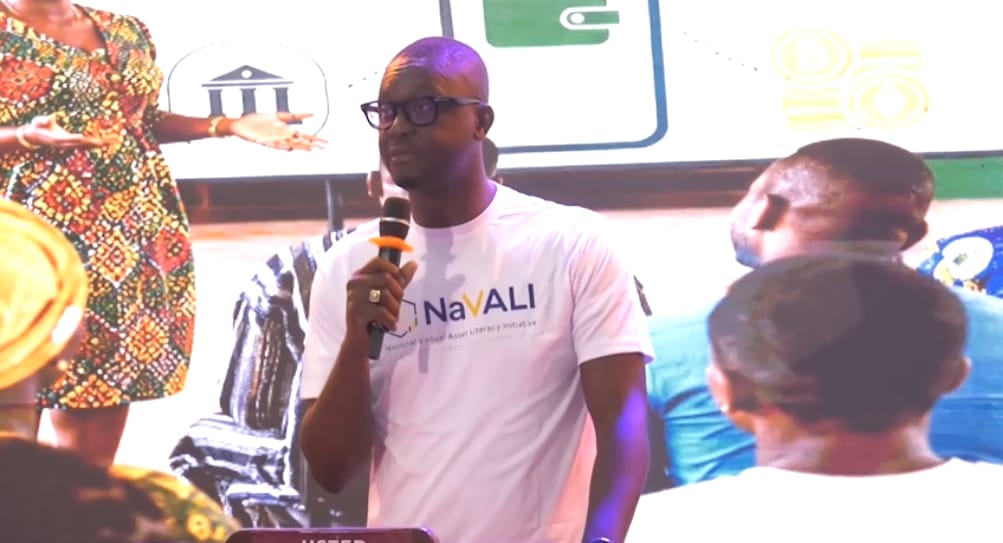
“A law can establish rules, institutions can enforce compliance, yet none of these are sufficient if citizens do not understand the environment in which they are expected to participate.”
He says NAVALI will therefore focus on taking education on virtual assets beyond regulatory institutions and into communities.
The regulators say the campaign is anchored on a simple message: “Understand before you undertake.”
Owureku Asare says citizens must be equipped with accurate information to distinguish genuine opportunities from unrealistic promises.
“Our duty is not to promote speculation, neither is it to stand in the way of innovation. Our duty is to ensure that Ghanaians are equipped with the knowledge necessary to make informed decisions.”
Deputy Director-General of Finance at the SEC, Mensah Thompson, says virtual assets are no longer a niche market, with their accessibility making public education increasingly important.

“The same ease of access, however, means that losses can occur just as quickly.”
He says the Virtual Asset Service Providers Act, 2025, also known as Act 1154, provides the legal framework for licensing and supervising virtual asset businesses in Ghana.
The law gives the SEC and Bank of Ghana powers to oversee areas including exchanges, custodians, brokers, wallet providers and tokenised investment products.
Mr Thompson says innovation will be encouraged, but must come with accountability.
“Innovation is welcome, but accountability is non-negotiable.”
The SEC is asking prospective investors to answer three key questions before committing their money to any virtual asset.
Is it licensed?
Can the asset be verified?
What protections exist if something goes wrong?
Mr Thompson says anyone who cannot get clear answers to these questions should stay away.
“If those questions cannot be answered clearly, do not invest.”
The Head of the Department of Economics at USTED, Professor Joseph Antwi Baafi, says the institution will support efforts to extend the campaign to places where ordinary Ghanaians can easily access the information.
According to him, the campaign will be taken to markets, churches, schools and other communities to ensure that the message reaches a wider audience.
The approach, he says, is necessary because virtual assets are increasingly becoming part of everyday financial activity, while many people may not fully understand the opportunities and risks involved.
The regulators believe that taking the campaign to the doorstep of people will help bridge the knowledge gap and protect more Ghanaians as the country’s digital financial ecosystem continues to evolve.
The Ashanti Region is the first region outside Accra to host the NAVALI campaign.
Ghana must establish a National Anti-fraud Fund before fraud undermines our digital future